What should you look for when buying?
First, compare the energy value and recipe of the specific variety you’re considering. Then decide how much you want for your snack, and check for allergens before buying if necessary.
| Criteria |
What to check |
Who it matters to |
| Energy value and quantity |
Compare the kcal per 100 g for the specific variety with the quantity you’re buying. |
I want to choose a nut snack whose energy value I can weigh up against the amount I plan to eat. For around 40% of consumers, this comparison is the main consideration when buying. |
| Sugar and recipe |
Check the sugar per 100 g and ingredients such as sugar, honey or salt. |
If I prefer less sweet snacks, a low kcal figure on its own isn’t enough. Around 40% of consumers focus first and foremost on the recipe. |
| Allergens |
Check allergen information on packaged goods; for loose goods, ask at the stall. |
Before buying loose nuts, I need to know which allergens that are relevant to me may be present. For around 20% of consumers, checking this takes priority when choosing. |
The figures on product information need to match the recipe in question: ALDI SÜD lists 502 kcal and 56 g of sugar per 100 g for the roasted almonds we examined, and notes that values may vary between suppliers. EDEKA lists 607 kcal per 100 g for the organic cashews we looked at. So, the lower energy value of the roasted almonds doesn’t mean they’re the less sweet choice.
Brands to consider
These brands offer a starting point for comparing specific nut products. What matters is the information for each variety, not the brand name alone.
Seeberger
Worth considering if you want to check the ingredients and added seasoning in a nut mix.
- Seeberger describes its nut kernel mix of hazelnuts, almonds, cashews and walnuts as unroasted, with no added salt or spices.
- That doesn’t automatically make the mix low in calories. If you have allergies, also check the information on the specific pack.
EDEKA
The products we looked at show why individual types of nuts and seasoned mixes should be considered separately.
- EDEKA lists 607 kcal per 100 g for its organic cashews we examined, and provides ingredients and information about possible allergen traces.
- According to EDEKA, the cashew and peanut mix with honey and salt we examined contains 35.5 g of sugar per 100 g. Always use the information on the specific pack to help you decide.
ALDI SÜD / FARMER NATURALS
A place to compare plain nuts and seasonal nut products, each with its own recipe.
- For the WINTERTRAUM roasted almonds we examined, ALDI SÜD lists 502 kcal and 56 g of sugar per 100 g.
- For this product, ALDI SÜD notes that nutrition values may vary between suppliers; seasonal special-buy products may only be available for a limited time.
REWE
Its range of almonds gives you the opportunity to compare plain and differently prepared varieties using their product information.
- The almond products listed by REWE include a range of recipes and pack sizes.
- The range alone won’t tell you the energy value, sugar content or allergens. It’s the individual product that matters.
Nut products on Joybuy
This selection includes almond snacks and mixes, as well as peanut and pine nut products. To compare them with Christmas market treats, look at the recipe, pack size and information per 100 g separately for each product.
 No image available
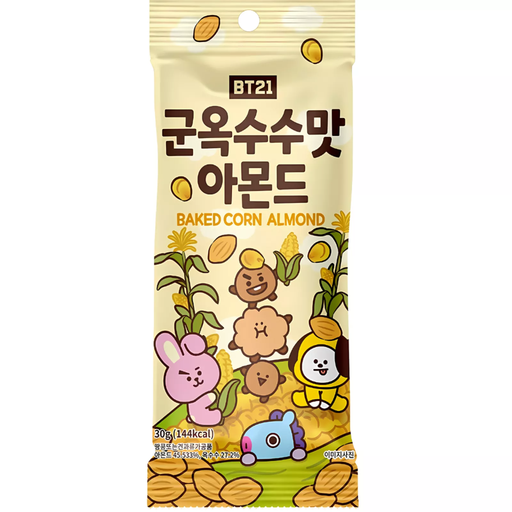
BT21 Baked Corn Flavor Almond 30 g
The 30 g pack is a good fit if you’re looking for a clearly defined snack portion. It’s an almond snack with corn flavour, not plain almonds; check the sugar content, ingredients and allergen information before buying.
View on Joybuy
 No image available
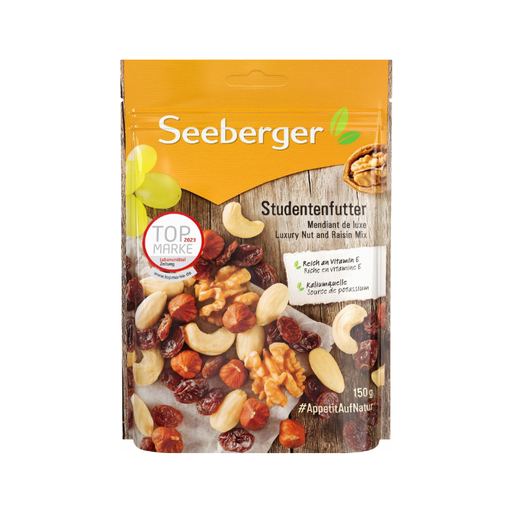
Seeberger Trail Mix 150 g
The 150 g pack is an option if you’re looking for trail mix rather than a single type of nut. Check the sugar content per 100 g and the ingredients: this isn’t the same as Seeberger’s nut kernel mix with no added spices.
View on Joybuy
 No image available
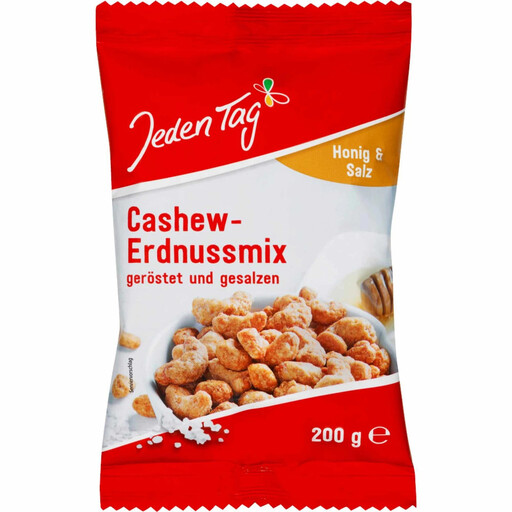
Jeden Tag Honey & Salt Cashew & Peanut Mix 200 g
This 200 g cashew and peanut mix could be a good choice if you’re looking for a honey-and-salt variety. If you’re aiming for a less sweet snack, compare the sugar, salt and ingredients on the specific pack with an unseasoned alternative.
View on Joybuy
 No image available
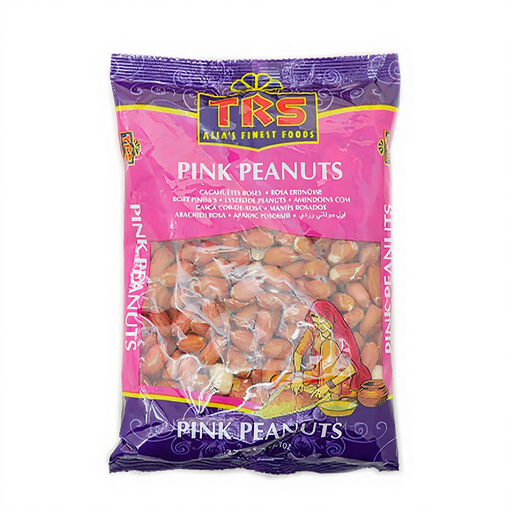
TRS Peanuts Kernels Pink 375 g
The 375 g pack is worth considering if you want to compare peanut kernels with seasoned mixes. Check the ingredients and the pack’s preparation instructions before eating; peanuts are an important consideration if you have a relevant allergy.
View on Joybuy
 No image available
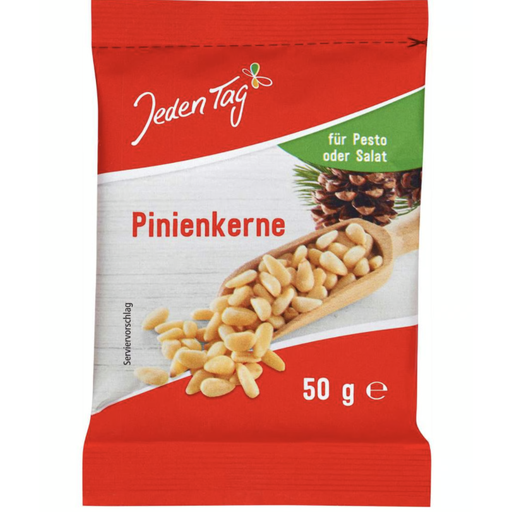
Jeden Tag Organic Pine Nut Kernels 50 g
The 50 g pack offers pine nuts rather than a seasoned nut mix. If you’re planning to have them as a snack, compare the energy value and ingredients per 100 g, and check the allergen information on the pack.
View on Joybuy
Frequently asked questions
Are roasted almonds automatically the lowest-calorie choice?
No, you can’t say that about all roasted almonds. The variety from ALDI SÜD we examined has 502 kcal per 100 g, which is lower than the EDEKA organic cashews we looked at, at 607 kcal, and the flaked almonds we examined, at 609 kcal per 100 g. At the same time, ALDI SÜD lists 56 g of sugar per 100 g for the roasted almonds and notes that values may vary between suppliers. So always compare the specific product.
What can I choose if I prefer less sweet nuts?
Look at plain nuts or mixes with an ingredients list that suits your taste, and check the sugar content too. Seeberger describes its nut kernel mix as unroasted, with no added salt or spices; that description doesn’t automatically apply to other Seeberger mixes. A simple recipe doesn’t necessarily mean fewer kcal per 100 g either.
How can I find out about allergens at a Christmas market stall?
Before buying, ask for allergen information about the specific loose product if it isn’t immediately clear. The Verbraucherzentrale explains that sellers in Germany must also provide information about allergens that have to be declared for loose goods. If you have questions about possible cross-contamination, ask for a clear explanation of how the product is handled.
If there’s no warning about traces, does that mean a nut product is suitable for me?
No, the absence of a warning about traces alone doesn’t tell you whether a product is suitable for you. If you have an allergy, check the information for the specific product and, for loose goods, ask specifically about the allergens that are relevant to you and possible cross-contamination. If the answer remains unclear, don’t assume the product is safe for you.


