If protein is your priority at coffee break, the REWE Bio peanuts included in this comparison provide more than the almonds and nut-and-kernel mixes considered, at 29.8 g of protein per 100 g. But the amount you eat matters too: according to REWE, the peanut product contains 606 kcal per 100 g. Check the ingredients, salt content and allergen information on the specific pack you choose.
Who is this choice important for?
Those who exercise and keep an eye on protein
If you want a snack after a workout or on an active day, compare the protein per 100 g with the amount you’ll actually eat. The German Nutrition Society describes proteins as building blocks for, among other things, muscles; this does not mean that any one nut product has a special effect.
People who plan their snack portions
If you’d like something with your coffee at work, decide how much you’ll have before reaching into the pack. For REWE Bio almonds, REWE gives an energy value of 185 kcal and 7.2 g of protein per 30 g.
People with specific ingredient and allergen requirements
For a single variety, and especially for mixes, check the ingredients list and any information about allergens present or possible traces. Salt content also depends on the specific recipe.
What should you look for when buying?
Start by comparing the nutritional information per 100 g, then work it out for the amount you plan to eat at coffee break. Finally, check the ingredients and salt content of the pack you’ve chosen.
| Criteria |
What to check when buying |
Who it matters most to |
| Protein |
Compare protein per 100 g and in the portion you plan to eat. REWE gives 29.8 g per 100 g for its Bio peanuts and 24 g per 100 g for its Bio almonds. |
After an active day, I want to know how much protein is in the amount I eat with my coffee. Around 46% of consumers would make comparing protein their top priority when buying. |
| Portion and energy |
Check the energy per 100 g and for your own portion. According to REWE, 30 g of its Bio almonds contain 185 kcal. |
If I snack straight from a large pack, it’s easy to lose track of how much I’m eating. That’s why around 27% of consumers would prioritise planning their portions. |
| Ingredients, allergens and salt |
Read the ingredients list, allergen information and salt content per 100 g on the specific pack. Don’t treat roasted and salted varieties as the same as unsalted ones. |
I need to be able to see which types of nuts are included and whether the recipe suits my requirements. Around 27% of consumers would consider this information a priority. |
Common comparison mistakes
-
Assuming the per-100-g figure is a snack portion
The nutrition table per 100 g doesn’t automatically tell you how much is on your plate. Alongside 24 g of protein per 100 g, REWE gives 7.2 g of protein and 185 kcal for a 30 g portion of its Bio almonds.
Decide on your portion, then compare the protein and energy for exactly that amount.
-
Treating salted and unsalted peanuts as the same
The recipe makes a difference: REWE gives 0.01 g of salt per 100 g for its Bio peanuts, while the FARMER roasted and salted peanuts considered here contain 1 g per 100 g according to ALDI SÜD.
If salt matters to you, compare the figures on the specific packs rather than just looking at the type of nut.
-
Looking only at the product name when choosing a mix
EDEKA’s GUT&GÜNSTIG Nut and Kernel Mix contains several tree nuts as well as pumpkin seeds. If you have specific ingredient requirements or allergies, the name ‘nut mix’ isn’t enough to make a decision.
Before buying, read the ingredients list and the allergen and trace information on the specific pack you’ve chosen.
Brands to help guide your choice
REWE Bio
The Bio peanuts and Bio almonds considered here let you compare two individual snack ingredients.
- REWE gives 29.8 g of protein per 100 g for the peanuts. For the almonds, it lists 24 g per 100 g and 7.2 g per 30 g portion.
- Both products may contain traces of other allergens. Always follow the information on the specific pack you choose.
GUT&GÜNSTIG / EDEKA
The Nut and Kernel Mix considered here combines almonds, cashews, hazelnuts and pumpkin seeds rather than just one variety.
- EDEKA gives this mix a protein content of 24.1 g per 100 g.
- The mix contains several tree nuts. EDEKA recommends checking the information on the specific packaging.
FARMER / ALDI SÜD
ALDI SÜD sells a range of nut products under FARMER and FARMER NATURALS, including individual varieties and mixes.
- For the FARMER peanuts considered here, ALDI SÜD gives a protein content of 29 g per 100 g.
- This peanut product is roasted and salted, with 1 g of salt per 100 g. ALDI SÜD notes that nutritional information may vary by supplier.
Seeberger
Seeberger offers individual nuts and kernels as well as mixes; the Power Nut Mix considered here contains walnuts, cashews and almonds.
- Seeberger gives the Power Nut Mix a protein content of 22 g per 100 g.
- The manufacturer notes that the product may contain traces of other tree nuts and peanuts, and warns that whole nuts pose a choking risk for children under four.
Nut products at Joybuy
This selection includes almond, peanut, cashew and pine nut products for a coffee break. For each product, compare the nutritional information and allergen details on the pack with your requirements. Pay particular attention to salt when comparing salted varieties.
 No image available
Seeberger Whole Natural Almonds Extra, 500 g
A single-variety almond option for your coffee break. With a 500 g pack, decide on your portion before using the per-100-g nutritional values to work out what you’ll actually eat.
View at Joybuy
 No image available
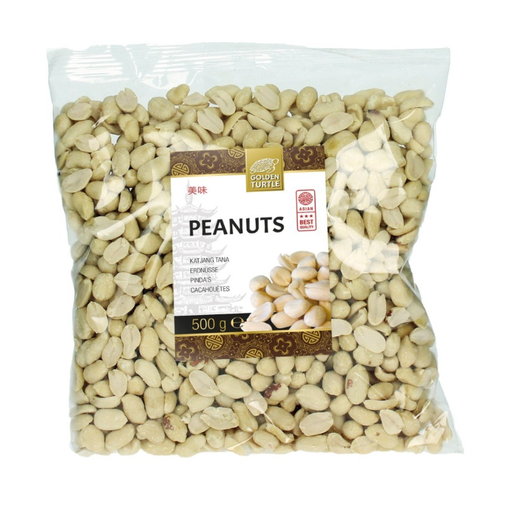
Golden Turtle Peanut Snack, 500 g
If you’d like to compare peanuts with almonds as a coffee-break snack, check the protein and salt per 100 g, as well as the ingredients and consumption advice, for this 500 g pack.
View at Joybuy
 No image available
Seeberger Roasted Unsalted Cashew Kernels, 150 g
A cashew option if you’d prefer a single variety rather than a mix. Despite the ‘unsalted’ description, check the salt content in the nutritional information and plan your portion from the 150 g pack.
View at Joybuy
 No image available
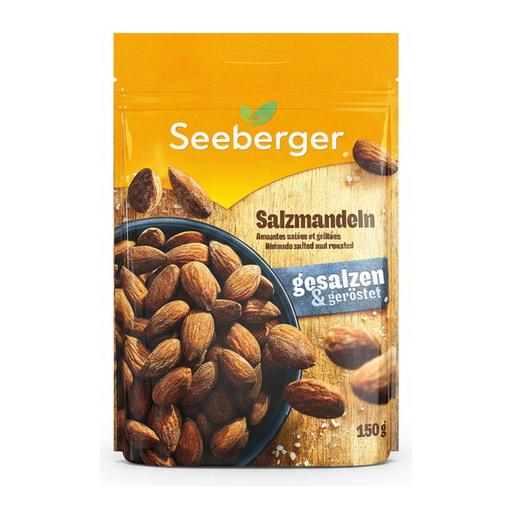
Seeberger Roasted Salted Almonds, 150 g
This 150 g option could suit you if you’re looking for roasted, salted almonds. For your coffee break, compare the salt content in particular with that of an unsalted variety.
View at Joybuy
 No image available
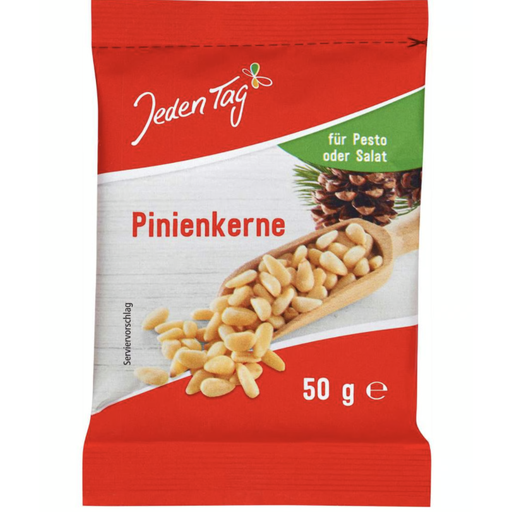
Jeden Tag Organic Pine Nuts, 50 g
Pine nuts are another kernel option for your coffee break. Compare the nutritional values for the amount you’ll actually eat, and read the allergen information on the 50 g pack.
View at Joybuy
Frequently asked questions
Do peanuts or almonds contain more protein?
Of the REWE Bio products compared, the peanuts have the higher protein content, at 29.8 g per 100 g; REWE gives 24 g per 100 g for the almonds. Your portion also matters at coffee break: according to REWE, 30 g of the almonds provide 7.2 g of protein and 185 kcal.
What should I check if I have a nut or peanut allergy?
Before choosing a product, check the ingredients and allergen information on the specific pack. The EDEKA Nut and Kernel Mix considered here contains several tree nuts; for its Bio peanuts, REWE lists peanuts as an ingredient and notes that traces of other allergens may be present.
How should I store nuts for a coffee break at work?
Follow the storage instructions for the product you’ve chosen. REWE recommends storing its Bio peanuts in a dry place and protecting them from heat and sunlight.
Are whole nuts a suitable snack for young children?
Whole nuts should not be offered as a snack to children under four because of the risk of choking. Seeberger specifically highlights this risk for its Power Nut Mix.


