If you’re looking for a protein-focused coffee-break snack, peanuts, almonds, pistachio kernels and nut mixes are all worth considering. REWE gives general protein values of 25 g per 100 g for peanuts, 24 g for almonds and 18 g for pistachios; the values for specific products may differ. So compare the nutritional information on each pack, and take energy, salt, ingredients and allergens into account too – especially if you’re planning to snack around exercise or physical activity.
Who is this selection for?
People focusing on protein
If protein is your main priority for a coffee-break snack, the value per 100 g gives you a starting point for comparing products. The overview of nut varieties from REWE and the nutritional information for specific EDEKA products also show why you shouldn’t assume that general values for a variety apply to every pack.
Active people looking for a snack
A portable portion of nuts could make a handy snack at the office, on the go or after exercise. But you can’t tell whether it suits your needs from the protein value alone: according to Lebensmittelverband Deutschland, nutritional and energy needs vary from person to person and from day to day.
People keeping an eye on salt and allergens
If you prefer unseasoned options or need to avoid certain ingredients, the information on the specific pack is essential. For mixes and individual varieties, check the allergen labelling and any ‘may contain’ warnings as well as the ingredients list.
What should you look for when buying?
Start with the nutritional information per 100 g so you can compare packs of different sizes on a like-for-like basis. Then check which ingredients and warnings matter for the amount you usually snack on.
| Criterion |
What to check |
Who it matters most to |
| Protein |
Compare the protein per 100 g on the specific pack. For a mix, use its own value, not the value for one of the nut varieties it contains. |
If I’m choosing a snack mainly based on its protein value, I want to compare different products on the same basis. For around 42% of consumers, this is the main consideration when choosing. |
| Energy, fat and salt |
Check the energy, fat and salt values per 100 g, and read the ingredients for seasoned varieties. |
I want a small snack whose nutritional values I can weigh up alongside its protein content. Around 33% of consumers prioritise energy and salt information when making this choice. |
| Ingredients and storage |
Check the ingredients, allergen labelling and ‘may contain’ warnings on every pack; store opened products according to the storage instructions. |
If I need to avoid certain ingredients or plan to use a pack over several breaks, I need clear labelling and suitable storage instructions. Around 25% of consumers prioritise suitability and ease of use. |
Common buying and storage mistakes
-
Focusing only on the protein figure
Protein is only one part of the nutritional information. The examples featuring almonds, pistachio kernels and a nut mix described by EDEKA and Seeberger each also contain more than 600 kcal per 100 g.
Compare protein, energy, fat and salt on the same per-100-g basis, then take into account how much you actually plan to eat.
-
Assuming general values for a variety match the product label
Roasting, seasoning and recipes vary. ALDI SÜD also notes that the nutritional information for its roasted nut mix may differ depending on the supplier.
When you buy, check the nutritional information and ingredients on the specific pack rather than relying on a general value for that nut variety.
-
Overlooking allergens in a mix
Seeberger Power Nut Mix contains walnuts, cashews and almonds and, according to Seeberger, may contain traces of other tree nuts and peanuts. Even a single-variety product may carry additional ‘may contain’ warnings.
If you need to avoid allergens, check the ingredients, allergen labelling and ‘may contain’ warnings on every pack.
-
Leaving opened nuts exposed to the air
Poor storage can affect quality. The Verbraucherzentrale Rheinland-Pfalz specifically warns against eating mouldy walnuts, as they may contain aflatoxins.
Store opened nuts in a tightly sealed container in a cool, dry place. Discard any nuts with visible mould.
Brands to consider
Seeberger
Seeberger offers nuts, kernels and mixes. When comparing products for a coffee break, the nutritional information and ingredients for each variety are what matter.
- According to Seeberger, its Power Nut Mix with walnuts, cashews and almonds contains 22 g of protein per 100 g.
- The mix contains several types of nuts, may contain traces of other allergens and provides 638 kcal per 100 g.
EDEKA / GUT&GÜNSTIG / Herzstücke
The products described offer two specific varieties to compare: almonds and shelled pistachio kernels.
- EDEKA lists 24 g of protein per 100 g for GUT&GÜNSTIG Snack Almonds and 20.8 g for Herzstücke Pistachio Kernels.
- These figures apply to these specific products. EDEKA notes that the information may differ from what’s shown on the packaging.
ALDI SÜD / FARMER NATURALS
The range includes individual varieties and nut mixes; the recipe determines which nutritional values can be compared.
- ALDI SÜD gives a protein value of 15 g per 100 g for one roasted nut mix.
- According to ALDI SÜD, this mix may come from different suppliers and have different nutritional values. The pack you buy is the one to check.
Lidl / Alesto
Lidl describes Alesto as a range of natural nuts and dried fruit, as well as seasoned snacks.
- The different product types let you compare individual varieties and mixes using the information on their packs.
- For the variety you choose, check the ingredients, protein and salt in particular; the fact that it’s part of the range doesn’t tell you these details.
REWE / ja!
REWE’s overview of different varieties can be a useful starting point before you choose a specific product.
- REWE gives general values of 25 g of protein per 100 g for peanuts, 24 g for almonds and 18 g for pistachios.
- These are general values for the varieties, not a nutritional guarantee for every REWE or ja! product. Compare the information on the specific pack.
Nut snacks at Joybuy
This selection includes peanuts, almonds, cashews and salted pistachios, offering different options for your coffee break. Check the pack information for the variety you prefer. Raw peanut kernels and ready-to-eat snacks won’t meet the same need for a quick, ready-to-enjoy break.
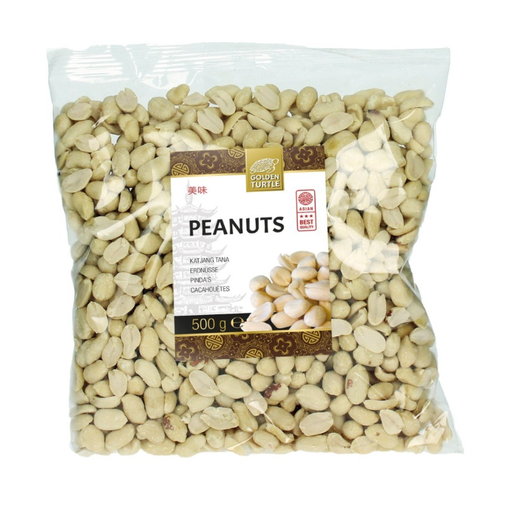 Image unavailable
Golden Turtle Peanuts snack 500 g
A peanut option if you’re looking for a single variety rather than a nut mix for your coffee break. The pack contains 500 g; check the allergen and ‘may contain’ information before choosing. The product description recommends using it within five days of opening.
View at Joybuy
 Image unavailable
Seeberger Whole Natural Almonds Extra 500 g
Whole almonds for anyone who prefers a single variety for their coffee break. This pack contains 500 g; if you have an allergy, check the ‘may contain’ information on the pack too. The product description recommends storing it in a cool, dry place.
View at Joybuy
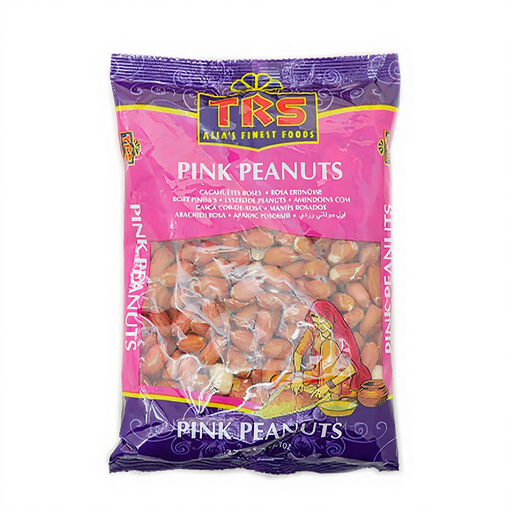 Image unavailable
TRS Peanuts Kernels Pink 375 g
A peanut option for anyone who has time to prepare their snack before their coffee break. The pack contains 375 g. The kernels are described as raw, and the product description recommends roasting them for the best flavour.
View at Joybuy
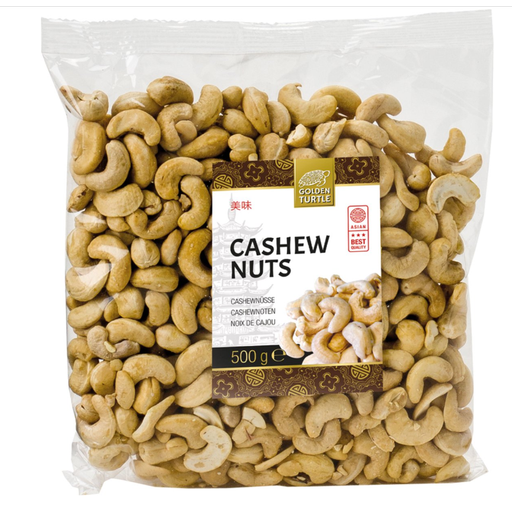 Image unavailable
Golden Turtle Cashew kernels snack 500 g
Cashew kernels for your coffee break if you’d like to compare another single variety alongside peanuts and almonds. The pack contains 500 g. Follow the storage instructions in the product description and plan to use the opened product within five days.
View at Joybuy
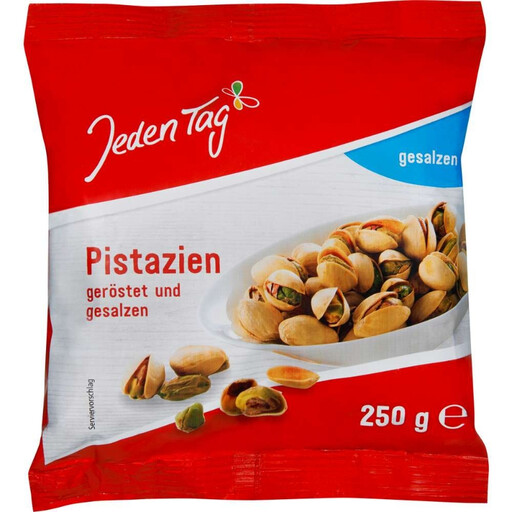 Image unavailable
Jeden Tag Roasted & Salted In-Shell Pistachios 250 g
Roasted, salted pistachios in their shells for anyone who wants exactly this kind of snack. The pack contains 250 g. If salt content matters to you, compare the nutritional information with that of the specific unsalted variety you’re considering.
View at Joybuy
Frequently asked questions
Which nuts are particularly high in protein for a coffee break?
Among the varieties covered here, REWE gives protein values per 100 g of 25 g for peanuts, 24 g for almonds and 18 g for pistachios. These are general values for each variety: EDEKA gives a value of 24 g per 100 g for a specific almond product and 20.8 g for shelled pistachio kernels. The nutritional information on the pack you choose is what matters when you buy.
Is a portion of nuts enough as a recovery meal after exercise?
You can’t tell from the protein value of a portion of nuts alone. According to Lebensmittelverband Deutschland, energy and nutritional needs differ from person to person and from day to day. So think of nuts as one possible part of your diet, not automatically as a complete meal.
Why should I compare nutritional values per 100 g?
The per-100-g value gives you a common basis for comparing packs of different sizes. Lebensmittelverband Deutschland explains that the nutritional information on packaged foods is standardised per 100 g or 100 ml. For your coffee break, you can also consider how much you actually want to eat.
What should I know about nut allergies and storage?
If you have a nut or peanut allergy, check the ingredients, allergen labelling and any ‘may contain’ warnings on the specific pack. Store opened nuts according to the pack instructions. Verbraucherzentrale Rheinland-Pfalz advises discarding mouldy walnuts because they may contain aflatoxins.


