For a calorie-conscious snack at your desk, portioning out your nuts in advance matters more than whether they’re labelled ‘natural’: even nuts with a short ingredients list can be high in energy per 100 g. So compare the energy content with the amount you actually plan to eat, and check the ingredients, salt information and, where relevant, allergen information on the specific pack.
Who should pay particular attention to their choice?
People who plan their portions
You want to take nuts with you for a quick lunch without snacking straight from a large pack. Portioning out an amount in advance and checking the nutrition information can help you keep track of how much you actually eat.
People who prefer simple ingredients
You’re looking for nuts with no added salt or other flavourings. Check the ingredients list for the variety you’ve chosen; the type of nut or brand alone won’t tell you everything.
People who need to check allergens
You check the declared allergens and any ‘may contain’ warnings before buying. The information on the current pack is what matters; a general product description isn’t enough if you have an allergy.
What should you look for when buying?
First, decide how much you want to eat at your desk. Then compare the nutrition information for the specific products and check whether the ingredients and packaging suit that portion. The German Nutrition Society suggests a small handful of nuts as a general guide, not as an individually calculated calorie allowance.
| What matters |
What to check |
Who it matters most to |
| Energy per portion |
Compare the energy per 100 g with the amount you plan to eat; portion it out in advance. |
If I tend to keep eating while I work, I want to decide how much I’ll have beforehand. Around 36% of consumers put portion control first. |
| Ingredients and salt |
Read the ingredients list and check the sugar and salt information for the specific variety. |
I don’t want added sweet or salty ingredients in my desk snack. Around 29% of consumers put this preference for a simple recipe first. |
| Convenience at work |
Check the pack size and consider whether you can easily take a small portion with you separately. |
When there’s hardly any time between meetings, I need a snack that’s easy to portion out in advance. Convenience is the top priority for around 21% of consumers. |
| Allergens and warnings |
Check the allergen labelling and any ‘may contain’ warnings on the current pack. |
If I have a relevant allergy, I need to read the labelling on each individual product carefully. This check is the main priority for around 14% of consumers. |
Common mistakes when choosing
-
Assuming ‘natural’ means ‘low in calories’
A short ingredients list doesn’t tell you how much energy you’ll get from your portion. EDEKA lists 620 kcal per 100 g for one specific variety of ground almonds; this figure doesn’t apply to all nut products.
Compare the nutrition information for the variety you want to buy and decide how much you’ll eat before you start.
-
Eating straight from the large pack
When you snack while working, a planned small portion can easily turn into more without you noticing. ALDI SÜD’s range includes nut products in different pack sizes, but the pack size itself doesn’t define a snack portion.
Put your planned amount into a small container or bag in advance, and store the rest separately.
-
Treating all nut varieties the same
Salted, sweetened, seasoned and plain varieties can differ in their ingredients and nutritional values. Even within the same range, the type of nut alone doesn’t tell you much about the finished recipe.
Compare the ingredients list and the energy, sugar and salt information on each pack.
-
Overlooking ‘may contain’ warnings if you have an allergy
A product containing almonds may also carry warnings about possible traces of other tree nuts or peanuts. EDEKA includes such warnings for one specific almond variety.
If you have an allergy, check all the information on the current pack; don’t rely on the product name alone to decide whether it’s suitable.
Brands to consider
These examples show which details can be useful when comparing specific nut varieties. Information about one variety doesn’t automatically apply to the rest of a brand’s range.
Seeberger
Seeberger offers nuts and nut mixes in a range of varieties and pack formats.
- According to Seeberger, the roasted almonds in the variety described are made from 100% almonds and roasted without oil or added salt.
- ‘No added salt’ doesn’t mean ‘low in calories’. Check the ingredients and planned portion for each variety separately.
EDEKA Herzstücke / GUT&GÜNSTIG
EDEKA publishes ingredients and nutrition information for some almond products, making it easier to compare specific varieties before you buy.
- For one variety of ground almonds, EDEKA lists the ingredients and energy content, as well as warnings about possible traces of peanuts and other tree nuts.
- Ground almonds aren’t the same as ready-to-eat snack nuts. EDEKA also notes that the information may differ from what’s shown on the pack.
FARMER NATURALS bei ALDI SÜD
ALDI SÜD’s range includes both plain and roasted nut varieties, as well as products with additional ingredients.
- For one specific variety of roasted almonds, ALDI SÜD lists 620 kcal and 0.03 g of salt per 100 g.
- These nutritional values don’t apply to other varieties. Range and availability may vary by location and time.
Joybuy products for your desk
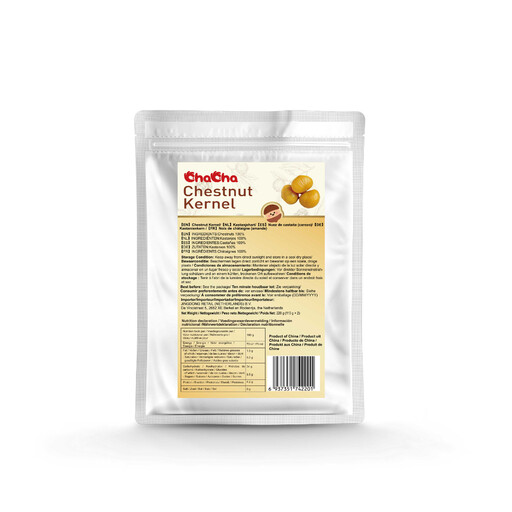
These chestnuts could work as a no-preparation snack at your desk. However, chestnuts aren’t the same as almonds or nut mixes: compare the nutrition information on the specific pack and portion out an amount that suits you.
 No image available
ChaCha chestnut kernels, 220 g
For a snack portion you’ve planned in advance at your desk. The product name states that the pack contains 220 g of chestnut kernels; check the nutrition information and portion out the amount you want, rather than treating the whole pack as one serving.
If you don’t eat it all at once, follow the pack’s storage instructions after opening.
View at Joybuy
Frequently asked questions
Can nuts be part of a calorie-conscious lunch at your desk?
Yes, if you decide on the amount in advance and include the nuts as part of your planned meal. The German Nutrition Society describes nuts as relatively high in energy and suggests a small handful as a general daily guide. By contrast, eating from a large pack while you work makes it harder to keep track of how much you’ve had.
Are roasted nuts always salted?
No. Roasting and adding salt are separate product characteristics. For example, Seeberger describes one variety of roasted almonds as made without oil or added salt. Even so, check the ingredients list and salt information on the specific pack; unsalted doesn’t mean low in calories.
Is the Nutri-Score enough to compare nut snacks?
No. At most, use it as an extra guide if it appears on the pack. The consumer advice centre explains that the label is voluntary and mainly helps you compare products within the same category. For your portion, the ingredients list, nutrition information per 100 g and the amount you actually eat are still important.
What should I look out for if I have a nut or peanut allergy?
Check the allergen labelling and any ‘may contain’ warnings on the current pack every time. For example, an almond product described by EDEKA warns that it may contain traces of peanuts and other tree nuts. The product name alone won’t tell you whether it’s suitable for you.


