What should you look for when buying?
Start by comparing the nutritional values per 100 g and deciding on your portion size. Then check the ingredients and whether the pack can be stored and divided up to suit your camping conditions.
| Criteria |
What to check |
Who is it important for? |
| Energy value and portion |
Check the energy value per 100 g and, where provided, per portion; decide how much you’ll actually take with you. |
I want to snack on the go without accidentally eating a whole pack. That’s why portion control is the top priority for around 36% of consumers. |
| Ingredients, sugar and salt |
Compare the ingredients list and the sugar and salt content per 100 g, especially for seasoned or sweetened mixes. |
A simple recipe matters more to me than a particular flavour. Around 29% of consumers prioritise the ingredients when choosing. |
| Packaging and storage |
Check the pack size and closure, and follow the storage guidance on heat and moisture. |
My snack needs to last for several days at the campsite and be easy to dip into along the way. For around 21% of consumers, this practical aspect comes first. |
| Pack size and availability |
Work out how much your group needs and check local availability before setting off. |
I want to buy enough nuts for several people without packing more than necessary. Around 14% of consumers put planning the quantity and where to buy it first. |
Nutritional values should always relate to the product you’re comparing. REWE lists ja! natural cashew nuts at 601 kcal per 100 g and 180 kcal per 30 g; the Farmer's Snack natural almonds listed there contain 625 kcal per 100 g. These examples also show why ‘natural’ doesn’t necessarily mean low in calories.
Brands to consider
The brands mentioned offer different nut products and recipes. For a useful comparison, look at the information for the specific product you’ve chosen, rather than relying on the brand name alone.
Seeberger
Seeberger offers nuts and nut mixes, among other products. The nut kernel mix described contains hazelnuts, almonds, cashews and walnuts.
- Seeberger says this mix is unroasted and contains no added salt or spices, according to its recipe.
- When a mix contains several types of nuts, it’s particularly important to check the specific ingredients and ‘may contain’ information.
Alesto (Lidl)
Lidl’s Alesto range includes both natural nuts and seasoned snack products.
- For example, you can compare plain cashews or almonds with seasoned varieties to check the ingredients.
- The brand or product type alone won’t tell you the energy value of an individual pack.
FARMER NATURALS / FARMER (ALDI SÜD)
The ALDI SÜD range includes natural nuts alongside roasted and seasoned varieties.
- Different recipes and pack sizes give you specific options to compare when planning your shop.
- For promotional products and changing ranges, check local availability in advance.
REWE / ja! / REWE Bio
The REWE range lets you compare the nutritional values of individual nut products.
- REWE lists ja! natural cashew nuts at 601 kcal per 100 g and 180 kcal per 30 g.
- The values for one listed product don’t apply to other packs of cashews or almonds; check them against the packaging.
EDEKA Bio / GUT&GÜNSTIG
EDEKA offers both plain cashews and a cashew and peanut mix with honey and salt.
- The ingredients lists show the difference between a product containing just one type of nut and a mix with additional ingredients.
- Product information and availability may vary depending on the specific pack or store.
Products for different snacking plans
This Joybuy selection includes chestnut kernels, cashews and peanuts in a range of pack sizes. Chestnuts aren’t directly comparable with cashews or peanuts, so check the nutritional values for each product. For raw kernels, also check the pack for preparation and storage instructions.
 No image available
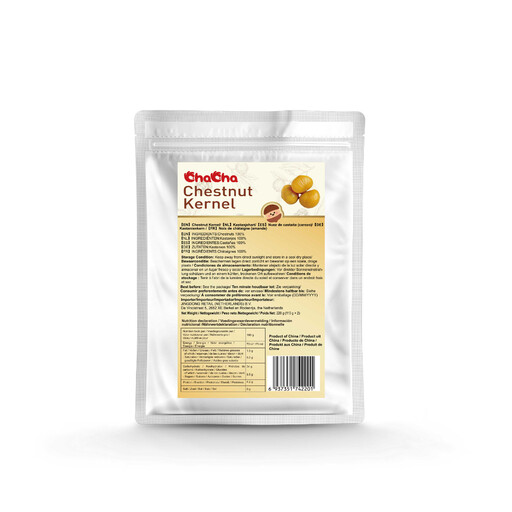
ChaCha Chestnut Kernels, 220 g
If you’re considering chestnut kernels as a camping snack, compare their nutritional values and your planned portion with other products.
The pack contains 220 g. Check the storage and consumption instructions on the specific packaging.
View at Joybuy
 No image available
Seeberger roasted unsalted cashews, 150 g
These roasted cashews may suit you if you’re looking for an unsalted nut snack. For calorie planning, the amount you eat still matters.
The pack contains 150 g. If you have any relevant allergies, check the packaging.
View at Joybuy
 No image available
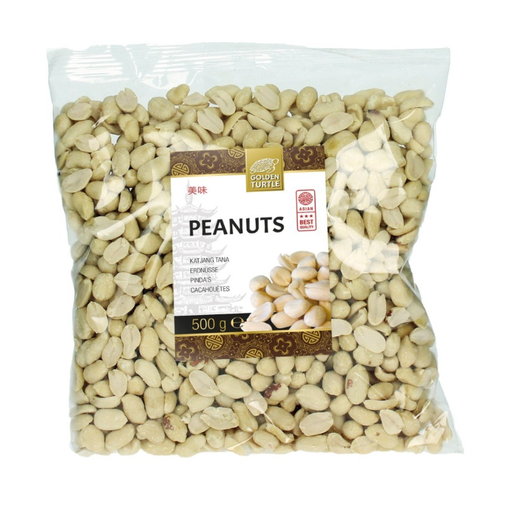
Golden Turtle peanuts, 500 g
The 500 g pack could work for a group, but if you’re keeping an eye on calories, you’ll need to portion it out yourself.
The product information describes the peanuts as raw. Before buying, check the pack for preparation and storage instructions.
View at Joybuy
 No image available
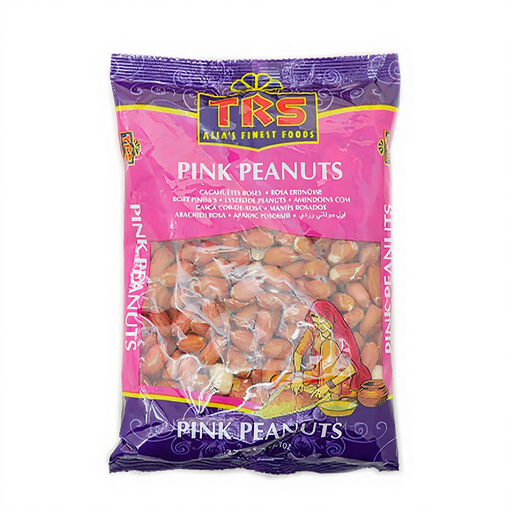
TRS Peanuts Kernels Pink, 375 g
Don’t assume this pack of peanuts is ready to eat straight away at the campsite: the product information describes the kernels as raw.
The pack contains 375 g. Check the preparation instructions and portion out the amount you want before setting off.
View at Joybuy
 No image available
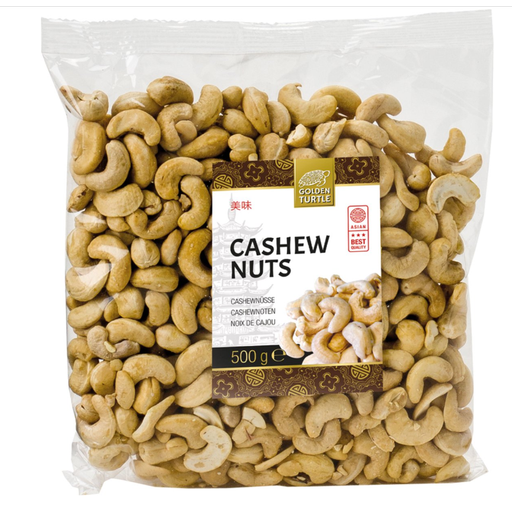
Golden Turtle cashew kernels, 500 g
If you’re taking a 500 g pack of cashew kernels for several days of camping, portioning and storage are particularly important.
The product information describes the kernels as raw and advises eating them within five days of opening. Before setting off, check the preparation and storage instructions on the pack.
View at Joybuy
Frequently asked questions
Can nuts fit into a calorie-conscious festival snack plan?
Yes, as long as you plan how much you want to eat rather than snacking on nuts without limits just because of their ingredients. The German Nutrition Society points out that nuts are relatively high in calories, so compare the energy value on the specific pack with your planned portion.
Are cashews lower in calories than almonds?
Of two natural products listed by REWE, the cashews have the lower stated energy value: ja! natural cashew nuts contain 601 kcal per 100 g, while Farmer's Snack natural almonds contain 625 kcal per 100 g. This is a comparison of these products, not a general rule for every pack of cashews and almonds.
How should I store nuts while festival camping?
Follow the guidance on your pack, and protect the snack from heat and moisture in particular if the instructions say to do so. The natural almonds listed by REWE should be stored in a dry place, away from heat; other products may have different requirements.
What should I check for allergens in nut mixes?
Check the ingredients and ‘may contain’ information on each specific pack, especially if it contains several types of nuts or if allergens are relevant to you. EDEKA lists possible traces of other allergens in its organic cashews, including peanuts, soya and other nuts.


