Shoppers keeping an eye on fat and calories
You’re looking for nuts or a nut snack for lunch and want to be able to verify that it contains less fat. Comparing the nutritional information is more useful than relying on the claim ‘dry-roasted’.


If you want to cut down on fat at lunchtime when working from home, compare the fat content per 100 g and, if a pack is labelled ‘reduced fat’, check which food it is being compared with. Plain or dry-roasted nuts may suit you if you prefer simple ingredients, but that doesn’t automatically make them lower in fat. The portion you plan to eat and any other ingredients matter too.
You’re looking for nuts or a nut snack for lunch and want to be able to verify that it contains less fat. Comparing the nutritional information is more useful than relying on the claim ‘dry-roasted’.
You’d like a short ingredients list, with as little added salt or roasting oil as possible. It’s also important to you not to confuse these qualities with reduced fat.
You compare pack sizes and ingredients, but want to take out a set amount for lunch and store any opened nuts appropriately.
First, decide whether you’re looking for a verifiably lower fat content or simply a plain recipe. Then check the nutritional information and plan how much you’ll have for lunch.
| What matters to you | What to check | Who it matters to |
|---|---|---|
| Comparing fat and calories | Check fat and calories per 100 g; if a product is labelled ‘reduced fat’, also check which comparable food it is being measured against. | If I want to cut down on fat, I need a clear comparison rather than packaging that simply looks light. This would be the main priority for around 50% of shoppers. |
| Plain ingredients | Read the ingredients list and salt information; check roasting claims for the specific product only. | For lunch, I want to choose nuts without extra seasoning or coatings, even if that doesn’t make them lower in fat. For around 30% of shoppers, this would be the top priority. |
| Portion size and storage | Match the pack size to your planned portion and make sure you have a suitable way to store the nuts after opening. | I want to portion out what I’ll eat and store the rest, rather than snacking straight from the pack. Around 20% of shoppers would make this their main consideration. |
Roasting without adding oil doesn’t remove the fat naturally present in nuts. Depending on the type of nut, the Lower Saxony State Office for Consumer Protection and Food Safety reports fat contents of around 40 to 75%.
If a lower fat content is important to you, compare the nutritional information for the specific products per 100 g. If a product claims to be reduced fat, check what it is being compared with.
A different recipe may also differ from plain nuts in its calorie, sugar and salt content. So a single nutritional value doesn’t tell you everything about a product.
Read the ingredients list and compare the nutritional information per 100 g, as well as for the amount you actually plan to eat.
Nuts can go rancid. The Lower Saxony State Office for Consumer Protection and Food Safety advises using chopped or ground nuts promptly, or storing them in an airtight container in the fridge or freezer.
Choose a pack size that suits how much you eat, and throw away any mouldy nuts.
If opened nuts are left for too long, some of the pack may spoil and need to be thrown away.
Even a product made from just one type of nut may carry a warning that it could contain traces of other tree nuts. REWE includes this warning for ja! roasted unsalted cashews, for example.
If you have an allergy, check the ingredients and allergen information on the specific pack; the product name alone isn’t enough.
Nut products with a range of ingredients and preparation methods; worth considering if you want to compare the recipes of individual varieties.
A retailer’s range of different types of nuts and recipes, making it easy to compare individual products.
Lidl’s brand of nuts, dried fruit and other snacks, with a range of recipes.
ALDI SÜD own-label products, including nuts and mixes prepared in different ways.
ALDI Nord’s own-label brand, with a range of nuts and nut mixes.
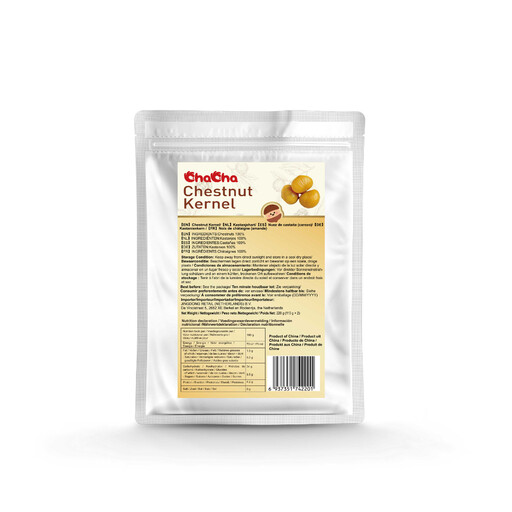
These chestnut kernels could make a snack for lunch when you’re working from home. If you’re specifically looking for an alternative labelled ‘reduced fat’, check the pack information and compare the nutritional values before making your choice.
 No image available
If you’re considering chestnut kernels for lunch while working from home, compare their nutritional information with the alternative you’d normally choose.
Pack size: 220 g.
The claim refers to the fat content compared with a similar food; it doesn’t automatically mean the product is lower in calories overall. So check what it is being compared with and look at the nutritional information per 100 g.
Not just because they’re roasted. ‘Dry-roasted’ means no oil was added during this step of processing. To compare fat content, you’ll need to check the nutritional information for the specific products.
Measure out the amount you want to eat beforehand, rather than taking nuts from the pack you keep in the cupboard. The German Nutrition Society recommends a small handful of nuts a day as a general guide.
Keep them away from heat and light, and seal the pack tightly. The Lower Saxony State Office for Consumer Protection and Food Safety advises using chopped or ground nuts promptly, or storing them in an airtight container in the fridge or freezer. Throw away any mouldy nuts.
No. Always check the ingredients and allergen information on the specific pack. According to the manufacturer, a product made from one type of nut may contain traces of other tree nuts.