Parents focused on texture
You’d like to offer nuts at snack time without serving whole pieces or dry nut flour. The Federal Institute of Public Health recommends nut butter or finely ground nuts stirred into moist food for toddlers.


Whole nuts are not suitable for a toddler’s snack because of the risk of choking. Suitable options include smooth nut butter or finely ground nuts stirred into moist food. If you want to make a more calorie-conscious choice, check the ingredients and energy value per 100 g, and consider how much you’ll actually use rather than assuming one type of nut is low in calories.
You’d like to offer nuts at snack time without serving whole pieces or dry nut flour. The Federal Institute of Public Health recommends nut butter or finely ground nuts stirred into moist food for toddlers.
You want to know which nut a product contains and whether it includes any other ingredients. Compare the ingredients list and read the allergen information on the specific pack.
You’re looking for a nut option for a snack and don’t want to base your choice on the type of nut alone. Consider the energy value per 100 g separately from the amount that goes into the snack.
First check the product’s texture, then its ingredients and allergen information, and finally the energy value alongside the planned snack portion. A short ingredients list doesn’t automatically mean a nut product is low in calories.
| Criteria | What to check when buying | Who it matters to |
|---|---|---|
| Texture | Check that nut butter contains no pieces; only use ground nuts if they’ll be stirred into moist food. | When I’m preparing a snack for my toddler, I don’t want to offer whole nuts or dry nut flour. For around 42% of consumers, the form in which nuts are served is the top priority. |
| Ingredients and allergens | Check the ingredients list for the named nut and any other ingredients; read the allergen and ‘may contain’ information on the pack. | I want to know which nut the product contains and whether any other ingredients matter to us. This check is the top priority for around 33% of consumers. |
| Energy and portion size | Compare the energy values of specific products using the same reference amount, such as per 100 g, and consider how much you’ll use. | For a snack, I want to estimate how much nut butter or ground nuts I’ll actually use. Around 25% of consumers put this first. |
Even plain whole nuts aren’t a suitable snack for toddlers because of the risk of choking. The Federal Institute of Public Health advises against them.
Choose smooth nut butter or stir finely ground nuts into moist food.
A nut butter can contain nothing but nuts and still have a high energy value per 100 g: REWE lists its organic peanut butter, made from 100% peanuts, at 593 kcal per 100 g.
As well as checking the ingredients list, read the nutrition information and consider how much you’ll use in the finished snack.
A peanut spread listed by EDEKA24 contains 87% peanuts as well as palm oil, cane sugar and sea salt. The word ‘creamy’ alone doesn’t tell you what’s in it.
If you’re looking for pure nut butter, check that the ingredients list contains only the nut in question.
As well as naming the nut it contains, a pack may include warnings about possible traces of other allergens. If you have a known allergy, it’s particularly important to check the labelling on the specific product.
Read the ingredients list and allergen information for every product you buy. If you have a known allergy, discuss any questions with a doctor.
Seeberger offers cashew and almond butter, among other products, as an alternative to whole nuts.
REWE’s organic peanut butter is a specific example of a nut butter with a short ingredients list.
ALDI SÜD’s range of nuts can be a starting point for adults looking to prepare nuts as an ingredient.
This selection includes nut butters and ground hazelnuts to stir into moist food. For every pack, check the texture, ingredients and allergen information, as well as the nutrition information.
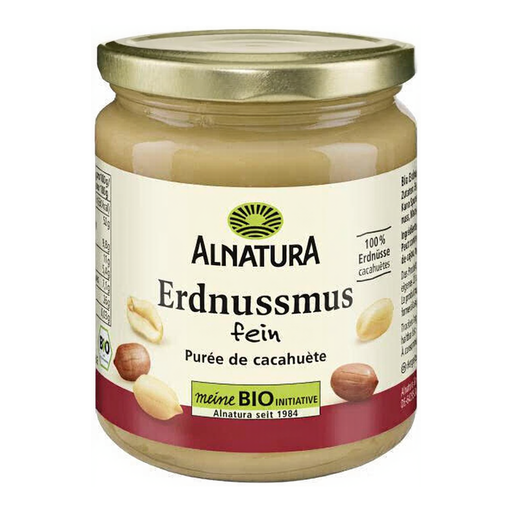 No image available
This butter, described as creamy, may be suitable for a snack without whole nuts, provided the variety you buy contains no pieces.
Check the ingredients and allergen information, as well as the energy value per 100 g, on the pack.
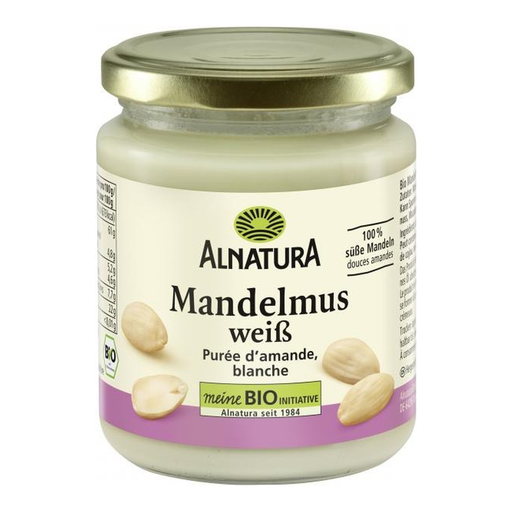 No image available
If you’re considering almond butter instead of peanut butter for a snack, check the texture of the specific variety for any pieces before serving it.
Read the nutrition and allergen information, as well as the storage instructions for after opening, on the pack.
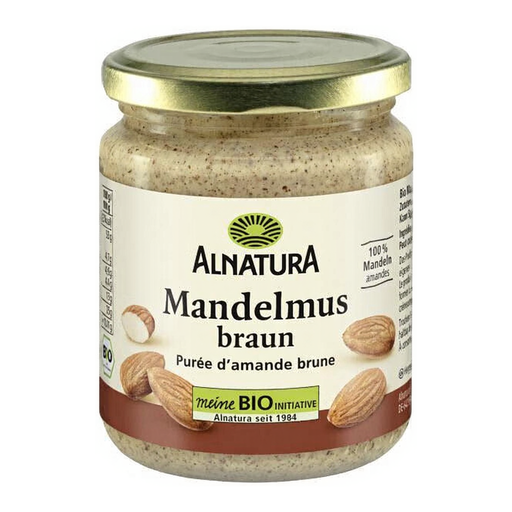 No image available
This butter is another almond option. The words ‘whole almonds’ in the product name don’t replace the need to check whether the finished butter contains pieces.
Compare the energy value per 100 g and check the allergen information on the pack.
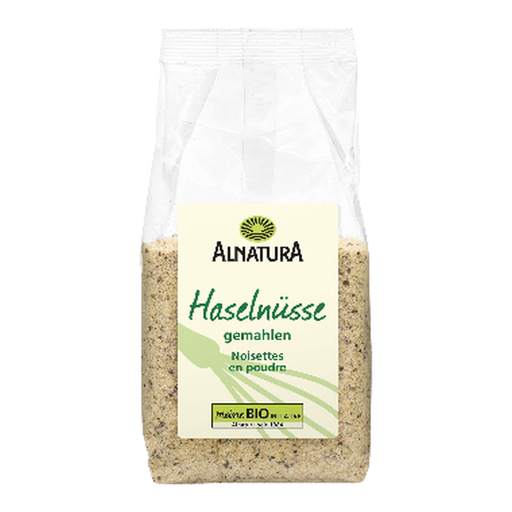 No image available
Ground hazelnuts can be used as an ingredient in a moist snack. Don’t serve them dry to a toddler: make sure they’re finely ground and fully stirred into something, such as yoghurt or porridge.
Check the ingredients, allergen information and energy value on the pack.
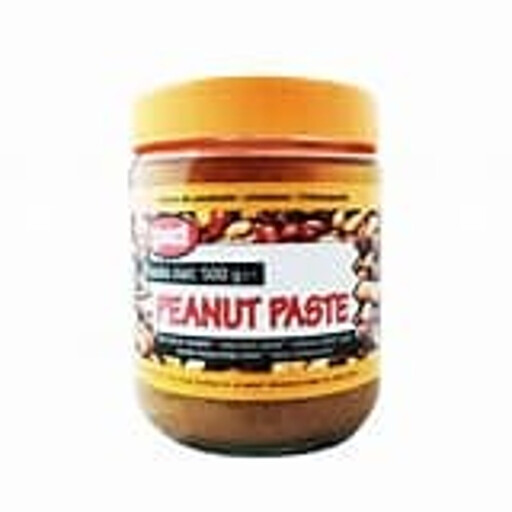 No image available
If you’re looking for peanut butter for a snack without whole nuts, check the texture of the variety you buy for any pieces.
Read the ingredients, allergen information and energy value per 100 g on the pack; the product name alone doesn’t mean it’s low in calories.
No. Whole nuts aren’t a suitable snack for toddlers because of the risk of choking. The Federal Institute of Public Health recommends nut butter or finely ground nuts instead. Ground nuts should be mixed into moist food and never served dry.
You can’t generally identify one type of nut as a low-calorie choice for toddlers. First choose a suitable form, then compare the energy values of specific products using the same reference amount, and consider how much will go into the snack.
A pure nut butter lists only the nut in question in its ingredients. Also check the variety you buy for any pieces, its allergen information and nutrition information. A short ingredients list alone says nothing about how low its energy value is.
Read the ingredients list and the allergen and ‘may contain’ information on the specific pack. If you have a known allergy, don’t rely on the general product description alone, and discuss any questions with a doctor.
You can plan nut butter as part of a snack rather than offering it continually between meals. The Federal Institute of Public Health describes regular meals with food-free intervals of around two to three hours; this doesn’t set a specific portion size for nut butter.