What should you look for when buying?
First decide who the holiday snack is for. Then compare products with similar ingredients and check the ingredients, nutrition information and pack size.
| Criteria |
What to check |
Who is it important for? |
| Fat and energy |
Compare the fat and energy values per 100 g for similar nut products; if a product is labelled “reduced fat”, check what it is being compared with. |
I want to choose a type of nut with a lower fat content without treating a nut and fruit mix as equivalent to plain nuts. This comparison is the main priority for around 27% of consumers. |
| Suitable form for children |
Consider age and texture; if there are allergies, read the ingredients and any allergen warnings on the pack. |
If the snack is for a toddler, a suitable texture matters more to me than the type of nut. This is the main concern for around 33% of consumers. |
| Added ingredients |
Check the salt information and ingredients list for added oil, sugar or seasoning. |
For a day out, I want to choose an unsalted mix and know what else it contains besides nuts. This is the first thing around 20% of consumers look for. |
| Pack and storage |
Choose a pack size and check the storage instructions to suit how you plan to use it over the holidays. |
I take snacks on several days out and want to store any opened nuts properly. This practical consideration comes first for around 20% of consumers. |
Nut snacks at Joybuy
This selection includes roasted, unsalted cashews and trail mix for holiday snacking. When choosing, compare the information on each pack: the fat content of a nut and fruit mix isn’t directly comparable with that of plain cashews.
 No image available
Seeberger roasted cashews, unsalted, 150 g
These cashews are an option if you’re looking for a holiday snack with no added salt. Compare the fat and energy values on the pack with those of other plain nut products; “unsalted” doesn’t tell you about fat content. Whole nuts aren’t suitable for toddlers.
View at Joybuy
 No image available
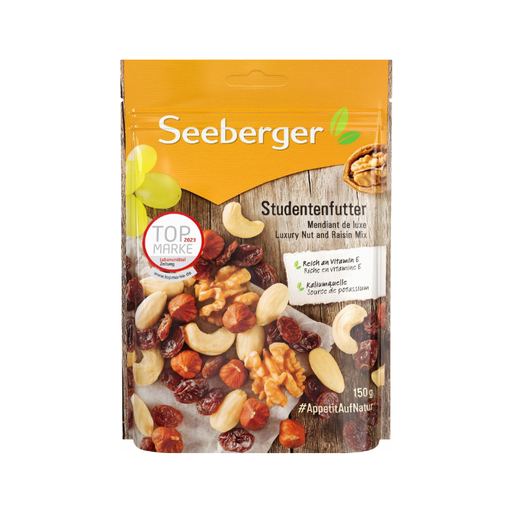
Seeberger Student Mix Trail Mix, 150 g
If you’re looking for trail mix for a day out, check the sugar content and ingredients of the specific mix as well as its fat and energy values. Its fat content shouldn’t be interpreted as a straightforward comparison between different types of plain nuts. Whole nuts aren’t suitable for toddlers.
View at Joybuy
Frequently asked questions
Are “reduced-fat” nuts automatically low in calories?
No. A reduction in fat doesn’t, by itself, tell you how much energy the product contains. Compare the nutrition information per 100 g and, if a claim is made, check which product it’s being compared with.
Which types of nuts contain less fat than others?
REWE’s nutrition overview lists 42 g of fat per 100 g for cashews and 48 g for peanuts, compared with 62 g per 100 g for walnuts and hazelnuts. This compares the types of nuts included in that overview; for a product you buy, check its own nutrition information.
Are whole nuts a suitable holiday snack for toddlers?
No. Whole nuts pose a choking risk for toddlers. The Federal Institute of Public Health suggests nut butter or finely ground nuts as alternatives; if your child has a known allergy, check the labelling on the specific pack.
How should I store an opened pack of nuts?
Shelled and chopped nuts should be kept in an airtight container. The Federal Centre for Nutrition recommends storing them in the fridge if possible. Don’t eat nuts that smell unusual or taste rancid.
What should I check if I have an allergy or am buying a nut mix?
If you have a known allergy, check the ingredients and allergen warnings on the specific pack. Mixes may contain different tree nuts or peanuts; the words “nut mix” alone don’t tell you everything that’s inside.


