What should you look for when buying?
Start by checking the fat and energy per 100 g, then work it out for the amount you actually plan to eat. You can then compare roasting methods, ingredients and pack sizes to find the right option for you.
| What matters |
What to check |
Who it matters to |
| Fat and energy |
Compare the fat and energy per 100 g with the planned portion size in grams. |
If I want to include a small amount of nuts, I need to know how much fat and energy that portion contains. This is the main consideration for around 33% of consumers. |
| Oil, salt and ingredients |
Read the ingredients list, salt information and the exact roasting description. |
For a savoury snack, I want a roasted flavour without losing sight of the added ingredients. This choice is a priority for around 27% of consumers. |
| Nutrition claims |
Compare the specific claim on the pack with the fat and energy per 100 g and the stated basis of comparison. |
If a pack says “reduced fat”, I want to understand what it is being compared with and the product’s actual nutritional values. This is the main consideration for around 27% of consumers. |
| Pack size and storage |
Choose a pack size that suits how much you plan to use, and make sure you can store it in an airtight container. |
I want to be able to finish an opened pack without constantly snacking straight from it or leaving leftovers for too long. This is a priority for around 13% of consumers. |
A short ingredients list does not prove that a product is low in fat. EDEKA states that a plain cashew product containing only cashew nuts has 47,1 g of fat per 100 g. By contrast, the European Commission sets a limit of no more than 3 g of fat per 100 g for a “low-fat” claim on solid foods.
Nuts and seeds at Joybuy
This selection includes roasted cashews, pumpkin seeds and walnut kernels. They can be enjoyed in a carefully measured portion or used as an ingredient, but they are not reduced-fat products.
 Image unavailable
Seeberger unsalted roasted cashew nuts, 150 g
For anyone looking for roasted cashews and wanting to choose their own snack portion.
Described as unsalted and roasted; pack size: 150 g. Check the current fat and energy information on the pack for your planned portion. Unsalted does not mean low-fat.
View at Joybuy
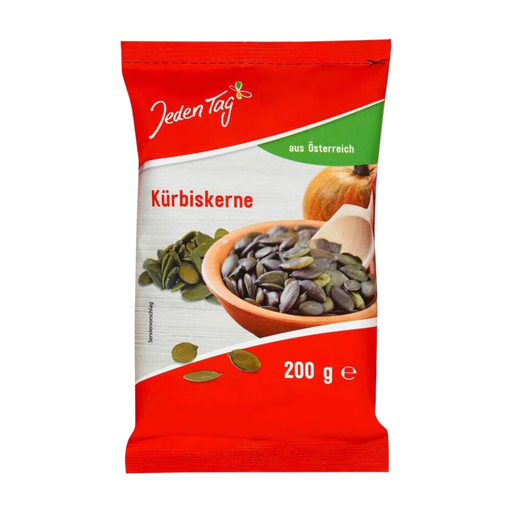 Image unavailable
Jeden Tag shelled pumpkin seeds, 200 g
For anyone considering shelled seeds instead of nuts as an ingredient that’s easy to portion.
Described as shelled pumpkin seeds; pack size: 200 g. Compare the fat and energy using the current nutrition information and the amount you plan to use.
View at Joybuy
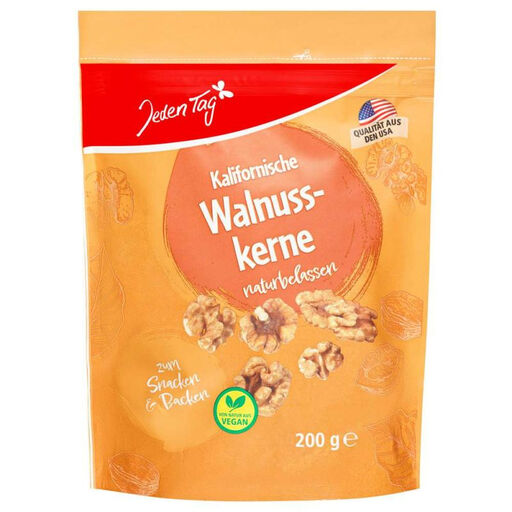 Image unavailable
Jeden Tag California walnut kernels, 200 g
For anyone who wants to use walnut kernels as an ingredient or enjoy a pre-measured portion as a snack.
Described as California walnut kernels; pack size: 200 g. Use the fat and energy information on the current pack to work out the values for your planned portion, rather than treating the whole pack as one serving.
View at Joybuy
Frequently asked questions
Are nuts a low-fat choice on a lower-fat diet?
No. Nuts are usually not low in fat: the German Nutrition Society points to their high natural fat content. If you want to include nuts, compare the nutrition information and measure out your portion before eating.
What does “roasted without oil” mean for nuts?
It means the nuts were roasted without added oil, not that they are low in fat. Also check the full ingredients list and the fat per 100 g.
Does “reduced fat” mean the same as “low-fat”?
No. “Reduced fat” is a comparative claim, while “low-fat” is subject to a fixed fat limit. The European Commission sets a limit of no more than 3 g of fat per 100 g for a “low-fat” claim on solid foods. For a reduced-fat claim, you should also check the basis of comparison and the nutrition information for the specific product.
Which allergen information should I check on a nut mix?
Always check the current labelling on the specific pack. Read both the ingredients and any warnings about traces, rather than relying on information for another mix or a similar product.
How should I store opened nuts?
Store opened nuts in an airtight container in a cool place, if possible. The Federal Centre for Nutrition recommends storing them in the fridge and notes that contact with oxygen can make nuts turn rancid.


