If you want to significantly limit the fat content of your snack, nuts are not the obvious first choice: even without added oil, nuts retain their natural fat. If you need to avoid nuts or peanuts because of an allergy, choose an alternative and check its current ingredients and allergen information.
Which choice is right for you?
People with a nut or peanut allergy
A nut is not automatically suitable for you just because it is natural or unsalted. Look for an alternative that does not contain the allergen you need to avoid, and check the ingredients and any precautionary allergen information on the current packaging. The Verbraucherzentrale (German consumer advice centre) points out that accidental traces do not have to be labelled by law.
People with a strict fat limit
If the fat content per 100 g or per portion determines your choice, compare nuts with other types of snack. The German Nutrition Society describes lentils, beans and peas as low-fat pulses; peanuts should not be considered the same way.
People planning to have a small portion of nuts
If nuts are an option for you, choosing a variety with a short ingredients list can make it easier to decide. Even so, check the fat content for your planned portion, as well as the ingredients and allergens on the specific pack.
What should you look for when buying?
Nut-free alternative
When to consider it: If you need to avoid nuts or are looking for a snack with a lower fat content than nuts.
What to bear in mind: The taste and texture will differ from nuts; the alternative’s ingredients and allergens must also meet your needs.
Nuts with no added oil
When to consider them: If nuts are suitable for you and you want a planned portion with a simple recipe.
What to bear in mind: The natural fat content remains. EDEKA lists its roasted almonds with no oil or salt as containing 63 g of fat per 100 g.
| What matters | What to check when buying | Who it matters to |
|---|
| Allergens |
Check the ingredients list on the current pack for the specific allergen you need to avoid; take any precautionary allergen information into account. |
If I need to take a nut or peanut allergy into account, I can’t base my snack choice solely on terms such as “natural”. Around 39% of consumers put avoiding the relevant allergen first. |
| Fat content |
Compare the fat per 100 g in the nutrition information and take your planned portion into account. |
If you have a strict fat limit for your snack, “no added oil” is not enough as a selection criterion. Around 38% of consumers prioritise the fat content. |
| Simple recipe |
Compare the ingredients of a single variety of nut with those of mixed or seasoned options. |
If nuts are an option for me, I’d prefer a straightforward ingredients list to a mix with additional ingredients. This is the main priority for around 23% of consumers. |
Common misconceptions
-
“No added oil” means “low fat”
Nuts can still be high in fat even without added oil. EDEKA lists its roasted almonds with no oil or salt as containing 63 g of fat per 100 g.
Compare the fat content per 100 g and take your planned portion size into account.
-
“Free from” replaces naming the allergen
A claim such as “unsalted” doesn’t tell you whether the product contains the nut or peanut you need to avoid. The Verbraucherzentrale also says that accidental traces do not have to be labelled by law.
First identify the allergen you need to avoid, then check the ingredients and any precautionary allergen information on the specific pack.
-
A nut mix is treated like a single variety of nut
Mixes can contain several tree nuts and other ingredients. For example, the nut and kernel mix described by EDEKA contains almonds, cashews and hazelnut kernels.
For mixes, read the full ingredients list rather than assuming the information for a single variety of nut applies.
-
Online information replaces the pack you buy
EDEKA points out that product information shown online may differ from the packaging. This is particularly important if you need to avoid certain ingredients or allergens.
Use online information to help you shortlist products, then check the ingredients, allergens and nutrition information on the pack you actually buy.
Brands to consider
The brands mentioned offer a range of nut products; the details for each individual variety are what matter when making your choice.
Seeberger
Seeberger says its snack range includes both natural and prepared options.
- A starting point for comparing plain nuts with sweet or savoury varieties.
- Ingredients, allergens and fat content need to be checked for each product individually.
Alesto
Lidl describes Alesto as offering natural nuts, mixes and seasoned snacks.
- The different varieties make it possible to compare a range of ingredients lists.
- The brand alone doesn’t tell you about the allergen or nutrition profile of a pack.
EDEKA / GUT&GÜNSTIG
EDEKA describes individual nut products and mixes, with details of their ingredients and nutritional values.
- The roasted almonds with no oil or salt and the nut and kernel mix illustrate different recipes.
- EDEKA says online information may differ from the packaging, so check the pack you buy.
FARMER NATURALS / FARMER
ALDI SÜD lists natural almonds, as well as roasted and salted snack almonds, under these ranges.
- You can compare the varieties mentioned by looking at their ingredients and nutrition information.
- Check the details on the specific pack, especially if you need to avoid certain ingredients.
REWE Beste Wahl / REWE Bio
REWE’s almond range includes own-brand products in a variety of styles.
- The products listed offer a starting point for comparing whole and roasted almonds.
- A category page doesn’t provide a single ingredients, allergen or fat profile that applies to every variety.
Snack alternatives at Joybuy
This selection features crispbread and a konjac snack as alternatives to nuts. Compare their nutrition information and, if you have an allergy, check the current labelling on the pack.
 No image available
Schär Gluten-Free Dark Crispbread, 125 g
Crispbread offers a different kind of snack if you’re looking for an alternative to nuts. Compare the fat and salt content, and if you have an allergy, check the ingredients and any precautionary allergen information on the pack.
View at Joybuy
 No image available
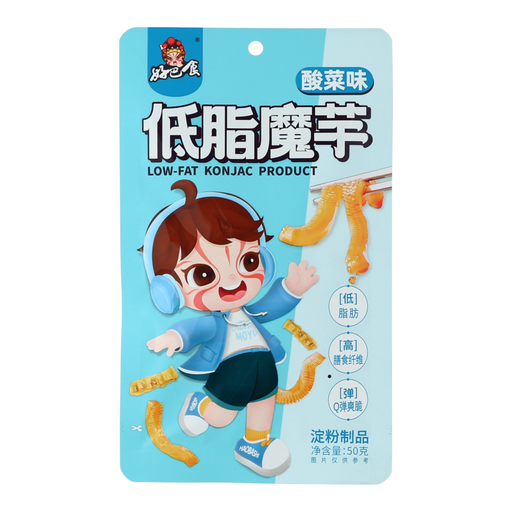
HUI JI Low-Fat Konjac, Sour Mustard Flavor, 50 g
A konjac snack is an alternative to nuts if you’re looking for something different. Check the fat and salt content, as well as the allergen information on the current pack; the specific labelling is particularly important for soya and possible cross-contamination.
View at Joybuy
Frequently asked questions
Are nuts a suitable main snack if I want to significantly limit my fat intake?
Nuts aren’t the obvious choice if you’re looking for a low-fat snack. Compare the fat content per 100 g and for your planned portion; the German Nutrition Society lists lentils, beans and peas as low-fat pulses, which are another food group to consider.
Are almonds with no added oil or salt low in fat?
No. These claims don’t describe the almond’s natural fat content. EDEKA lists its roasted almonds with no oil or salt as containing 63 g of fat per 100 g.
If I’m allergic to the nut it contains, is a nut product a suitable “free from” choice?
No, not when it comes to the allergen it contains. For example, if you need to avoid almonds, a product containing almonds isn’t a suitable alternative. For a different snack, check its current ingredients and any precautionary allergen information for the allergen you need to avoid.
Are possible traces of allergens always listed on the pack?
No. The Verbraucherzentrale explains that accidental contamination, known as traces, does not have to be labelled by law. So the absence of a precautionary allergen statement alone does not prove that a product is suitable for your allergy.


