For anyone keeping an eye on fat and energy
If you want nuts as part of your office break, the nutrition information per 100 g and your portion size will tell you more than a single claim on the front of the pack.


When choosing nuts for your office break, don’t rely on the ‘reduced fat’ claim alone. It describes a comparison and doesn’t automatically mean the snack is low in fat or energy. Compare the nutrition information per 100 g and for the portion you plan to eat, and check the salt content, ingredients and allergen information on the specific pack as needed.
If you want nuts as part of your office break, the nutrition information per 100 g and your portion size will tell you more than a single claim on the front of the pack.
If you want a savoury snack with no added salt, look for products labelled accordingly. With roasted nuts, it’s also worth checking the ingredients list for additions such as oil.
If you take a snack to work, compare the pack size with the portion you have in mind, or portion out some nuts from a larger pack in advance.
First decide what matters most to you: comparing fat and energy, the recipe or a portion that’s easy to plan. Then use the information on the specific pack to make your comparison.
| Criteria | What to check | Who it matters to |
|---|---|---|
| Fat and energy | Compare fat and energy per 100 g, and take your planned portion into account. For ‘reduced fat’ products, also check what they’re being compared with. | If I’m choosing an office snack based on its actual fat and energy content, the ‘reduced fat’ claim alone isn’t enough. Around 42 % of consumers put this comparison first. |
| Salt and ingredients | Check the salt information and ingredients list, especially for roasted or seasoned varieties. | I want to know whether my snack contains salt or oil as well as nuts. This is the priority for around 33 % of consumers. |
| Taking it to work and portion size | Compare the pack weight with the amount you want to snack on; if you buy a larger pack, portion some out in advance. | When I’m on the go, I need an amount that’s easy to plan for my working day. Around 25 % of consumers put easy portioning first. |
A reduced-fat claim refers to a comparable product. On its own, it tells you little about the fat and energy in your portion.
Compare the nutrition information per 100 g and take into account how much you actually plan to take with you.
Roasted nuts can contain other ingredients even if they’re unsalted.
Check the ingredients list if, for example, you want to avoid added oil or seasoning in your snack.
It can be harder to keep track of how much you planned to eat when you have an open pack on your desk.
Portion out the amount you want in advance, or check whether the weight of a smaller pack matches your planned portion.
Nut mixes can contain different tree nuts or peanuts. For anyone with a relevant allergy, the contents of the specific pack are what matter.
Check the ingredients list and allergen information again before buying, especially if the product or recipe has changed.
Seeberger offers a range of nut products, including roasted varieties and smaller packs. Compare the recipe of each product rather than choosing on brand name alone.
The ja! Nusskernmischung naturell listed by REWE is an option if you’re looking for an unsalted, unroasted nut mix.
The EDEKA24 range includes roasted cashews and unsalted peanuts under the EDEKA Herzstücke brand.
Lidl describes Alesto as a range of natural and enhanced nuts, as well as nut mixes.
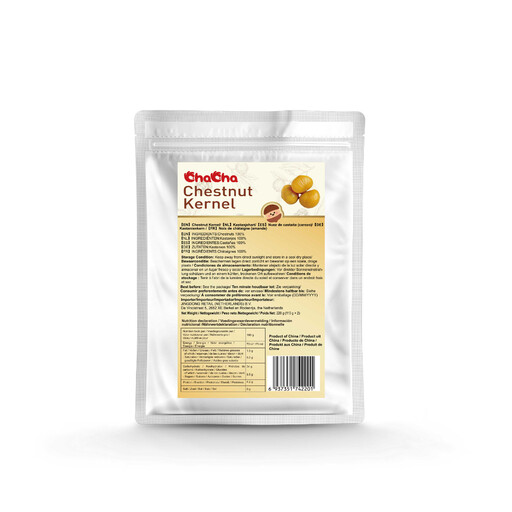
If you’re considering packaged chestnut kernels as an office snack instead of a classic nut mix, compare their nutrition information and pack size with the portion you have in mind. You can’t assume they’re ‘reduced fat’ based on this alone.
 No image available
These packaged chestnut kernels are worth considering if you’re also looking for an alternative to a nut mix for your office break. Before buying, compare the nutrition information and check whether the pack size suits the amount you plan to snack on.
No. The claim describes a reduction compared with a similar product; it doesn’t necessarily mean the product is low in fat or energy. Compare the nutrition information per 100 g and for the portion you plan to eat.
As a general guide, the German Nutrition Society recommends eating a small handful of nuts a day. Also check the pack weight for your snack: the portion in a pack may not match the amount you want to take with you.
Not necessarily. For its roasted almonds, Seeberger says they’re roasted without oil or added salt; you can’t assume the same applies to other products. Check the ingredients list on the specific pack to see whether it contains oil.
Check the ingredients list and allergen information for every product rather than relying on the brand name or product image. According to the consumer advice centre, information about allergens in a product is part of food labelling. Also check warnings about possible traces if they’re relevant to your allergy.