
Lieferung heute & morgen

Qualitätsgarantie

Willkommens-Angebote freischalten: KOSTENLOSE Lieferung | Bis zu 80 % RABATT | Kostenlose 30-Tage-JoyPlus-Testphase
App herunterladen
Anyone looking to buy nuts online will quickly find a huge selection: natural kernels, roasted snacks, seasoned mixes, trail mixes and large packs for cooking or stocking up. Product images often look similar, but the differences can be found in the ingredients list, nutrition table, allergy information and pack size.
As a Joybuy Product Recommendation Officer, I provide an objective overview of the most important purchasing criteria. This makes it easier to decide whether a nut mix is suitable for an everyday snack, a celebration, or cooking and baking.
For almonds, walnuts or Brazil nuts, “natural” may simply mean that no seasoning has been added. The ingredients list is what matters. Natural almonds should ideally contain almonds and nothing else. Roasted products, on the other hand, may also contain oil and salt.
A mix can contain additional ingredients too: trail mix with dried fruit often includes sugar or vegetable oil in the fruit. If you want to avoid unnecessary additives, check the ingredients and their percentages rather than relying solely on terms such as “natural” or “premium”.
A 500-gram pack is not automatically cheaper than two smaller bags. For a fair comparison, check the price per 100 grams. At the same time, it is important to consider how quickly the product will be used. A large pack of nuts can be practical for families, parties or regular baking, but once opened it will lose its crunch more quickly if it cannot be resealed.
With roasted and salted peanuts, pistachios or seasoned mixes, the salt content can be considerably higher than in natural products. The packaging may also state that the product contains traces of other nuts, peanuts, sesame, milk or cereals containing gluten.
If you have a nut allergy, the complete labelling on the product page and packaging is decisive. Warnings such as “May contain other nuts” should not be ignored. Whole nuts can also pose a choking hazard for young children.
The ingredients list shows whether you are buying a single-ingredient product or a seasoned mix.
It is worth comparing the nutritional information per 100 grams. Nuts naturally contain a lot of energy and fat. This is not a judgement on quality, but simply an objective product characteristic. Depending on your needs, individually portioned bags or resealable packaging may be practical.
The variety affects the flavour, texture and possible uses:
For storing larger quantities, keep them somewhere cool and dry, away from light. After opening, an airtight container is recommended. A rancid smell or noticeably changed flavour is a reason not to use the product.
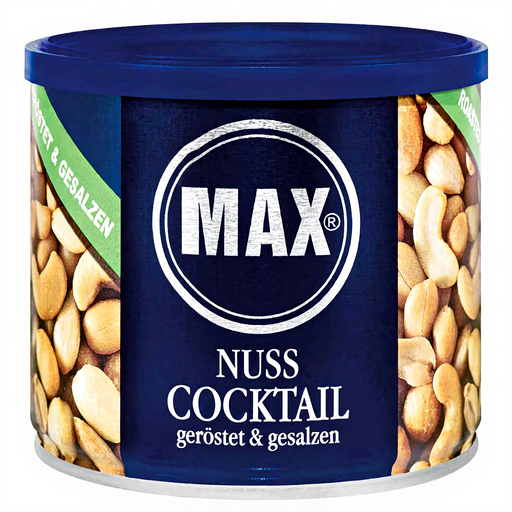
Why this product suits this profile: The 250-gram tub combines roasted peanuts with cashews, blanched almonds and hazelnuts. It gives beginners several varieties in one compact pack.
The ingredients list clearly states the proportions: 50% roasted peanuts. Oil and table salt are also listed, so this mix should not be confused with a natural selection.
22 g of protein and 1.0 g of salt per 100 g according to the product information; resealable 250-g tub for storage and portioning.
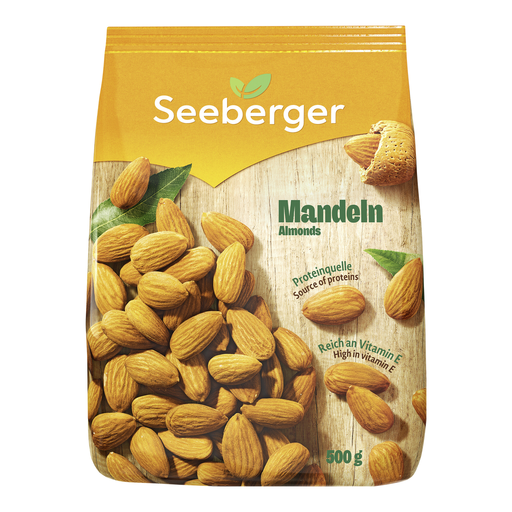
Why this product suits this profile: The pack contains whole almonds with no other listed ingredients. They are suitable as a snack and for cereals, salads, baked goods or homemade almond milk.
The ingredients statement says almonds. However, warnings about possible traces of cashews, peanuts and other tree nuts remain relevant for allergy sufferers.
500 g contents, 24 g of protein and 0.01 g of salt per 100 g according to the product information; versatile for eating raw or roasting.
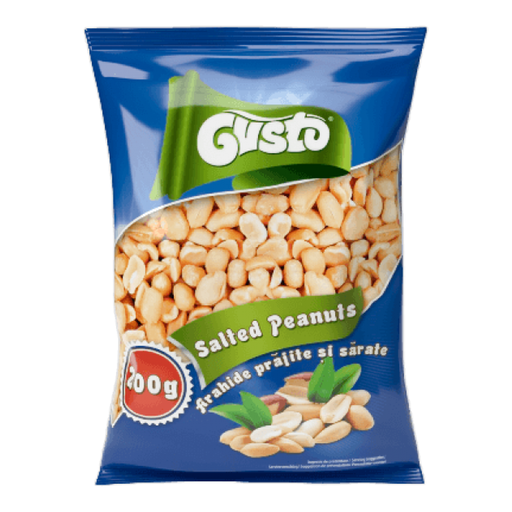
Why this product suits this profile: The 1,000-gram pack is designed for larger households, parties and regular use. Roasted peanuts are ideal as a snack or for creating your own mixes.
The composition is stated as 96% peanuts, 3.3% sunflower oil and 0.7% salt. This makes it easy to assess the seasoning objectively before buying.
1 kg net quantity, 28 g of protein and 0.7 g of salt per 100 g according to the product information; suitable for vegetarian and vegan diets.
Nuts contain a high proportion of fat and should therefore be protected from heat, moisture and direct sunlight. After opening, a well-sealed container helps preserve the desired crunch, but it does not replace checking the best-before date.
With large packs, it is sensible to transfer only part of the contents into your everyday storage container and keep the rest sealed as tightly as possible. Natural walnuts, pine nuts and macadamia nuts in particular should not be left open unnecessarily long. Always follow the specific storage instructions provided by the manufacturer.
We have put together a complete, regularly updated list of products that fully meet these strict selection criteria and the safety regulations applicable in the EU.
Natural almonds, walnuts, pistachios, macadamia nuts and peanuts are plant-based products by nature. With seasoned mixes or trail mix, check the ingredients, as they may contain honey, milk ingredients or flavourings. Trace warnings are also relevant if you have allergies.
This depends on the variety, packaging and storage conditions. The best-before date applies to unopened packaging stored under the stated conditions. After opening, nuts should be stored somewhere dry and cool in an airtight container and used promptly. If they smell rancid or have an unusual flavour, the product should be thrown away.
For sauces, pesto, salads and many baking recipes, unsalted nuts are more flexible because you can control the salt and roasted flavours yourself. Roasted nuts, on the other hand, are ready to enjoy as a snack or use as a topping. The deciding factors are the recipe, your preferred flavour and the product’s ingredients list.