Calorie-conscious picnic-goers
You want to take nuts with you and compare their energy per 100 g and serving size. If you’re choosing a seasoned product, you also check the ingredients.


For a calorie-conscious summer picnic, compare the energy per 100 g of different nuts and plan your portion rather than labelling any one type as low in calories across the board. The plain cashews and almonds listed by EDEKA contain 603 and 619 kcal per 100 g respectively. A Seeberger mix listed by REWE is lower at 479 kcal, but half of it consists of partly sweetened dried fruit and it contains 36 g of sugar per 100 g.
You want to take nuts with you and compare their energy per 100 g and serving size. If you’re choosing a seasoned product, you also check the ingredients.
You’re looking for something different to share with a group. The amount of sugar or salt in a mix depends on the specific product – for example, on how much partly sweetened dried fruit it contains.
You need to know which allergens are in a particular product or may be present as traces, and how to store any leftovers after the picnic.
Start by comparing the nutritional information per 100 g and think about how much you want to take with you. Then check the ingredients, labelling and ease of use to see whether a product is right for your picnic.
| Criterion | What to check | Who is it important for? |
|---|---|---|
| Energy and portion size | Compare kcal per 100 g on the same basis and decide how much to take with you. | If I don’t want to keep eating from a large bag without noticing at the picnic, planning a portion matters to me as much as the nutritional value. Around 33% of consumers prioritise comparing calories and portion sizes. |
| Ingredients, sugar and salt | For mixes, check the amount of dried fruit and sugar per 100 g; for salted nuts, check the ingredients and salt per 100 g. | A sweet mix can work for me, as long as I weigh up its sugar content against the portion of nuts I want. Around 27% of consumers focus first and foremost on differences in ingredients, sugar or salt. |
| Transport and leftovers | Check the pack size and whether it can be resealed; follow the storage instructions for opened products. | If we’re sharing a snack and have some left over, I want it to be easy to manage the amount and seal the leftovers. This is the main consideration for around 20% of consumers. |
| Allergen labelling | Read the allergens highlighted in the ingredients list and check the specific pack for possible traces. | When I’m shopping for others, I need to be able to identify which nuts and other allergens are relevant to the group. Specific allergen labelling is the top priority for around 20% of consumers. |
EDEKA points out that nuts are generally high in energy. A lower figure compared with other nuts doesn’t make a product low in calories overall.
Compare the energy figures per 100 g and decide what portion to pack for your picnic.
The Seeberger Nuts ’n’ Berries mix listed by REWE contains 479 kcal and 36 g of sugar per 100 g; half of the mix consists of partly sweetened dried fruit.
If sugar content matters to you, check the ingredients list and the proportions of nuts and dried fruit as well as the energy figure.
Among the GUT&GÜNSTIG products listed by EDEKA, plain cashews contain 603 kcal and 0 g of salt per 100 g. The version with sunflower oil and salt contains 621 kcal and 0.8 g of salt per 100 g.
When comparing similar nut products, check each one’s ingredients list, as well as its energy and salt per 100 g.
Even products made with just one type of nut may carry warnings about possible traces of other allergens. The Federal Centre for Nutrition recommends storing opened nuts in an airtight container, preferably in the fridge.
Check the label for everyone who’ll be sharing, keep the product information handy and seal any leftovers in an airtight container after the picnic.
REWE lists individual nuts, nut mixes and mixes with dried fruit from Seeberger.
EDEKA’s own-brand range includes plain almonds and cashews, as well as roasted, salted cashews.
REWE lists slivered and flaked almonds, as well as roasted, salted almonds, under this own brand.
ALDI Nord lists a roasted, salted nut mix containing peanuts, cashew nuts, almonds and hazelnuts.
This selection includes pine nuts, cashews and almonds in a range of pack sizes. For your summer picnic, think about how much you want to take and compare the latest nutritional information and allergen advice for each product.
 No image available
The 50 g pack is a good option if you want to take a small amount of pine nuts with you. To help meet your calorie target, check the nutritional information on the pack and look at the allergen labelling before you buy.
 No image available
These cashews are a good choice if you’re looking for a roasted, unsalted option for your picnic. The pack contains 150 g; before buying, check the nutritional information and whether the packaging can be resealed to store leftovers.
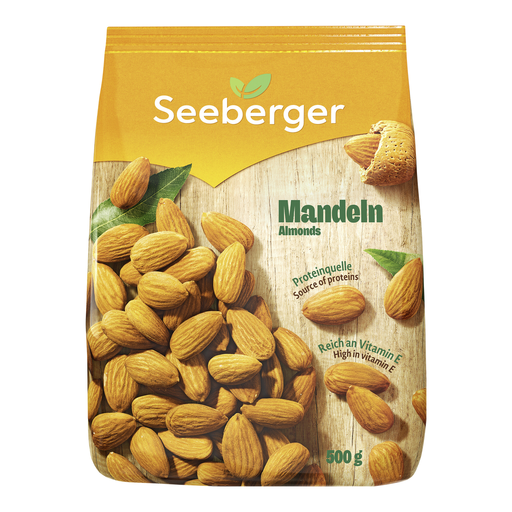 No image available
The 500 g pack could work for a group if you portion out what you need before the picnic. Store any leftovers in an airtight container, and check the packaging and allergen advice.
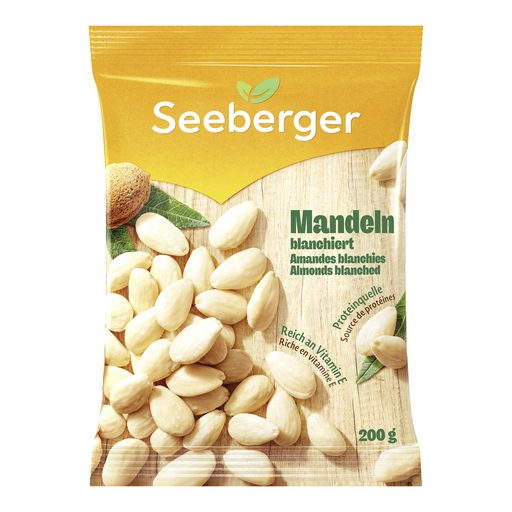 No image available
If you’d rather take 200 g than a larger pack of almonds, this blanched variety is one option. Before choosing, compare the energy per 100 g and check the allergen advice on the label.
Among the plain products listed by EDEKA, cashews contain 603 kcal and almonds 619 kcal per 100 g. This is a comparison of these particular products, not a rule that applies to all cashews and almonds; check the nutritional information on the pack you’re considering.
It depends on the specific mix and what you’re comparing it with. The Seeberger Nuts ’n’ Berries mix listed by REWE contains 479 kcal per 100 g, less than the plain cashews and almonds mentioned above. However, half of it consists of partly sweetened dried fruit, and it contains 36 g of sugar per 100 g.
Seal opened nuts in an airtight container and follow the product’s storage instructions. The Federal Centre for Nutrition recommends storing shelled and chopped nuts in an airtight container, preferably in the fridge.
Check the ingredients list and any additional warnings about traces on the specific pack. Under the labelling rules explained by the European Union, allergens present in a product must be highlighted in the ingredients list; possible traces vary from product to product.
No. If you want to compare energy, sugar or salt, you’ll also need the nutritional information per 100 g and the ingredients list. For fruit and nut mixes, pay particular attention to how much dried fruit they contain and whether it has been partly sweetened.