Snackers who keep an eye on portions
If you plan to snack on nuts, you’ll want to keep track of how much you eat. Your own portion size and the energy value per 100 g are more useful for this than the pack size alone.


If you want to enjoy nuts as a calorie-conscious snack, start by checking portion size and the energy value per 100 g. No type of nut is low in calories simply because of its name. The German Nutrition Society does not classify nuts as foods with a low energy density. For mixes, you’ll also need to check the ingredients and sugar content: a lower kcal value per 100 g won’t tell you everything about what’s in the mix.
If you plan to snack on nuts, you’ll want to keep track of how much you eat. Your own portion size and the energy value per 100 g are more useful for this than the pack size alone.
If you prefer a simple ingredients list, compare plain nuts with seasoned or roasted varieties. Information about added salt and sugar is useful, but it doesn’t replace checking the full ingredients list.
For nut and fruit mixes, check the portion size, the dried fruit in the ingredients list and the sugar value per 100 g. This lets you compare the mix with a plain nut option.
Start by comparing energy values on the same basis and deciding how much you want to snack on. Then check the ingredients and nutritional information for the specific type or mix.
| Criterion | What to check when buying | Who it matters to |
|---|---|---|
| Portion and energy | Compare kcal per 100 g and set aside the amount you want to snack on. | If you tend to snack straight from the pack, you’ll want to keep track of how much you eat. Around 36% of shoppers would put portion control first. |
| Ingredients and added extras | Read the ingredients list and check the sugar and salt information; for roasted mixes, look for added oil too. | When choosing between plain nuts and a seasoned or sweet mix, I’d prioritise a simple recipe. Around 29% of shoppers would put this first. |
| Type and nutritional information | Compare types or mixes using the kcal information per 100 g. | If you’re considering several types of nut, you’ll want to compare their nutritional information on the same basis. Around 21% of shoppers would prioritise this comparison. |
| Pack size and shopping | Check the pack contents and current availability at your chosen retailer. | If I buy nuts regularly, the pack size needs to suit how much I get through, and the product needs to be available to me. Around 14% of shoppers would check these shopping details first. |
Even a type of nut with a lower energy value than the other options is still energy-dense. The German Nutrition Society identifies nuts as an exception among unprocessed plant foods, which are often low in energy density.
Compare kcal per 100 g and set aside the amount you actually want to eat.
EDEKA lists two GUT&GÜNSTIG nut and fruit mixes at 494 and 501 kcal per 100 g respectively, compared with 613 kcal per 100 g for its nut kernel mix. The two fruit mixes also contain 31 and 26.4 g of sugar per 100 g respectively. So energy values alone don’t tell you what’s in them.
Check the energy and sugar information alongside the ingredients list before choosing a mix.
A roasted mix can contain oil even if no salt has been added. Seeberger lists sunflower oil in the ingredients for its roasted nut mix.
For roasted nuts, check the full ingredients list rather than relying on the information on the front of the pack.
Once opened, how you store shelled or chopped nuts affects how long they’ll stay fresh.
The consumer advice centre recommends storing opened packs of shelled or chopped nuts in a container in the fridge. Don’t eat nuts that show signs of spoilage.
Seeberger offers individual types of nuts and mixes, including a nut kernel mix without raisins and a roasted nut mix.
Lidl’s Alesto range includes nuts, dried fruit and snack options.
EDEKA offers nut mixes and nut and fruit mixes with ingredients and nutritional information for each product.
REWE’s nut range includes own-brand cashews and walnut kernels, as well as branded products.
ALDI SÜD and ALDI Nord offer nuts and mixes under various own-brand names; the specific range depends on the product and store.
This selection includes individual types of nuts, a nut mix without raisins and a trail mix. When comparing options for calorie-conscious snacking, your chosen portion and the nutritional information for each product are key.
 Image unavailable
A good choice if you’d rather portion out a single type of nut than have a mix. The 150-g pack contains roasted, unsalted cashews. Check the nutritional information on the pack to help decide how much to snack on.
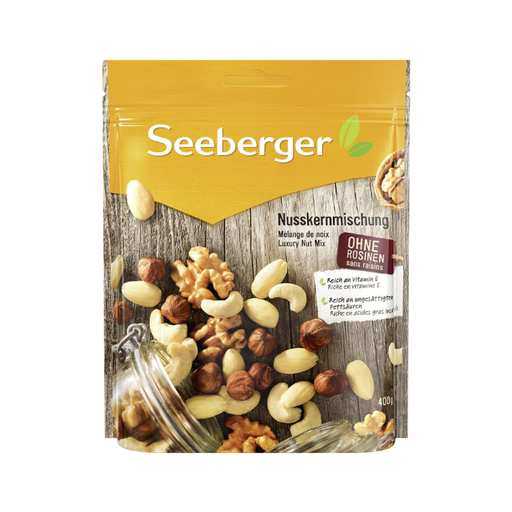 Image unavailable
For anyone who likes a variety of nut kernels but doesn’t want raisins in the mix. The 400-g pack lets you set aside the amount you want to snack on.
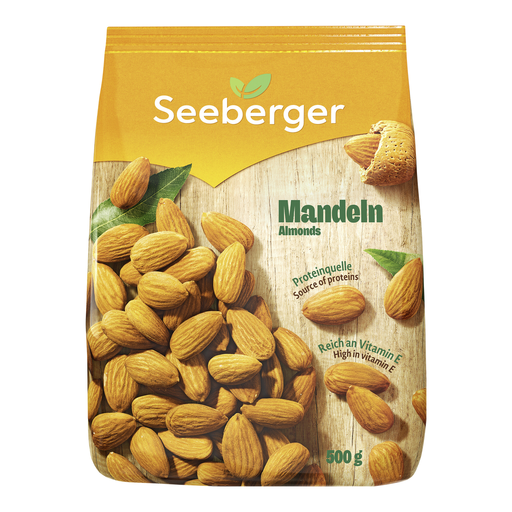 Image unavailable
A good choice if you want to compare almonds as an individual type of nut with other varieties. The pack contains 500 g; take out the amount you want for a snack.
 Image unavailable
For anyone who wants to use pine nuts as an individual ingredient or measure out their own portion. The pack contains 50 g, but the whole pack isn’t automatically a snack portion.
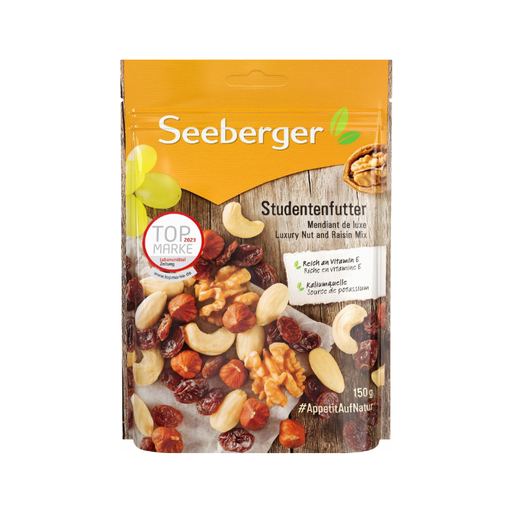 Image unavailable
For anyone who’d prefer a nut and fruit mix to plain nuts. For the 150-g pack, check the ingredients and sugar value per 100 g as well as deciding on your own portion.
No. Nuts aren’t classed as foods with a low energy density, as the German Nutrition Society makes clear. If you want to enjoy nuts as a calorie-conscious snack, compare the kcal value per 100 g and decide on your portion yourself.
Cashews, almonds and peanuts are good starting points for comparing different types. EDEKA places them at the lower end of the calorie and fat scale within the selection it has looked at. That doesn’t automatically make any of them low in calories, so compare the information for the specific products per 100 g.
Set aside the amount you want before you start snacking, rather than eating straight from the pack. The German Nutrition Society recommends a small handful of nuts each day. Weighing your portion is more accurate than estimating by eye when comparing it with your own daily plan.
The consumer advice centre recommends storing opened packs of shelled or chopped nuts in a container in the fridge. Don’t eat nuts if they smell rancid or musty, or show visible signs of mould.
Check the ingredients and nutritional information on the packaging of the specific product. EDEKA notes for some products that online information may differ from the packaging; availability can also vary by store.