When choosing a nut snack for your working-from-home lunch, check the specific ingredients and information on the packaging. The key things to look for are the types of nuts included, precautionary allergen warnings, and any added salt or sugar. If you have a nut or peanut allergy, a nut mix is not automatically a suitable free-from choice; if you have coeliac disease, a recipe with no obvious cereal ingredients is no substitute for an explicit gluten-free label. If none of these restrictions apply, the main choice is between a simple, unsalted mix and the roasted, salty flavour you prefer.
Which choice is right for you?
People with a nut or peanut allergy
If you react to particular tree nuts or peanuts, the types included and any possible traces matter more than how the nuts are roasted or taste. The German Allergy and Asthma Association points out that not all nut allergies involve the same types of nuts. Your choice should therefore reflect the allergy you have had assessed; depending on your needs, a nut-free snack may be more suitable than a nut mix.
People with specific free-from requirements
If you have coeliac disease, an explicit gluten-free label is essential; an ingredients list with no cereals is not enough on its own. If you shop for vegan or lactose-free products, check the individual recipe too: neither of these labels, on its own, means that a nut product is free from other relevant allergens.
People looking for a simple lunch addition
If you prefer nuts without added salt or sugar, compare the ingredients list and nutritional information. Unroasted or unsalted mixes and roasted, salted varieties suit different tastes; the words ‘nut mix’ alone tell you very little about what to expect.
What should you look for when buying?
First, check whether you have any requirements relating to allergies or coeliac disease. Then compare the ingredients, salt content and how practical each option will be during your lunch break.
| Criterion |
What to check |
Who it matters most to |
| Allergens and traces |
Check which tree nuts and peanuts are included, as well as any precautionary allergen warnings on the current packaging. |
If I react to a particular type of nut or to peanuts, I need to choose a product that takes account of my individually assessed triggers. Around 36% of consumers would put this check first. |
| Additives and salt |
Check the ingredients list for added salt and sugar; compare the salt content per 100 g. |
For my regular lunch break, I want a simple mix and am happy to compromise on a stronger seasoned flavour. Around 29% of consumers would make the recipe their top priority. |
| Gluten-free and other dietary requirements |
If you have coeliac disease, look for an explicit gluten-free label; check the ingredients for vegan or lactose-free options. |
If I need to meet a specific dietary requirement, the words ‘nut mix’ are not enough to help me decide. This suitability would be the top criterion for around 21% of consumers. |
| Flavour and convenience |
Compare the roasting, salt profile, pack size and, where relevant, whether the pack can be resealed. |
Between meetings, I want a snack that’s easy to enjoy during my break and tastes good. This practical consideration would come first for around 14% of consumers. |
Common misconceptions
-
No added salt does not mean allergen-free
An unsalted nut kernel mix may contain several types of tree nuts and also carry a precautionary warning about possible peanut traces. The salt information does not tell you whether it is suitable for someone with an allergy.
If you have an allergy, check the types of nuts included and any precautionary allergen warnings on every pack against your individual requirements.
-
No cereal ingredients does not automatically mean gluten-free
You cannot tell whether a nut product is suitable for a coeliac diet simply because there are no obvious cereal ingredients.
If you have coeliac disease, look for an explicit gluten-free label and check the ingredients list as well.
-
Roasted and salted is not the same as unsalted
The roasted, salted mixes described by EDEKA and REWE list salt and, in some cases, sunflower oil as ingredients. Their recipes are therefore different from those of unsalted mixes.
Choose according to the flavour you prefer and compare the ingredients and salt content per 100 g, rather than choosing by the ‘nuts’ category alone.
Brands to consider
These examples show how specific nut products from different brands vary. Information about one mix does not automatically apply to the brand’s entire range.
Seeberger
This nut kernel mix is an option to compare if you’re looking for a mix without raisins and, according to Seeberger, a recipe with no added salt or sugar.
- Seeberger says this mix contains hazelnuts, almonds, cashews and walnuts, and is unroasted.
- Seeberger warns of possible cross-contamination. The mix should not therefore be considered allergen-free by default.
EDEKA / GUT&GÜNSTIG
The products described offer a comparison between an unsalted, unroasted nut kernel mix and a roasted, salted mix.
- EDEKA describes the GUT&GÜNSTIG nut kernel mix as unsalted and unroasted; the separately described roasted mix contains sunflower oil and salt.
- EDEKA lists the tree nuts included in its nut products, as well as possible traces of other allergens. Check the labelling of the product you choose.
REWE Bio
The roasted, salted nut mix described here is aimed at a different taste preference from an unsalted mix.
- REWE says this mix contains cashews, almonds, hazelnuts and peanuts.
- According to REWE, it contains sunflower oil and 1% table salt; the nutritional information lists 0.96 g of salt per 100 g. Peanuts and tree nuts are relevant when checking for allergens.
Nut snacks and seed mix at Joybuy
These products include individual types of nuts, a nut mix without raisins, and a seed and kernel mix. Compare each product type with your requirements for allergens, labelling and convenience; the seed mix is not a nut mix.
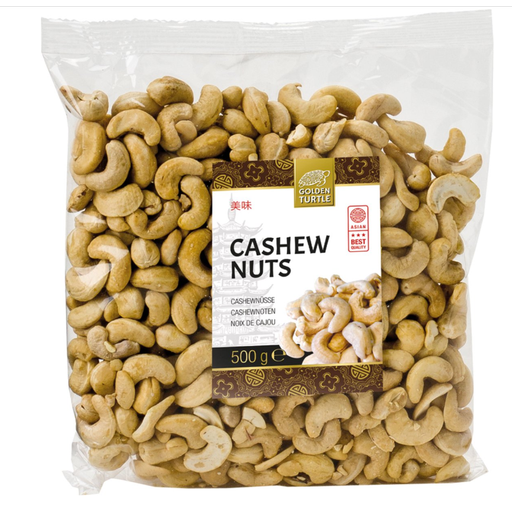 Image unavailable
Golden Turtle cashew kernels, 500 g
An option if you’re looking for cashews as a snack rather than a mix. Cashews are not suitable if you have a cashew allergy; check the packaging for possible traces and, if you have coeliac disease, for a gluten-free label.
View at Joybuy
 Image unavailable
Seeberger roasted cashew kernels, unsalted, 150 g
For anyone who prefers roasted cashews without added salt. This product contains cashews; if you have other allergen requirements or coeliac disease, check the current packaging for the information you need.
View at Joybuy
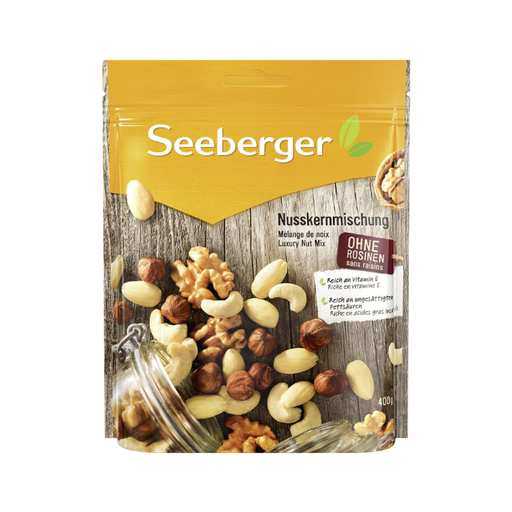 Image unavailable
Seeberger Premium nut mix without raisins, 400 g
For a lunch break with a variety of nuts, if you specifically want a mix without raisins. A nut mix is not a generally allergen-free choice; check the types included, precautionary allergen warnings and, where relevant, the gluten-free label on the pack.
View at Joybuy
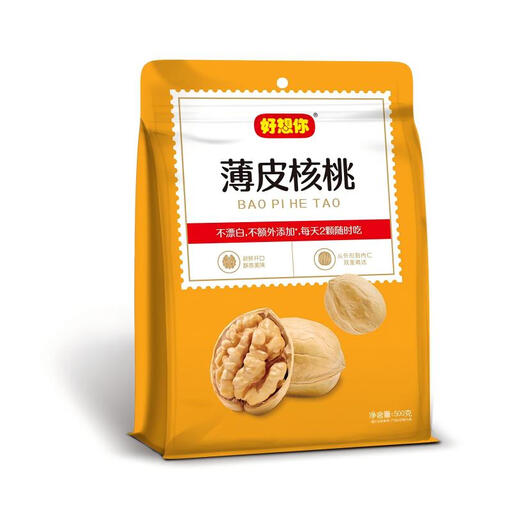 Image unavailable
Haoxiangni thin-shelled walnuts, 500 g in 8 packs
For anyone looking for walnuts rather than a nut mix and who prefers individual packs. The walnuts need to be cracked before eating; if you have an allergy or coeliac disease, check the packaging.
View at Joybuy
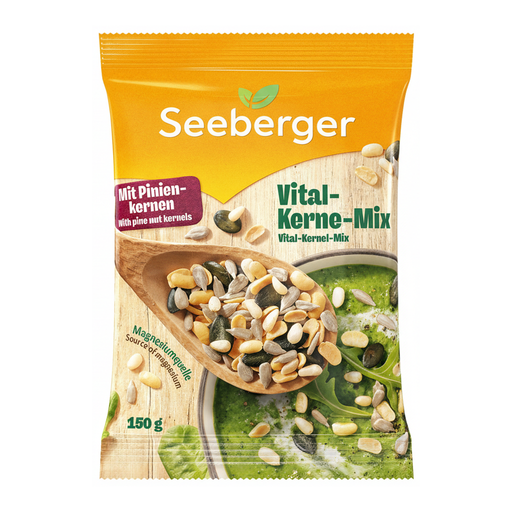 Image unavailable
Seeberger Vital Salad seed and kernel mix, 150 g
A different type of product to consider if you’re looking for a seed and kernel mix rather than a nut mix for your lunch break. The product description calls it gluten-free; if you have coeliac disease, check this information on the current packaging. If you have an allergy, also check the labelling for soya and possible traces.
View at Joybuy
Frequently asked questions
Are nuts automatically an allergen-free, free-from snack?
No. Tree nuts and peanuts may be a concern for people with a relevant allergy, and a mix may contain several types. The German Allergy and Asthma Association points out that the types of nuts affected can vary from person to person. Choose according to your assessed allergy and the labelling on the specific pack.
Is a nut mix with no cereal ingredients suitable for someone with coeliac disease?
No. An ingredients list alone is no substitute for an explicit gluten-free label. If you shop gluten-free because you have coeliac disease, check for this label and read the ingredients on the current packaging.
Does a precautionary allergen warning mean that the product contains peanuts?
No. A warning about possible traces does not confirm that any have actually got into the product. It does, however, flag a possibility that may be relevant when people with a peanut allergy are choosing products for themselves.
How do I compare unsalted and salted nut mixes?
First check whether salt is listed as an ingredient, then compare the salt content per 100 g. This helps you tell an unsalted recipe from a roasted, salted variety without assuming the salt content from the words ‘nut mix’.
Is the information on an online product page enough if I have an allergy?
When choosing a product before eating it, the labelling on the pack you have is what matters. Check the ingredients, highlighted allergens and precautionary allergen warnings in particular; EDEKA notes in its product information that online details may differ from the packaging.


