If protein content matters when stocking up, it’s worth comparing pumpkin seeds, peanuts and almonds: Seeberger lists around 36 g, 27 g and 24 g of protein per 100 g respectively. The right pack for you also depends on its salt content and ingredients, how quickly you’ll use it and how you store it once opened. Nuts and seeds alone are no substitute for a balanced diet to support your sport.
Who might benefit from stocking up on nuts?
Active people keeping an eye on protein
If you’re planning to have nuts or seeds as a snack or add them to meals around your training, you can compare their protein content per 100 g. The German Nutrition Society considers protein intake for sport as part of your overall diet, rather than a quality of any one snack.
People keeping track of their salt intake
If you regularly snack from your stock, don’t assume that unsalted and salted peanuts are alike. Product information from REWE and ALDI SÜD lists 0.05 g and 1 g of salt per 100 g respectively for two different peanut products.
Households with limited storage space or allergies
If you’re shopping for several weeks at a time, you’ll need somewhere to store opened products and should keep an eye on their condition. If you have allergies, it’s also important to check the ingredients and precautionary allergen information on each specific pack: peanuts and tree nuts are different allergen groups.
What should you look for when buying?
Start by comparing the nutritional information per 100 g, then decide what salt content, pack size and storage method will suit how much you’ll actually use.
| Criterion | What to check when buying | Who it matters to |
|---|
| Protein content |
Compare the protein per 100 g for your chosen variety and pack. |
If you mainly want to use nuts or seeds as a protein-rich ingredient in meals, the figure per 100 g is the one to focus on. Protein content is the top buying priority for around 33% of consumers. |
| Salt and ingredients |
Check the salt per 100 g alongside the ingredients list. |
If you’re stocking up on snacks to enjoy regularly, you’ll want to know whether they contain salt, oil or other ingredients as well as nuts or seeds. Low salt and a straightforward ingredients list come first for around 27% of consumers. |
| Storage |
Consider the product type, pack closure and storage instructions. |
If a pack will stay open for a while, you’ll need space to store it properly and should be able to spot any changes in the product. Storage life is the top priority for around 20% of consumers. |
| Pack size |
Check the quantity and best-before date against how much you plan to use. |
A larger pack only makes sense if you can use it in time when stored properly. For around 20% of consumers, the main consideration is choosing a quantity that suits how much they’ll use. |
Common pitfalls when stocking up
-
Looking at protein content alone
Similar peanut products can differ considerably in their salt content: ALDI SÜD lists 1 g of salt per 100 g for FARMER peanuts, while REWE lists 0.05 g per 100 g for Ültje unsalted peanuts.
For the specific pack, compare protein and salt using the same serving size, and check the ingredients list too.
-
Opening a large pack without a storage plan
Chopped nuts are more sensitive to storage conditions because they have a larger surface area. The Verbraucherzentrale recommends storing opened chopped nuts in the fridge.
Choose a quantity that suits how much you use and follow the storage instructions on the pack. Before eating, check your stock for any unusual smell, bitterness, mould or signs of pests.
-
Treating peanuts and tree nuts as the same when you have allergies
Peanuts and tree nuts are different allergen groups. A product containing only one of these groups may still carry a precautionary warning about traces of the other.
If you have a known allergy, check the ingredients and precautionary allergen information on every individual pack instead of assuming it’s the same as another variety or brand.
-
Assuming online information applies to every pack
ALDI SÜD notes that suppliers and nutritional information may vary for FARMER peanuts. EDEKA also points out that product information may differ from what’s shown on the packaging.
Before buying, check the nutritional information, ingredients, storage instructions and best-before date on the specific pack.
Brands worth considering
Seeberger
Seeberger offers nuts and seeds in a range of pack sizes. Its Jumbo peanuts are available in 500 g, 1,000 g and 2,500 g packs.
- A choice of pack sizes makes it easier to find one that suits how much you plan to use.
- The figures in Seeberger’s guide refer to varieties; the nutritional information on your chosen pack is what matters.
GUT&GÜNSTIG
EDEKA lists natural GUT&GÜNSTIG almonds in a resealable 200-g bag.
- For this almond product, EDEKA lists 24 g of protein and 0.01 g of salt per 100 g.
- Check the information on the specific pack; EDEKA also notes that availability varies between stores.
FARMER
ALDI SÜD sells FARMER roasted and salted peanuts in a 200-g bag.
- For the listed product, ALDI SÜD states that it contains 29 g of protein per 100 g.
- The figure of 1 g of salt per 100 g applies to this product; ALDI SÜD says that suppliers and nutritional information may vary.
Alesto
Lidl sells snacks under the Alesto brand, including nuts, pistachios and cashews.
- The range includes a variety of nut products, so you can compare the individual options.
- When choosing by protein, salt and pack size, check the information for each specific product.
Ültje
REWE lists Ültje unsalted peanuts in a 200-g bag.
- For this product, REWE states that it contains 25 g of protein and 0.05 g of salt per 100 g.
- The ingredients list also includes sunflower oil; check the allergen information on the pack too.
Suitable products at Joybuy
This selection includes pumpkin seeds, peanuts and almonds in packs ranging from 200 g to 500 g. If you’re stocking up with protein in mind, the variety is only part of the picture: the nutritional information on the specific pack and how quickly you’ll use it once opened matter too.
 No image available
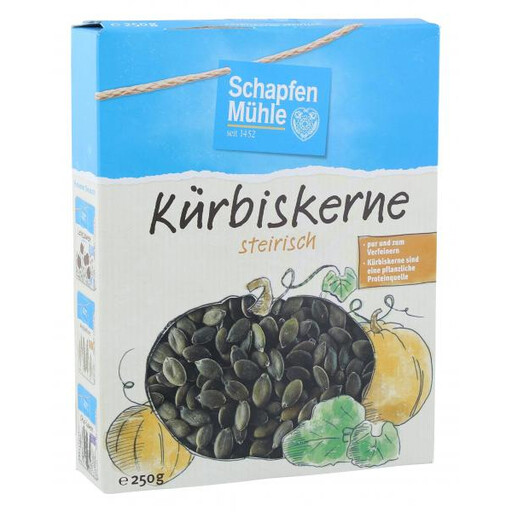
SchapfenMühle Styrian pumpkin seeds 250 g
For anyone planning to include pumpkin seeds in their store cupboard; this pack contains 250 g. Compare the pack’s nutritional information with that of other seeds, and plan how to store it once opened.
View at Joybuy
 No image available
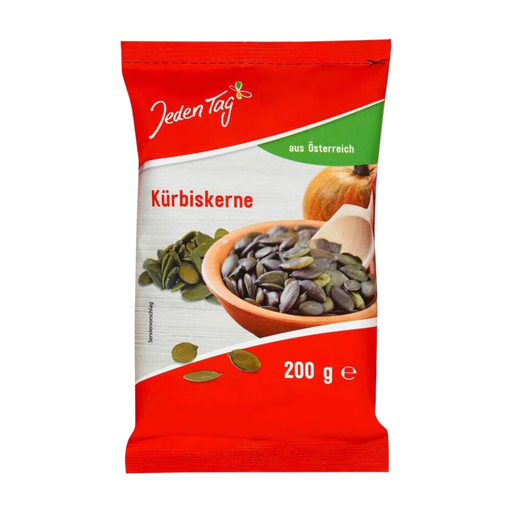
Jeden Tag shelled pumpkin seeds 200 g
For anyone looking for shelled seeds in a 200-g pack to stock up on. Compare the nutritional information and check the product for any pieces of shell before use.
View at Joybuy
 No image available
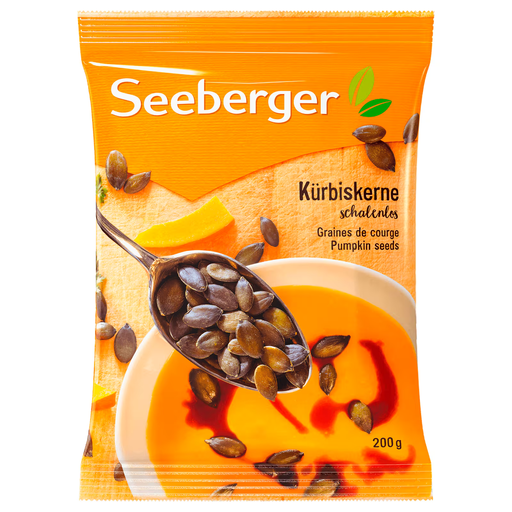
Seeberger Styrian shelled pumpkin seeds 200 g
For anyone wanting to stock up on shelled pumpkin seeds in a 200-g pack. Read the nutritional information and storage instructions, and choose a quantity that suits how much you use.
View at Joybuy
 No image available
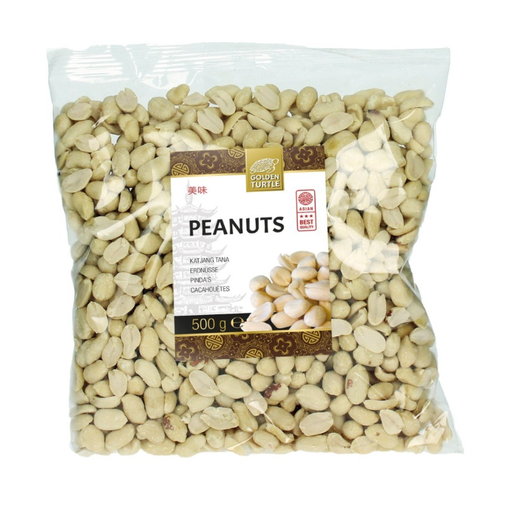
Golden Turtle peanut snack 500 g
For anyone planning to stock up on peanuts in a 500-g pack and able to use that quantity soon after opening. Check the ingredients, salt content, allergen information and consumption instructions on the specific pack.
View at Joybuy
 No image available
Seeberger whole natural almonds Extra 500 g
For anyone wanting to stock up on whole almonds in a 500-g pack. Make sure the quantity suits how much you use, and follow the nutritional, allergen and storage information on the pack.
View at Joybuy
Frequently asked questions
Why are peanuts compared with nuts?
Botanically, peanuts are legumes, but they’re often sold alongside nuts as a snack. When stocking up, it’s best to compare the nutritional information and allergen details for each specific product rather than relying on its place on the shelf or its name.
Are nuts or seeds enough as a post-workout snack?
Nuts and seeds can contribute protein to your diet, but on their own they’re no substitute for a balanced diet overall. The German Nutrition Society considers protein intake for sport as part of your overall diet.
How should I store opened nuts?
For opened chopped nuts, the Verbraucherzentrale recommends storing them in a container in the fridge, where they’ll keep for around four weeks. Follow the instructions for the specific product too, and don’t eat anything with mould, signs of pests or an unusual smell.
What should I look out for if I have a peanut or tree nut allergy?
Check the ingredients and precautionary allergen information on every specific pack, as peanuts and tree nuts are different allergen groups. Don’t assume a product is suitable based on the labelling of another variety or brand.


