Guests who keep an eye on protein content
If you’re looking for a ready-to-eat nut snack at the buffet, compare the protein content per 100 g. However, a high figure alone doesn’t tell you whether a product is suitable for serving in a snack bowl.


For a protein-focused conference buffet, whole, ready-to-eat peanuts, almonds or cashews are all options. Always compare the protein content per 100 g of the specific product. Whether a variety is suitable for serving also depends on its ingredients and salt content. At an open buffet, guests need to be able to identify the allergenic ingredients.
If you’re looking for a ready-to-eat nut snack at the buffet, compare the protein content per 100 g. However, a high figure alone doesn’t tell you whether a product is suitable for serving in a snack bowl.
When nuts are served loose, guests need to be able to identify the allergenic ingredients they contain. The Lower Saxony State Office for Consumer Protection and Food Safety also highlights the need to provide allergen information for loose foods.
If you’re looking for a simple recipe, check the ingredients list and salt content as well as the ‘unsalted’ label. Roasted and seasoned products shouldn’t be treated as alike just because they’re the same type of nut.
First, choose a format that suits how you plan to serve the nuts: whole nuts for a snack bowl, ground almonds for a toppings station. Then compare the information on the specific packs and plan how you’ll share allergen information for each variety served loose.
| What matters | What to check when shopping | Who it matters most to |
|---|---|---|
| Protein and snack format | Protein per 100 g and whether the product is whole and ready to eat. | If I’m serving nuts without any further preparation, I want to compare protein content without confusing a baking ingredient with a snack to eat by hand. Around 42% of consumers put protein content first when making this choice. |
| Allergen information | Whether the product contains peanuts or tree nuts, and what information to provide for each variety served loose. | If I’m putting out several bowls, I want to be able to tell guests clearly which allergenic ingredients each one contains. For around 33% of consumers, this information is the main priority. |
| Ingredients and salt | Ingredients list and salt per 100 g for the variety chosen. | For guests who want unsalted snacks, I’d like to offer a variety without a heavily seasoned recipe. Around 25% of consumers prioritise this. |
This doesn’t make it clear whether the ingredients include peanuts or which tree nuts they contain. The Federal Ministry of Agriculture, Food and Regional Identity and the Lower Saxony State Office for Consumer Protection and Food Safety explain the requirement to provide information about allergenic ingredients.
Keep the ingredient information for the products you’re actually serving to hand, and clearly match the allergen information to each bowl.
Recipes can differ significantly: REWE lists 0.05 g of salt per 100 g for Ültje roasted unsalted peanuts, while EDEKA lists 1 g per 100 g for a roasted, salted GUT&GÜNSTIG product.
For the specific variety, compare protein, salt and ingredients per 100 g instead of assuming the protein content tells you everything about the recipe.
Ground almonds can’t be picked up from a self-service bowl like whole kernels, even if their nutritional information is useful when making your selection.
Use whole kernels for a snack bowl. Ground almonds are better suited to a dedicated toppings station.
ALDI SÜD notes that its special-buy products are available in limited quantities; EDEKA points out that online information may differ from the packaging.
Plan the quantity you need in good time and check the ingredients, nutritional values and allergen information on the products that will actually be served at the buffet.
Seeberger offers individual nut varieties and mixes prepared in different ways.
Lidl offers both natural nuts and seasoned snacks under the Alesto brand.
ALDI SÜD lists natural, roasted and seasoned nut products under these names.
REWE sells an unsalted, unroasted nut kernel mix under the ja! brand, containing hazelnuts, cashews, almonds and walnuts.
EDEKA offers individual peanut, almond, cashew and walnut products with information specific to each product.
These Seeberger varieties include whole almonds and roasted cashews. If you’re choosing between a snack bowl and a toppings station, preparation and pack size matter just as much as the information on the individual pack.
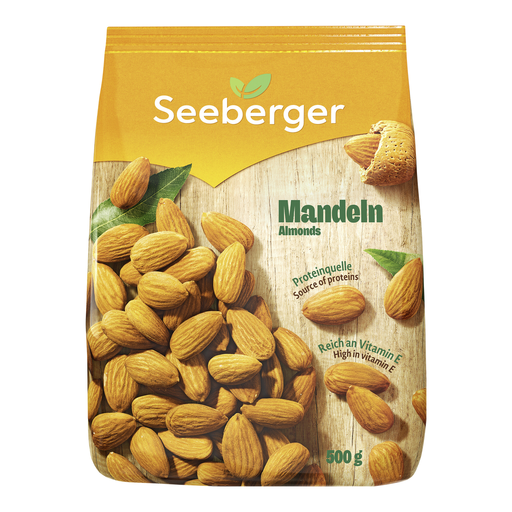 No image available
Whole almonds are suitable for a snack bowl; match the pack size to the quantity you plan to serve. Almonds are tree nuts and must be identifiable as an allergenic ingredient when served loose.
 No image available
Roasted, unsalted cashew kernels are an option for guests who prefer them prepared this way. Plan how much to serve based on the 150 g pack, and identify cashews as an allergenic ingredient when serving them loose.
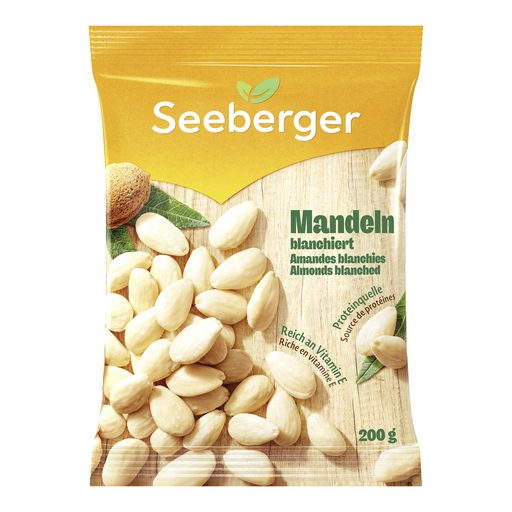 No image available
These whole, blanched almonds may be suitable for a planned toppings station. Before serving them as a snack to eat by hand, check the instructions on the specific pack; almonds must be identifiable as an allergenic ingredient at an open buffet.
When food is served loose, information about allergenic ingredients must be provided, as explained by the Lower Saxony State Office for Consumer Protection and Food Safety. Clearly match each variety on offer to the information on the pack actually used. The Federal Ministry of Agriculture, Food and Regional Identity lists peanuts and tree nuts among the allergens that must be declared.
No. Peanuts and tree nuts are separate allergen groups. The Federal Ministry of Agriculture, Food and Regional Identity lists them separately, so a general ‘nuts’ label doesn’t clearly identify the ingredients in a particular buffet bowl.
Compare ready-to-eat varieties using the protein content per 100 g: REWE lists 25 g for Ültje roasted unsalted peanuts, EDEKA lists 21 g for natural GUT&GÜNSTIG cashews, and REWE lists 19.3 g for the ja! nut kernel mix. These figures apply to those specific products. When shopping, check the nutritional information on the pack you choose and consider its format as a snack.
Check the product name, ingredients list and salt content per 100 g. REWE lists 0.05 g of salt per 100 g for Ültje roasted unsalted peanuts, while EDEKA lists 1 g per 100 g for roasted, salted GUT&GÜNSTIG peanuts.