
Lieferung heute & morgen

Qualitätsgarantie

Willkommens-Angebote freischalten: KOSTENLOSE Lieferung | Bis zu 80 % RABATT | Kostenlose 30-Tage-JoyPlus-Testphase
App herunterladen
A 150 cm wide, oak-effect sideboard is a popular choice for anyone looking to combine style and storage. It integrates seamlessly into a living room, dining area, or hallway, offering space for everyday items. However, the market is flooded with options that look great at first glance but quickly prove to be impractical or short-lived. Before you make a decision, it's crucial to understand the typical pitfalls often hidden behind appealing product photos.
This guide will help you identify the decisive features and show you what to look for when making your selection to find a long-term, satisfying solution for your home.
Many buyers focus on design and price, overlooking critical quality features in the process. This often leads to disappointment. Here are the three most common problems you should avoid:
To avoid a bad purchase, you should focus on three core technical parameters. These are the primary determinants of the quality and functionality of your new 150 cm credenza.
The term engineered wood is a collective term for materials like MDF (Medium-Density Fibreboard) and particleboard. The quality depends on the density and finishing. Pay attention to the following features:
A sideboard with drawers and doors should be flexible. The external dimensions alone are not telling.
The overall stability of a sideboard depends on several factors.
Based on the criteria mentioned, we have identified a few models that are suitable for different user profiles.
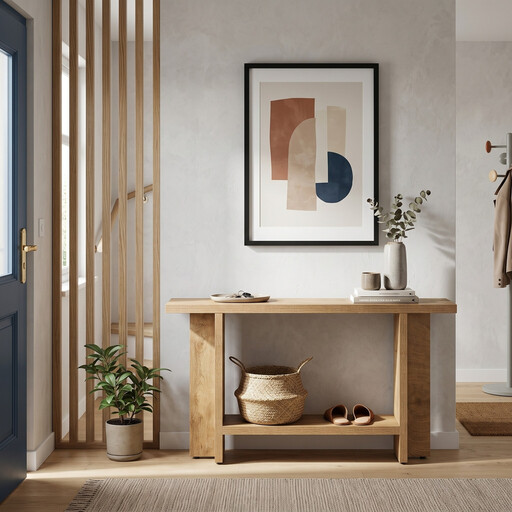
Why this model is a great fit: Ideal for narrow spaces like a hallway or as a surface behind the sofa. With its slim depth of 30 cm, this oak console table offers a space-saving solution without sacrificing the desired 150 cm width. The open design feels airy and modern.
Instead of a closed body with impractical compartments, this model offers two continuous, open shelves. This maximises flexibility for decorations or storage baskets.
The T-shaped leg construction made of engineered wood ensures good stability. According to the manufacturer, assembly is straightforward and quick thanks to numbered parts.
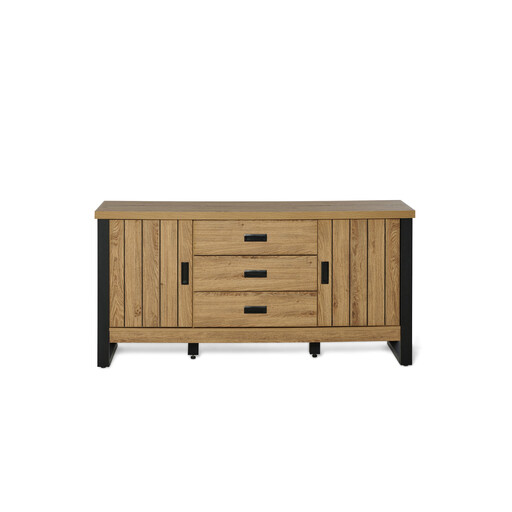
Why this model is a great fit: This model combines a modern oak chest of drawers with black accents. It is ideal for users who value a high-quality look and thoughtful details. The plank-effect finish and handleless fronts underscore its contemporary character.
According to the manufacturer, the surface with its 3D print is particularly realistic and durable, which bypasses the problem of delicate foils. The shelves are adjustable, offering flexible storage solutions.
The combination of three drawers and two door compartments offers a balanced mix of open and closed storage. A practical cable management opening in the back panel makes it an ideal media unit.
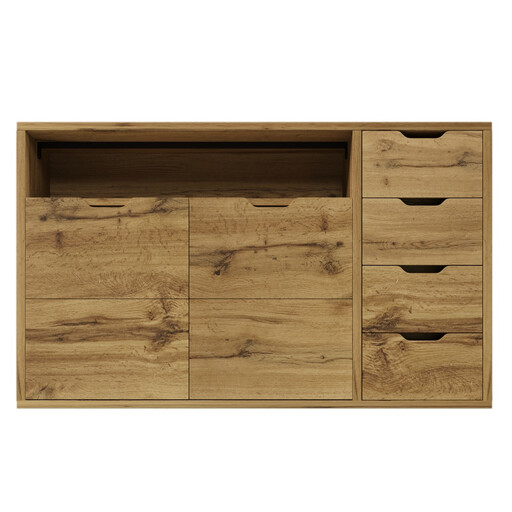
Why this model is a great fit: Anyone looking for maximum, well-organised storage will find a suitable solution here. With four drawers, two doors, and an open compartment, this oak living room cabinet offers a thoughtful layout for a wide variety of items.
This sideboard solves the problem of impractical storage with height-adjustable shelves (in 6.5 cm increments) and a high number of drawers. This allows the space to be optimally adapted.
The doors are equipped with soft-close hinges, ensuring quiet, gentle use that protects the material. An included anti-tip kit increases safety, especially in households with children.
We have compiled a complete, up-to-date list of products that fully meet these strict selection criteria and UK safety regulations.
Care is generally straightforward. For daily cleaning, a soft, dry cloth is sufficient. For light dirt, a damp (not wet) cloth can be used. Avoid harsh cleaning agents or abrasive sponges, as they can damage the surface. Always follow the specific care instructions provided by the manufacturer.
"Engineered wood" is a general term for panel materials made from wood fibres or chips and binders, such as particleboard or MDF. Stability depends not just on the material's name but on its density, thickness, and the overall construction of the furniture. A high dead weight and a high specified maximum load capacity are good indicators of a sturdy design.
The assembly effort varies by model. Most products are delivered flat-packed with detailed instructions and numbered parts. Due to the size and weight of a 150 cm sideboard, it is generally recommended to assemble it with two people. Depending on the complexity of the model and your experience, plan for one to two hours for assembly.