Batch bakers
If you want to bake lots of oat biscuits in as few batches as possible during a group baking session, consider a built-in oven for which the manufacturer specifies multi-level baking for the particular model.


For a group baking session with several trays of oat biscuits, a built-in oven with multi-level fan-assisted cooking specified for the particular model is a suitable choice, provided the housing and connection are right. If you don’t have a suitable space for a built-in appliance, or you’re baking smaller batches one after another, a compact convection oven could be an option. Its oven cavity and usable tray area limit how much you can bake in one go. For ovens that require an energy label, compare the energy consumption per standard baking cycle: the Verbraucherzentrale explains this figure on the energy label.
If you want to bake lots of oat biscuits in as few batches as possible during a group baking session, consider a built-in oven for which the manufacturer specifies multi-level baking for the particular model.
If you don’t want a built-in appliance and are happy to bake smaller batches one after another, a compact, freestanding convection oven could be an option.
If you’re replacing an existing oven, first check that the dimensions of the housing, the connection requirements and the accessories supplied with the particular model are right for your kitchen.
| What to consider | What to look for | Who will find this especially important? |
|---|---|---|
| Several trays | Check the specified multi-level heating function and suitable tray dimensions for the complete model. A manufacturer’s claim about baking on several levels doesn’t guarantee that your recipe will brown evenly. | If I want to bake as many oat biscuits as possible in one go during a group baking session, I look at the usable shelf positions and suitable trays. Around 42 % of consumers put the need for several trays first. |
| Compact set-up | Check the oven cavity and tray area against the dimensions. For a freestanding appliance, also follow the clearances specified in the instructions. | If I don’t want to use a built-in housing in my kitchen and smaller batches are enough, a compact oven could be a good option. Around 25 % of consumers prioritise a compact set-up. |
| Fitting and accessories | Check the housing and appliance dimensions, connection requirements, and the trays and racks supplied with the particular model. | If I’m replacing an existing oven, the appliance, housing and connection all need to be compatible. The accessories supplied also matter for the number of trays I’m planning to use. Around 17 % of consumers put having the right built-in set-up first. |
| Energy use and cleaning | For ovens that require an energy label, compare energy consumption per standard baking cycle on the same basis. Also consider how you’ll use cleaning functions such as pyrolysis. | If I bake often, I want to take the stated energy consumption into account, as well as the energy needed for an additional cleaning function. Around 16 % of consumers prioritise running costs. |
The Verbraucherzentrale explains that an oven label gives the energy consumption per standard baking cycle. To choose the right oven for your baking session, you’ll also need to consider how many trays you can actually use: having several shelf positions alone doesn’t tell you how many biscuit trays will fit at once.
A manufacturer’s claim about several baking levels doesn’t tell you how many trays are included. The Siemens and AEG models featured here each list one baking tray as an accessory.
Before buying, check what’s included with the complete model and count how many suitable trays you’ll need for your baking session.
If you need additional suitable trays, you’ll have to buy them separately and check that they’re compatible with the oven.
For the Severin TO 2068, the manufacturer lists four shelf positions and an oven cavity of around 20 l. This doesn’t confirm that four biscuit trays will fit at once or bake evenly.
Compare the usable internal dimensions with the tray dimensions, and follow the instructions for the particular oven.
If only smaller trays will fit, you may need to bake in additional batches for your group session.
The energy label on ovens that require one states the energy consumption per standard baking cycle. According to NDR, pyrolytic self-cleaning also uses energy.
Compare energy consumption figures on the same basis and decide whether the cleaning function matters to you based on how you’ll use the oven.
Bosch Home Appliances DE specifies 3D Hotair for up to three levels in the HBA234BB3 built-in oven.
Siemens Home Appliances DE specifies hot air for up to three levels in the HB314G0S3 built-in oven.
AEG DE describes Multilevel Cooking and pyrolytic self-cleaning for the BPK53516XB.
NEFF Home Appliances DE specifies CircoTherm for up to three levels in the B6ACJ7AG3.
Severin describes the TO 2068 as a freestanding oven and toaster with a convection function and an oven cavity of around 20 l.
This selection includes built-in ovens with hot air, as well as compact freestanding convection and air fryer ovens for smaller baking sessions.
 No image available
This built-in model could suit a larger baking session if your housing and connection are compatible and you want to use several levels.
71 l oven cavity; 3D Hotair for up to three levels; temperature range 30–275 °C. A wire rack and universal pan are listed.
 No image available
A built-in option for baking on several levels, provided the appliance fits your housing and connection.
70 l oven cavity; hot air circulation and multi-level baking are described. The product title lists 3 kW.
 No image available
Described as a freestanding alternative for a smaller kitchen; check that the oven cavity and tray area are large enough for the amount you plan to bake.
28 l oven cavity, three adjustable shelf positions and three heating modes; the stated temperature range is 100–230 °C.
 No image available
A freestanding option with a baking function, if you’d also like to make use of the combination appliance’s extra features.
30 l oven cavity, 1,800 W and 21 presets, including baking; the description also mentions 360° airflow.
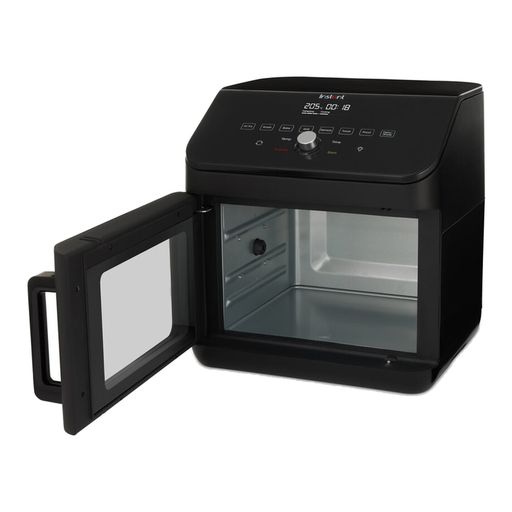 No image available
This compact countertop oven could suit you if you have limited space and are happy to bake smaller batches at a time.
13 l oven cavity, two cooking trays, a baking programme and 360° hot air circulation. The compact oven cavity may limit how much you can bake in one go.
No, the number of shelf positions alone doesn’t confirm this. Check the multi-level heating function specified for the complete model, suitable trays and the instruction manual. Claims of up to three levels come from the manufacturer and aren’t a test using your recipe.
For household ovens that require an energy label, compare the consumption per standard baking cycle and the oven cavity volume on the same basis. The Verbraucherzentrale describes these figures on the energy label; they don’t prove that any of the models mentioned will cost less to run.
Check the appliance and housing dimensions, the connection requirements for the particular model and the accessories against your kitchen, and follow the installation and instruction manuals. Whether a professional needs to carry out the work depends on the specific installation. Pyrolysis is a cleaning option, but it uses energy too; NDR notes that this cleaning process consumes electricity.
No. EU Regulation No. 65/2014 covers the energy labelling of household ovens within its scope and excludes, among others, small and portable ovens. So, if a mini oven is classified accordingly, the absence of a label alone doesn’t prove that the law has been broken.