Check the fibre in your oat base
If you want to compare the fibre content of the oat ingredient and prefer a fine texture, consider oat bran as well as traditional oats. The figures on the specific product and the amount you use are what matter.


If you’re looking to prioritise fibre in your oat base, oat bran is worth considering. Kölln lists 19 g of fibre and 18 g of protein per 100 g for its oat bran flakes, compared with 9.2 g and 13 g respectively for its fine organic oats. However, the protein content of your finished porridge depends on how much you use and what else you add. Fine or instant oats mainly affect preparation and texture. If you have coeliac disease, the German Federal Centre for Nutrition advises choosing only oats explicitly labelled gluten-free.
If you want to compare the fibre content of the oat ingredient and prefer a fine texture, consider oat bran as well as traditional oats. The figures on the specific product and the amount you use are what matter.
If you combine oats with dairy products, plant-based protein sources or a ready-made mix, consider the protein content of the whole serving. A protein muesli contains additional ingredients, so it isn’t directly comparable with plain oats.
Fine and instant oats are worth considering if you want porridge that softens quickly or a shake. If you need to pay particular attention to ingredients because of coeliac disease or allergies, check the labelling on every pack too.
First compare the nutritional values of the oat base, then factor in the amount you’ll actually use and any other ingredients. Texture and labelling may also affect your choice.
| Criterion | What to check | Who it matters to |
|---|---|---|
| Fibre in the oat base | Compare fibre per 100 g and for the amount you plan to use. If choosing oat bran, consider the texture you want too. | If I use only a small amount of oats, I want to know how much fibre it provides. Around 34% of consumers put this comparison first. |
| Protein in the finished serving | Check protein per 100 g and in the ready-to-eat serving. For mixes, take the ingredients into account too. | For my protein-rich breakfast, the whole meal matters, not just the figure on the oats pack. Around 33% of consumers prioritise this. |
| Texture and preparation | Choose between instant, fine and coarse oats according to how you plan to use them. Check the specific product for instructions on preparing it cold. | If I want my porridge to soften quickly or keep more texture, the type of oats matters. Around 20% of consumers put this question first. |
| Ingredients and labelling | If you have coeliac disease, look for an explicit gluten-free label. If you have allergies, read the ingredients list and allergen information on the pack. | If I need to avoid certain ingredients, the right labelling comes before nutritional values and texture. This is the main concern for around 13% of consumers. |
The figures on an oats pack don’t automatically describe your finished breakfast. If you use less oats, they’ll contribute less protein too.
Calculate the amount of oats you actually use and include any other ingredients when working out the nutritional value of your serving. For ready-made mixes, check the ingredients and allergens as well.
Kölln lists 19 g of fibre per 100 g for its oat bran flakes and 9.2 g per 100 g for its fine organic oats. These figures apply to the products mentioned, not to every type of oat bran or oats.
Compare the nutritional information on the specific packs. If you’re switching from oats to oat bran, try a small amount first to see if you like the finer texture.
The German Federal Centre for Nutrition points out that oats may come into contact with gluten-containing cereals. For people with coeliac disease, regular oats aren’t suitable simply because they’re oats.
If you have coeliac disease, choose only oat products explicitly labelled gluten-free and speak to your doctor about any questions concerning your individual tolerance.
Kölln says its instant oats dissolve quickly in liquid, while Alnatura describes its extra-fine oats as softening to a porridge-like consistency even in cold liquid. Jumbo oats have a different texture.
For drinks or a creamy porridge in a hurry, choose a fine variety described as suitable for this. If you prefer more texture, look for jumbo or coarse oats.
The range includes different types of oats as well as oat bran. This makes it possible to compare the nutritional information and preparation method for specific products.
Its protein muesli is an option if you want a mix containing ingredients beyond oats, including plant-based protein sources.
Alnatura offers oats in different sizes and textures, including fine, jumbo and extra-fine varieties.
The organic oats reviewed provide a base for porridge or muesli, with nutritional values that can be compared against other specific products.
The particularly fine oats reviewed are aimed at shoppers looking for a finer oat base rather than coarse oats.
Brüggen is relevant here primarily as a manufacturer: REWE lists H. & J. Brüggen KG as the contact company for the organic product reviewed.
This selection includes fine and coarse oats, instant oats and oat bran, to use as a base or ingredient for porridge. The fibre and protein content of your meal depends on the nutritional values of the specific pack, your serving size and any other ingredients.
 No image available
For porridge made with fine oats, when you want to choose the other ingredients in your meal yourself.
Pack size: 500 g. Use the information on the pack to compare fibre and protein for the amount you use.
 No image available
For porridge made with fine oats. Check the preparation instructions if you plan to use them with cold liquid.
Pack size: 400 g. If you have specific requirements around allergens or gluten, check the labelling on the pack.
 No image available
An instant option for anyone who wants to use oats in porridge or drinks.
Pack size: 250 g. Check the preparation instructions and nutritional information for the specific product. The type of oats alone doesn’t determine the protein content of your meal.
 No image available
For porridge or muesli if you prefer a coarser option to fine oats.
Pack size: 500 g. For your serving, compare the nutritional information on the pack with that for fine oats or oat bran.
 No image available
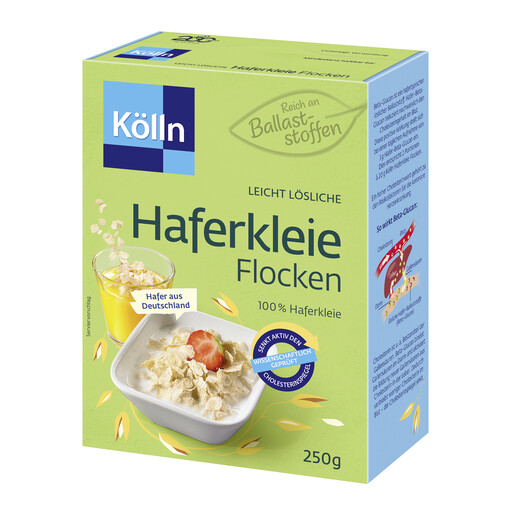
Add oat bran to your porridge if you want to compare the fibre content of the oat ingredient.
Pack size: 250 g. Check the fibre content on the specific pack; figures for other Kölln oat bran products may not be the same.
No. The name ‘oats’ alone doesn’t tell you that. Kölln lists 13 g of protein per 100 g for its fine organic oats, while REWE lists 13.5 g per 100 g for the organic oats reviewed. For your porridge, what matters is the amount you actually use together with the other ingredients.
Oat bran is worth comparing if the fibre in your oat ingredient is particularly important to you and you prefer a fine texture. Kölln says its oat bran flakes contain 19 g of fibre and 18 g of protein per 100 g; for its fine organic oats, the manufacturer lists 9.2 g and 13 g respectively. These figures apply only to these two products.
According to the German consumer advice centre, a product can be labelled ‘source of protein’ if at least 12% of its energy comes from protein; for ‘high protein’, the figure is at least 20%. To plan your porridge, you’ll also need the protein figure in grams and your actual serving size.
No. If you have coeliac disease, don’t choose regular oats unless they carry the appropriate labelling. The German Federal Centre for Nutrition highlights the risk of cross-contamination with gluten-containing cereals and advises choosing oats explicitly labelled gluten-free. Speak to your doctor about any questions concerning your individual tolerance.
Fine or instant oats are an option if you want a soft texture. Kölln says its instant oats dissolve quickly in liquid, while Alnatura says its extra-fine oats soften to a porridge-like consistency in cold liquid too. Check that this applies to the specific product you choose.