Households with staggered mealtimes
If you don’t all eat at the same time, you can choose between baking a fresh portion for each mealtime and reheating waffles later. Cloer’s oat waffle recipe suggests reheating them in a toaster.


If mealtimes are staggered, a single waffle maker is a good fit if you usually bake one fresh portion for each mealtime. A double waffle maker makes more sense when mealtimes overlap and you need several waffles at once. If there’s a long gap between meals, making more waffles in one batch won’t keep them fresh until later: Cloer’s oat waffle recipe suggests reheating them in a toaster. For batter containing eggs, the German Consumer Advice Centre recommends good kitchen hygiene, refrigeration and eating the waffles promptly.
If you don’t all eat at the same time, you can choose between baking a fresh portion for each mealtime and reheating waffles later. Cloer’s oat waffle recipe suggests reheating them in a toaster.
If two people eat at the same time, the number of waffles you can make per batch may matter more than having the most compact appliance. Krups says the FDD95D makes two thick Belgian waffles per batch; Tefal says the WM311D makes two heart-shaped waffles.
When oat batter varies in thickness, it’s worth considering the waffle shape and adjustable browning settings. The results will still depend on the recipe you use. Cloer says the 1621 has a stepless browning control.
First, decide whether you want to bake fresh waffles at each mealtime or make several at once. Then compare the waffle shape, adjustable settings and cleaning method with your recipe and everyday kitchen routine.
| What matters | What to look for | Who it matters most to |
|---|---|---|
| Freshness at mealtime | Consider whether you want to bake individual portions fresh and how you’ll handle waffles once they’re ready. | If I eat at different times, I want to make my portion as fresh as possible rather than keep it waiting for a long time. Roughly 33% of consumers would prioritise freshness at mealtime. |
| Portions per batch | Compare the number and shape of waffles made per batch with your mealtimes. | If two people eat at the same time, I want to bake several suitable waffles at once. Roughly 27% of consumers who prioritise output when eating together would fall into this group. |
| Control when using thick oat batter | Check the browning settings, waffle shape and instructions; test your own recipe with a small amount of batter first. | If I use different oat batters, I want to be able to adjust the browning to suit my recipe. Roughly 20% of consumers would prioritise control over their own oat recipe. |
| Cleaning after baking | Check whether the plates or drip tray can be removed and are dishwasher-safe for the exact model variant. | If I bake several batches, I want to keep the clean-up simple. Roughly 20% of consumers would consider ease of cleaning especially important. |
Oat waffle recipes vary in their ingredients and batter consistency. So a general waffle maker test won’t necessarily tell you how your particular batter will turn out.
Start by choosing the waffle shape, number of portions and adjustable settings you need. Then test your recipe with a small amount of batter.
A double waffle maker increases the number of waffles baked at once, but it won’t automatically keep them fresh or safe until a later meal.
A double waffle maker may suit you if mealtimes overlap briefly. If there’s a long gap, weigh up baking fresh waffles and reheating them later as separate options.
The cleaning method depends on the specific model. Krups says the FDD95D has removable, dishwasher-safe plates and a dishwasher-safe drip tray; Cloer says the 1621’s cooking surfaces should be wiped clean once cooled.
Read the cleaning instructions for the exact model variant and each of its parts.
According to the manufacturer, the Cloer 1621 is a single waffle maker for classic heart-shaped waffles, with adjustable browning.
According to the manufacturer, the FDD95D is designed to make two thick Belgian waffles at the same time.
According to the manufacturer, the WM311D is a double waffle maker for heart-shaped waffles.
According to the manufacturer, the Advanced Control 42424 is designed for two Belgian waffles and offers programmes, adjustable browning and texture settings.
The test results below relate to the AMW500PBS, not the brand as a whole.
The range includes heart-shaped and mini waffle makers, as well as appliances with several cooking plates. Check that the waffle shape and number of portions suit your oat recipe and mealtimes.
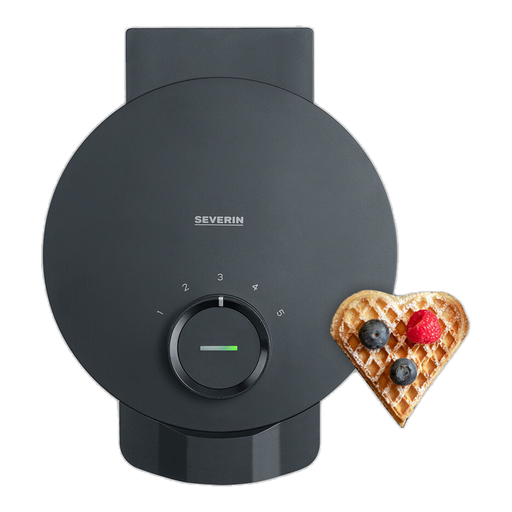 No image available
For making individual heart-shaped waffles when you want to bake one portion at a time.
The product name lists a ready indicator, cord storage and 1000 W.
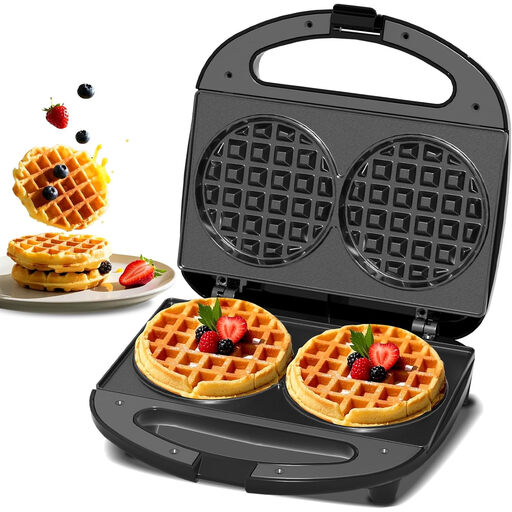 No image available
For making several waffles per batch, provided the stated waffle shape suits your recipe.
The product name lists two waffle plates, a non-stick coating and a cool-touch handle.
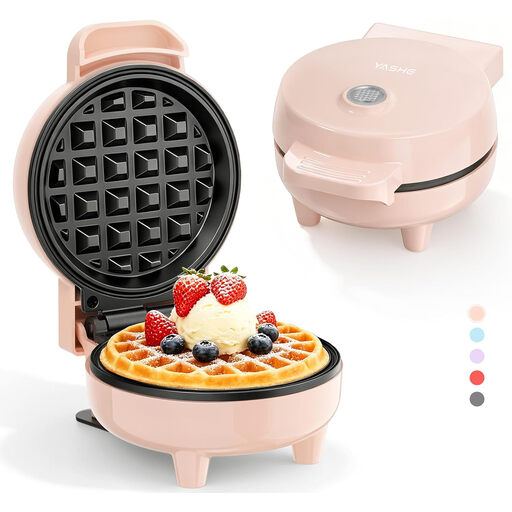 No image available
For small portions, if mini waffles are the right shape for you.
The product name lists 550 W, a non-stick coating, an indicator light and a cool-touch handle.
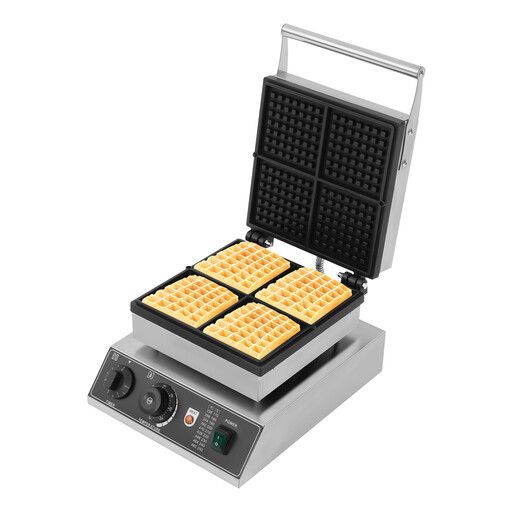 No image available
For making several waffles in one batch, if the stated shape and size suit your recipe.
The product name lists 1750 W, time and temperature controls (0-5min / 122-572°F) and non-stick die-cast aluminium plates.
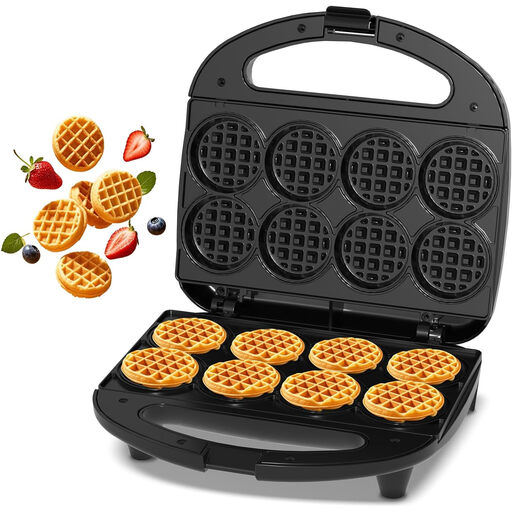 No image available
For making several mini waffles per batch, if small waffles suit your recipe.
The product name lists a non-stick coating.
Not necessarily: Cloer’s oat waffle recipe suggests reheating waffles in a toaster. Another recipe recommends keeping cooked waffles warm on a rack in a preheated oven until you’ve finished baking. This doesn’t establish a generally safe storage time.
For foods containing raw eggs, the German Consumer Advice Centre recommends good kitchen hygiene, refrigeration and eating them promptly. Make sure the waffles are cooked through evenly: the Centre’s general food hygiene guidance says to heat food thoroughly and evenly to at least 70 °C to kill most germs.
Only if the instructions for the specific model variant say so. Krups describes the removable plates and drip tray on the FDD95D as dishwasher-safe; Cloer says to wipe the 1621’s cooking surfaces clean once cooled.
Electrical equipment within the scope of the EU Low Voltage Directive must meet the legal CE marking requirements. EUR-Lex points out that CE marking is not an independent product quality mark. The seller, not the manufacturer, is generally responsible for the statutory guarantee; the German Consumer Advice Centre says this is generally two years for consumer purchases. An additional manufacturer’s guarantee is separate.
In Germany, old electrical equipment should be taken to an authorised collection point, a manufacturer or a retailer that is required to take it back. If you aren’t buying a replacement, retailers’ take-back obligations for small appliances are generally limited to items with no external dimension greater than 25 cm. Local authority collection points accept old electrical equipment regardless of size.