What should you look for when buying?
First, decide whether you want the flakes to soften into the dough or remain noticeable as a texture or topping. To keep track of the salt, check the nutritional information on the specific pack and consider the recipe for the whole loaf.
| What to consider |
What to check when buying |
Who it matters to |
| Salt content |
Compare the salt content per 100 g and the ingredients list for the oats. Also factor in any salt added separately and the other ingredients in your recipe. |
I want to know how much salt the oats and other ingredients add to my bread. For around 46% of consumers, salt content is a key consideration when buying. |
| Flake texture |
Choose finer flakes for a more even incorporation, or jumbo oats for a heartier or more visible texture. Consider how you’ll use them in the recipe. |
If I want the flakes to be visible on the crust, their size matters more to me than achieving the finest dough texture. Around 36% of consumers put this texture consideration first. |
| Gluten-free requirements |
Check that the specific oats are labelled gluten-free, as well as all the other ingredients you’ll use for baking. |
If my bread needs to be gluten-free, I don’t want to rely on the type of grain alone. This requirement takes priority for around 18% of consumers. |
Oats for different baking needs
These oats may suit bread made with finer or coarser flakes, and one variety is explicitly labelled gluten-free. Compare the salt content on each pack to suit your recipe, and check the flake type of the Jeden Tag products before buying.
 No image available
Kölln Fine Rolled Tender Oat Flakes, 500 g
A good choice for bread where you want to work fine oats into the dough or a scald.
Pack size: 500 g. Check the salt content on the specific pack and remember to include any extra salt in the recipe.
View at Joybuy
 No image available
Kölln Gluten-Free Tender Rolled Oats, 500 g
This variety is labelled gluten-free and may suit recipes that call for oats with the same labelling.
Pack size: 500 g. If you need to prepare gluten-free food, also check the labelling on all the other ingredients and take care when handling them during baking.
View at Joybuy
 No image available
Alnatura Organic Fine Rolled Oat Flakes, 400 g
These fine oats may suit bread recipes where you want to work the flakes into the dough.
Organic variety in a 400 g pack. Check the salt content before baking and read the ingredients and allergen information on the pack.
View at Joybuy
 No image available
Jeden Tag Coarse Rolled Oat Flakes, 500 g
If you’re looking for coarser oats for bread or a topping, check the actual product type before buying.
Pack size: 500 g. The product name says coarse flakes, but the ingredients description lists oat flour. Check these details to make sure the texture is right for you.
View at Joybuy
 No image available
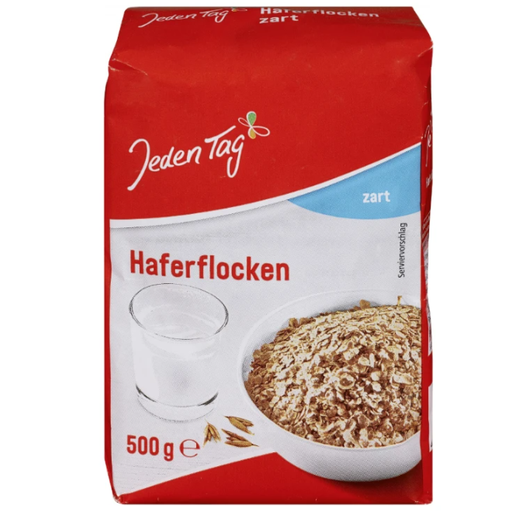
Jeden Tag Fine Rolled Oat Flakes, 500 g
For a recipe that calls for fine flakes, it’s important to check whether this variety really contains rolled oats or oat flour.
Pack size: 500 g. The product name says fine flakes, but the ingredients description lists oat flour. Check the product type before choosing it for a particular bread texture.
View at Joybuy
Frequently asked questions
Are plain oats automatically ‘reduced salt’?
No, you shouldn’t assume this applies to all oats. Kölln states that its organic fine oat flakes contain 0 g of salt per 100 g, while EDEKA24 gives a figure of 0.02 g per 100 g for Gut & Günstig Extra Fine Oat Flakes. For a fair comparison, check the nutritional information for the specific variety.
Will oats automatically make homemade bread lower in salt?
No, the salt content of the finished loaf depends on all the ingredients. Kölln’s oat bread recipe uses salt in both the sourdough and the scald. So consider the whole recipe rather than simply swapping the oats.
When should you use fine oats, and when should you use jumbo oats in bread?
Finer oats are a good choice if you want them to blend more evenly into the dough or scald, while jumbo oats give a heartier, more visible texture. Alnatura describes its jumbo oats as hearty and firm to the bite, and its fine, melting flakes as dissolving straight away. Choose according to the role the oats play in your recipe.
What should I look for in oats for gluten-free bread?
If your whole loaf needs to be gluten-free, choose oats that are explicitly labelled as such and check all the other ingredients too. Kölln describes its gluten-free tender oats as certified gluten-free. When baking, take care to avoid cross-contamination from ingredients and utensils.


