For a breakfast with ingredients you choose yourself, plain wholegrain oats make a good, easy-to-manage base for porridge. Portion size and the make-up of the whole meal still matter. Jumbo and fine oats mainly differ in texture, while if you need to follow a gluten-free diet for medical reasons, it’s essential to check that the specific product is clearly labelled as gluten-free.
Who are these selection criteria important for?
People who like to make their own porridge
If you want to measure out your own sugar, fruit, nuts or dairy products, start with plain oats rather than a ready-flavoured mix. The ingredients list and nutritional information show what’s already in the base.
People with different preferences for texture and preparation time
Jumbo oats tend to stay firm, while fine oats soften more quickly. If you prefer instant or melt-in-the-mouth oats, consider the preparation method and the whole meal rather than assuming the type of oats alone determines your individual blood glucose response.
People who need oats labelled gluten-free
If you have coeliac disease, simply choosing oats or an organic product isn’t enough. Check that the specific pack is clearly labelled as gluten-free, and also follow any individual medical advice you’ve been given.
What should you look for when buying?
Start by checking the ingredients and nutritional information on the specific pack. Then choose the type of oats to suit your preferred texture and preparation time. If you need a gluten-free product, that label takes priority.
| What to look for | What to check when buying | Who it matters most to |
|---|
| Ingredients in the base |
Ingredients list and sugar per 100 g; for mixes, check for added sweetening ingredients too. |
If I’m making my own porridge, I want to know what’s already in the oats. Around 36% of consumers prioritise this level of control over ingredients. |
| Wholegrain and fibre |
Check for a wholegrain label and, where stated, the fibre per 100 g; also consider the portion you plan to eat. |
I’m looking for a wholegrain base for breakfast and want to understand the fibre content shown on the pack. Around 29% of consumers prioritise this. |
| Type of oats |
Check whether they’re jumbo, fine or instant, as well as the preparation instructions. |
In the morning, I want the texture to suit the time I have, without assuming that a particular type of oats will have a specific effect on my blood glucose. Around 21% of consumers base their choice primarily on this. |
| Gluten-free labelling |
Look for an explicit “gluten-free” label and check the current allergen information on the pack. |
If I need to eat gluten-free because of coeliac disease, I need an oat option that’s clearly labelled. This is the main consideration for around 14% of consumers. |
Common misconceptions
-
Assuming all “porridge” is made from plain oats
A porridge mix may contain other ingredients. If you want to choose the ingredients yourself, check the specific product’s ingredients list.
For mixes, compare the ingredients and sugar per 100 g with those in plain oats.
-
Judging instant oats by their glycaemic index alone
diabetesDE reports that porridge made with instant oats has a higher glycaemic index than porridge made with oats cooked in water. However, a meal’s glycaemic index also depends on how it’s prepared and what else it contains.
Choose the type of oats to suit your preferred texture and preparation time, and don’t treat the glycaemic index as a measure of the whole meal.
-
Assuming organic or wholegrain means gluten-free
Organic and wholegrain labels describe different qualities. For example, an EDEKA organic oat product warns that it may contain traces of other cereals containing gluten.
If you need to follow a gluten-free diet for medical reasons, check that the current pack is explicitly labelled as gluten-free.
Brands to help guide your choice
The brands below offer different types of oats or products that are explicitly labelled gluten-free. When comparing them, focus on the information for the specific product rather than the brand name alone.
Kölln
Kölln’s range includes fine organic wholegrain oats that can be used as a porridge base.
- The product page describes the fine organic oats as flakes made from cut oat kernels.
- Check the information for your chosen variety for sugar, fibre and allergens.
Seitenbacher
Seitenbacher sells oat products, including a separate variety of oats labelled gluten-free.
- You can check the gluten-free labelling for this specific variety.
- It doesn’t automatically apply to other products from the brand.
Brüggen
Brüggen makes oat and wheat products.
- The brand offers another option to consider when comparing oat products.
- Choose a specific pack of oats by checking its ingredients and nutritional information.
Alnatura
Alnatura sells organic wholegrain oats in fine and jumbo varieties.
- Fine and jumbo oats give you a clear choice of texture for your porridge.
- Organic and wholegrain don’t automatically mean gluten-free.
REWE
REWE sells fine wholegrain oats, as well as a separate organic variety labelled gluten-free.
- The different product descriptions help you tell plain oats apart from varieties labelled gluten-free.
- Check the ingredients, nutritional information and labelling on the specific pack you choose.
EDEKA
EDEKA’s range includes fine organic oats and jumbo oats.
- The products mentioned are clearly distinguished by their type of oats.
- EDEKA’s organic product information warns that it may contain traces of other cereals containing gluten, so it shouldn’t be considered suitable for a gluten-free diet.
Oats and porridge mix at Joybuy
This selection includes oats to suit different porridge preferences, as well as a mix with additional ingredients. Check the specific pack when choosing for your meal. If you have coeliac disease, take particular care to check the current labelling of any variety described as gluten-free.
 No image available
Kölln fine rolled oats, 500 g
A fine oat option for porridge, ideal if you want to choose the other ingredients in your breakfast yourself. Remember to consider the portion size and the make-up of the whole meal.
View at Joybuy
 No image available
Jeden Tag coarse rolled oats, 500 g
A porridge option described as having a coarse oat base. As the ingredients also list wholegrain oat flour, check the actual product format on the pack if you’re looking for a chunkier texture.
View at Joybuy
 No image available
Kölln coarse rolled oats, 500 g
An oat option for porridge. The title describes it as coarse, while other product information describes a fine texture. Check the type of oats on the pack before choosing it for a firmer bite.
View at Joybuy
 No image available
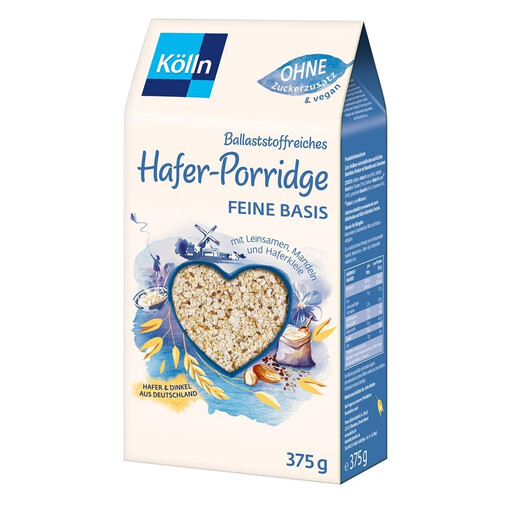
Kölln Pure Rolled Oat Porridge, 375 g
A porridge mix for anyone who prefers a set blend to plain oats. It contains, among other ingredients, wheat flakes, almond flour and linseed. Check the current ingredients and allergen information before buying, especially the details about milk and peanuts.
View at Joybuy
 No image available
Kölln gluten-free fine rolled oats, 500 g
A fine oat option for porridge that’s labelled gluten-free. If you have coeliac disease, it’s essential to check the label on the current pack. If fibre is a priority, also compare the nutritional information.
View at Joybuy
Frequently asked questions
Are oats automatically suitable for breakfast if you have diabetes?
You can’t determine whether a product is suitable for you from its name alone. Oats contain carbohydrates, so consider the portion, ingredients and the whole meal. diabetesDE explains that a meal’s glycaemic index depends on several factors.
Are jumbo oats always a better choice than fine oats?
No, one type of oats isn’t generally better than the other. Jumbo oats are rolled from whole oat grains, while fine oats are made from grains that have been cut first. Choose according to your preferred texture, preparation method and the information on the specific pack.
How can I check whether a product is “high in fibre”?
Compare the fibre content per 100 g shown on the pack. Under EU Regulation (EC) No 1924/2006, a product can be described as “high in fibre” if it contains at least 6 g of fibre per 100 g or 3 g per 100 kcal. The label alone doesn’t indicate whether a meal is suitable for you personally.
Are ordinary oats suitable for people with coeliac disease?
If you need to follow a gluten-free diet for medical reasons, choose oats that are explicitly labelled as gluten-free on the specific pack. EU Regulation (EU) No 828/2014 requires special measures to prevent contamination for oats labelled this way, and sets a maximum gluten level of 20 mg per kg.


