A 1 kg pack is a good choice for the family cupboard if several people eat oats regularly and you can store them somewhere dry and away from heat. If everyone has different preferences, several 500 g packs may be more practical. Jumbo oats are ideal for a bit of crunch in muesli and for baking, while fine oats make a softer porridge. If you have coeliac disease, the consumer advice centre recommends buying only oats that are explicitly labelled gluten-free.
Which option is right for you?
Families who eat oats every day
If you regularly use oats for muesli, porridge and baking, a larger pack could be worth considering. According to its product page, Alnatura’s 1 kg jumbo oats have a hearty texture and are intended for muesli and baking.
Households that prefer smooth porridge and smoothies
If a smooth consistency matters more to you than a bit of bite, consider fine, dissolving or instant oats. Kölln says its instant oats dissolve in both hot and cold liquids.
Households looking for gluten-free options
Here, the label on the specific pack matters more than its size or brand. The consumer advice centre recommends that people with coeliac disease buy only oats that are explicitly labelled gluten-free.
What should you look for when buying?
First, work out how much your household gets through and which texture suits the recipes you make most often. If you need gluten-free oats, check the label on each specific pack, whatever your other preferences.
| What to consider |
What to check when buying |
Who it matters most to |
| Pack size and storage |
Pack size, best-before date and instructions for keeping the oats dry and away from heat. |
If several people in my household eat oats regularly, the pack size should suit how much we use and the space we have to store it. Pack size is the top priority for around 31% of consumers. |
| Texture and how you’ll use them |
Jumbo oats for bite and baking; fine oats for softer porridge. |
If everyone has different breakfast preferences, I don’t want to buy a large pack with a texture that only suits one recipe. The right type of oats is the main concern for around 31% of consumers. |
| Smooth results |
Check whether the pack says fine, dissolving or instant oats, and whether the suggested uses suit your recipe. |
If porridge or a smoothie is on the menu in the morning, a smooth consistency matters more to me than a hearty bite. Around 23% of consumers put this need first. |
| Gluten-free and allergen labelling |
If you have coeliac disease, look for an explicit “gluten-free” label. Also check the ingredients and allergen information on the pack you buy. |
If someone in my household has a dietary requirement, the specific product needs to be labelled accordingly. This check is a priority for around 15% of consumers. |
Common buying mistakes
-
Choosing a large pack without considering how much you use
Once opened, a bulk pack needs to be stored properly until you’ve used it up. If you only eat oats occasionally, remember to check the best-before date too.
Estimate how much your household gets through and check that you have somewhere dry to store the oats, away from heat.
-
Assuming jumbo oats suit everyone
Jumbo oats add bite to muesli and work well for baking. For a really smooth porridge, finer oats are more likely to give you the texture you want.
Choose according to the dishes you actually make. If people in your household have different preferences, it may make sense to buy separate packs of different types of oats.
-
Assuming organic oats are gluten-free
An organic label is not a substitute for a gluten-free label. Some oat packs may also state that they could contain traces of other cereals containing gluten.
For people with coeliac disease, the consumer advice centre recommends oats that are explicitly labelled gluten-free. Check the allergen information on the pack you buy as well.
-
Relying only on the online product listing
For the specific product you choose, the ingredients, allergen information and best-before date on the pack you actually buy are what matter.
Check these details in store or on the packaging when your order arrives.
Brands to consider
Kölln
Kölln offers oats in a range of textures, including an instant variety.
- Kölln says its instant oats dissolve in both hot and cold liquids, and suggests using them for porridge and smoothies.
- The properties of the instant variety don’t automatically apply to other Kölln oats. Check the size of the specific pack if you’re buying to stock up.
Seitenbacher
Seitenbacher describes oats as an ingredient for muesli, porridge and baking.
- These suggested uses can help you choose a type of oats for a range of family recipes.
- Check the pack size and type of oats on the specific product before planning to buy it for the family cupboard.
Brüggen
Brüggen makes mill products and describes how grains are processed into flakes.
- The manufacturer lists cleaning, sorting and steaming among the steps involved in making flakes.
- The manufacturer’s profile doesn’t identify a specific retail pack for the family cupboard.
Alnatura
Alnatura describes its 1 kg pack of organic jumbo oats as a bulk pack.
- The product page describes the oats as hearty, and suitable for muesli and baking.
- The product page notes that the oats may contain traces of soya, mustard and lupin. Being organic is not a substitute for a gluten-free label.
REWE
REWE’s range includes several 500 g packs of oats, including jumbo, fine and explicitly labelled gluten-free varieties.
- The range of oat types makes it possible to choose packs according to texture and labelling.
- Not every listed variety is gluten-free. Check the label on the specific pack.
EDEKA
EDEKA describes 500 g packs of jumbo and extra-fine oats under the GUT&GÜNSTIG brand.
- The two varieties described have different oat textures.
- An EDEKA organic variety is listed as potentially containing traces of other cereals containing gluten and other allergens. The label on the pack you choose is what matters.
Oats at Joybuy
The range includes a multi-pack for stocking up on breakfast essentials, as well as individual 500 g packs with a jumbo or fine texture and a variety labelled gluten-free. Your choice will depend on the type of oats you prefer, how much you need and the labelling on the pack delivered.
 Image unavailable
Kölln fine oats, 4 × 500 g
For households that want to stock up on fine oats in several packs. Four 500 g packs add up to 2 kg, so make sure you have enough dry storage space.
If you need gluten-free oats, check the labelling on the pack delivered.
View at Joybuy
 Image unavailable
Jeden Tag jumbo oats, 500 g
For households that prefer jumbo oats or want to try a single pack of this texture first. The 500 g pack is a smaller option than a large family-sized supply.
Check the ingredients and allergen information on the pack you buy.
View at Joybuy
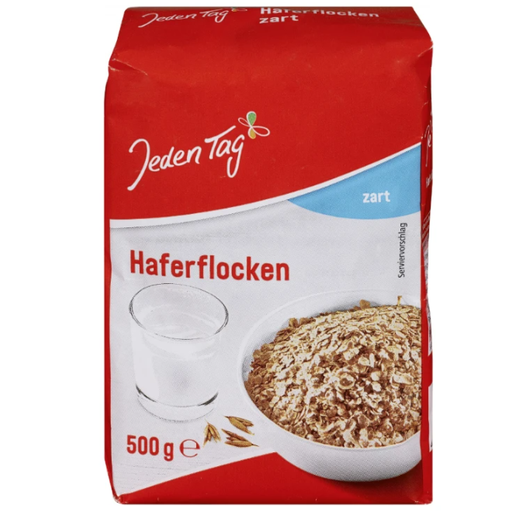 Image unavailable
Jeden Tag fine oats, 500 g
For households that prefer fine oats to jumbo oats for porridge. At 500 g, this individual pack can also be added to a supply of another type of oats.
Check the ingredients and allergen information on the pack you buy.
View at Joybuy
 Image unavailable
Kölln gluten-free fine oats, 500 g
For households looking for fine oats with an explicit gluten-free label. Each pack contains 500 g.
For people with coeliac disease, the consumer advice centre recommends buying only oats that are explicitly labelled gluten-free. Check the label and allergen information on the pack actually delivered.
View at Joybuy
Frequently asked questions
When is a 1 kg pack of oats a good choice for a family?
A 1 kg pack is a practical size for stocking up if several people regularly eat the same type of oats and you can store the pack somewhere dry and away from heat. If you don’t use oats often, or everyone has different preferences, several smaller packs may fit your routine better.
What’s the difference between jumbo, fine and instant oats?
According to the consumer advice centre, jumbo oats are rolled from whole oat grains, while fine oats are made from oats that have been cut first. Jumbo oats are a good choice for muesli with a bit of bite, while fine oats make softer porridge. Kölln says its instant variety dissolves in both hot and cold liquids.
Are regular oats suitable for people with coeliac disease?
Not simply because they’re made from oats. The consumer advice centre recommends that people with coeliac disease buy only oats that are explicitly labelled gluten-free. Check the label and allergen information on the specific pack.
Why should I read the packaging on oats?
The pack you buy gives you the details for that specific product, including its ingredients, allergen information and best-before date. Check these details even if you’ve already looked at the product online.


