Families who want to control the seasoning
When making sweet or savoury oat dishes, plain oats let you consider the salt in the base separately from that in the other recipe ingredients.


Plain, unseasoned oats make a versatile base for lower-salt family meals, as you can control the seasoning in the other ingredients yourself. Compare the salt content per 100 g and choose the type of oats to suit the texture you want. If you need a gluten-free diet, look for an explicit gluten-free label.
When making sweet or savoury oat dishes, plain oats let you consider the salt in the base separately from that in the other recipe ingredients.
Soft porridge calls for a different type of oats from burgers, bread or dishes where you want the oats to retain some bite.
If a gluten-free diet is required, check that the specific oat product is explicitly labelled as gluten-free. The word ‘oats’ alone is not enough.
Start by checking the ingredients and salt content of the oats. Then choose the right type for your planned dish and, if necessary, any gluten-free requirements.
| Criterion | What to check | Who it matters to |
|---|---|---|
| Salt and ingredients | Compare the salt per 100 g and the ingredients list; for ‘less salt’ claims, check the comparison details too. | If I’m seasoning the family meal myself, I want to be able to assess the oats separately from the other ingredients. Around 36% of consumers prioritise keeping an eye on salt and ingredients. |
| Texture | Look for jumbo oats for a more noticeable texture, and fine or extra-fine oats for a softer result. | If I want soft porridge but oats with some bite in a burger, the type of oats makes the difference. This texture is the main concern for around 29% of consumers. |
| Gluten-free labelling | If needed, check that the specific product is explicitly labelled as gluten-free. | If someone in my household needs to eat gluten-free, I need an oat base that is clearly labelled. Around 14% of consumers prioritise this when choosing. |
| Everyday uses | Match the type of oats to the dishes you have planned, such as porridge, bread or burgers. | If I want to use the same basic ingredient in several family meals, how well it works in my recipes matters. Around 21% of consumers prioritise this versatility. |
A comparative claim alone doesn’t tell you how much salt the product contains per 100 g. In the finished dish, you also need to consider ingredients such as stock, cheese, sausages or sauces.
Check both the salt content and the comparison details on the pack. Take the other ingredients into account when seasoning your dish too.
Jumbo and extra-fine oats don’t give you the same texture. This matters particularly when your family wants both soft and more textured dishes.
Choose the type of oats to suit the recipe: fine or extra-fine for softer dishes, and jumbo or large-flake oats for more texture.
The name of the grain alone doesn’t tell you whether a product is suitable for a gluten-free diet.
Check that the specific product is explicitly labelled as gluten-free and follow any individual medical advice.
Serving sizes can vary between products, making the figures difficult to compare unless they use the same reference amount.
Start by comparing the nutrition information per 100 g, then take account of the amount you’ll actually use in your recipe.
The brand offers different types of oats. When choosing for a family meal, it’s worth checking the texture and labelling of each variety.
Alnatura’s fine and extra-fine oats are options for different texture preferences.
The organic jumbo oats labelled gluten-free are an option if you need a coarser base with clear gluten-free labelling.
Seitenbacher suggests savoury ways to use oats too, including in burgers and soups.
This selection includes fine, jumbo and explicitly gluten-free labelled oats for a range of family meals. As well as the type of oats, compare the information on each pack.
 Image unavailable
A fine variety for when you want a soft texture in the family porridge. If you need gluten-free oats, choose a variety that is explicitly labelled as such.
 Image unavailable
This fine variety is labelled gluten-free, making it an option if you need that labelling and want a softer texture. If you have specific dietary requirements, check the current pack.
 Image unavailable
This coarser variety is a good choice for dishes where you want the oats to retain some texture. Check the pack size before buying, as the information available varies.
 Image unavailable
Fine organic oats for families looking for a softer texture. For a lower-salt dish, compare the nutrition information per 100 g on the pack.
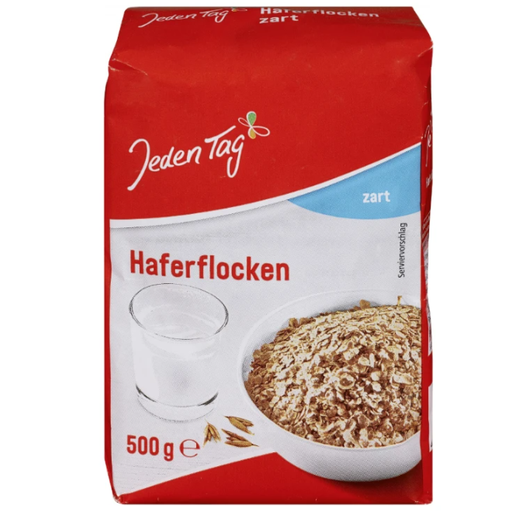 Image unavailable
A fine variety for dishes where you don’t want a coarse oat texture. If you have specific requirements relating to gluten or other allergens, check the current pack labelling.
It depends on the salt content of the specific product and the ingredients in the whole dish. Kölln lists 0 g salt per 100 g for its organic jumbo oats, while Alnatura lists 0.02 g per 100 g for its extra-fine variety. Remember to account separately for any other ingredients that contain salt.
No. A comparative claim doesn’t replace checking the salt content per 100 g. Check what the comparison on the pack refers to as well, and consider the other ingredients in your recipe.
Start by comparing the nutrition information per 100 g. The Verbraucherzentrale explains this reference amount for food labelling. You can then factor in the amount you’ll actually use in your family meal.
Choose oats with an explicit gluten-free label rather than assuming they’re suitable just because they’re oats. If you have coeliac disease, also follow any individual medical or dietary advice.