Who is this stock-up for?

Families who eat oats regularly

If you make porridge several times a week or bake with oats, you can choose between a 1-kg pack and a multipack. Consider how quickly you’ll use them, whether you have suitable storage space and which type of flake suits your usual recipes.

Households that make porridge and baked treats

If you want to use the same oats in different recipes, texture matters: fine flakes give a smoother result, while jumbo or large-flake oats add more bite. For savoury dishes served with a Sunday roast, choose a flake type that suits the recipe you have in mind.

Households that need to avoid gluten due to coeliac disease

For these households, the words ‘oats’ or ‘organic oats’ aren’t enough. The German Federal Centre for Nutrition advises people with coeliac disease to choose oats that are explicitly labelled gluten-free because of the way they are produced.

What should you look for when buying?

First decide whether you’ll mainly use the oats for porridge, baking or a particular savoury recipe. Then you can narrow down the pack size and any other requirements.

Criteria What to check Who it matters to
Amount to stock up on Compare the net weight and number of packs: for example, 1 kg or 4 × 1.250 g. Check the storage instructions. If oats are a regular feature on your table, choose a supply that suits how quickly you’ll use them and the space you have available. This is the main consideration for around 36 % of consumers.
Flake texture Choose fine or extra-fine, or jumbo or large flakes, depending on the recipe you have in mind. If you prefer creamy porridge or want a particular texture in your baking, start by choosing the right type of flake. Around 29 % of consumers make this their priority.
Organic labelling Check the label on the specific pack, along with its ingredients and ‘may contain’ information. When stocking up, organic labelling may matter more to me than buying the largest pack possible. It’s the main selection criterion for around 21 % of consumers.
Gluten-free labelling Look for an explicit gluten-free label and check the information on the specific pack. If you’re buying oats for someone with coeliac disease, suitable labelling takes priority over quantity and texture. Around 14 % of consumers put this requirement first.

Common buying mistakes

  • Choosing a family pack on weight alone

    A multipack with a total weight of 5 kg takes up storage space. If you only use oats occasionally or switch between fine and jumbo flakes, you may not need such a large quantity of one type.

    Estimate how much you’ll use in the recipes you actually plan to make before choosing between 1 kg and a multipack.

  • Assuming fine and jumbo flakes are interchangeable

    The German consumer advice centre distinguishes fine flakes made from cut oats from jumbo flakes made from whole rolled grains. Depending on your recipe, you may need a different type to get the texture you want.

    For smoother porridge, choose fine flakes; for more bite, opt for jumbo or large flakes. Check the recipe requirements for baked goods and savoury dishes.

  • Assuming organic oats are automatically gluten-free

    An organic label doesn’t tell you whether a product is gluten-free. For example, one organic product described by EDEKA warns that it may contain traces of other cereals containing gluten.

    If you have coeliac disease, look for oats that are explicitly labelled gluten-free and check the information on the specific pack. The German Federal Centre for Nutrition highlights the importance of the production process.

  • Assuming every pack from a brand is the same

    Flake type, pack size and allergen information can vary between products from the same brand. A range overview is no substitute for checking the details of the product you’ve chosen.

    Before buying, check the specific product name and, when it arrives, read the packaging carefully. This is especially important if you need a particular texture or allergen labelling.

Brands and ranges to help you choose

Kölln

Kölln offers fine and jumbo oat flakes, as well as a multipack of Blütenzarte Köllnflocken containing 4 × 1.250 g.

  • The Kölln shop describes its fine wholegrain flakes as a versatile ingredient for porridge and baking.
  • The product page for this specific fine-flake variety says it may contain traces of nuts and milk. If you have coeliac disease, look for a variety that is explicitly labelled gluten-free.

Alnatura

Alnatura offers fine and large-flake oats. The large-flake pack described contains 1 kg and is labelled as a Demeter product.

  • Alnatura describes its large flakes as hearty and firm, and suitable for muesli, porridge and baking.
  • This large-flake pack may contain traces of soya, mustard and lupin. Organic and Demeter labelling is no substitute for a gluten-free label.

Seitenbacher

Seitenbacher also presents oats as an ingredient for sweet and savoury recipes.

  • The manufacturer suggests using oats in biscuits, veggie patties, soups and sauces, among other dishes.
  • For a family stock-up, check the pack size, flake type and allergen information on the specific product.

Brüggen

Brüggen is relevant here as a manufacturer of cereal flakes and a partner for own-label ranges, rather than as a specific family pack.

  • Brüggen describes processing steps for cereal flakes such as cleaning, sorting, steaming and rolling.
  • When deciding what to buy, the information on the specific consumer pack is what matters. The manufacturer’s name alone doesn’t tell you the pack size or labelling.

REWE / ja!

REWE sells various types of oats. One example is ja! Jumbo Oat Flakes in a 500-g pack.

  • For this ja! pack, REWE lists wholegrain oat flakes and advises storing them in a dry place away from heat.
  • At 500 g, this pack is smaller than the stock-up sizes considered here: 1 kg or a multipack. Check the specific pack if you need a larger supply.

EDEKA

EDEKA’s range described here includes extra-fine and jumbo oat flakes, including 500-g products.

  • EDEKA describes its organic extra-fine variety as flakes made from chopped and rolled oat kernels.
  • The product information says it may contain traces of other cereals containing gluten, lupin, mustard and soya. Always check the information on the pack you choose.

Oats at Joybuy

This selection mainly features fine oat products for porridge and baking. The packs contain 400 g or 500 g, so they’re smaller than the 1-kg-and-up supplies discussed in this article. Check each product to make sure the quantity and flake type suit your recipes.

Kölln Fine Oat Flakes, 500 g

Kölln Fine Oat Flakes, 500 g

For households looking for fine flakes for porridge or baking, and where a 500-g pack is enough. If you have coeliac disease, you’ll need a variety that is explicitly labelled gluten-free.

View at Joybuy

Kölln Gluten-free Fine Oat Flakes, 500 g

Kölln Gluten-free Fine Oat Flakes, 500 g

A 500-g pack of fine flakes for porridge and baking, with a product name that identifies them as gluten-free. If gluten-free labelling is essential, check the details on the current packaging.

View at Joybuy

Alnatura Organic Fine Oat Flakes, 500 g

Alnatura Organic Fine Oat Flakes, 500 g

Fine oat flakes for porridge and baking, in a 500-g pack for when that quantity suits your needs. The organic label does not mean the product is labelled gluten-free.

View at Joybuy

Alnatura Organic Fine Oat Flakes, 400 g

Alnatura Organic Fine Oat Flakes, 400 g

A 400-g pack of fine flakes for porridge and baking. If you’re planning a larger family stock-up or need gluten-free labelling, check those requirements separately.

View at Joybuy
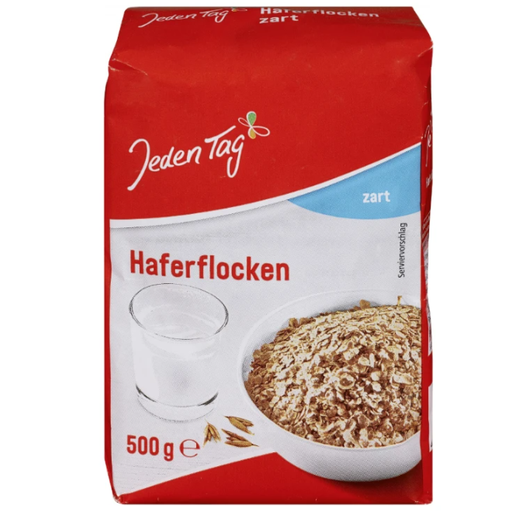
Jeden Tag oat product, 500 g; check the product form before buying

Jeden Tag oat product, 500 g

This 500-g product may suit porridge or baking only if the form you receive works for your recipe: the title and description refer to fine oat flakes, but the ingredients list says oat flour. Check the specific product form and packaging information before buying.

View at Joybuy

Frequently asked questions

When is 1 kg of oats enough, and when is a multipack a better choice?

A 1-kg pack is a manageable supply if how quickly you use oats varies, or your family likes to use different types of flakes. A multipack, such as Kölln’s 4 × 1.250 g, is better suited to regular, high use and households with enough storage space. It’s worth deciding on your preferred texture first.

Which flakes are best for porridge, and which for baking?

Fine flakes are a natural choice for smoother porridge, while jumbo or large flakes retain more bite. For baking, it depends on the texture you want: Kölln recommends its fine flakes as a baking ingredient, and Alnatura also says its hearty large flakes are suitable for baking.

Are regular or organic oats suitable for people with coeliac disease?

No. You can’t tell whether they’re suitable from the ingredient ‘oats’ or an organic label alone. The German Federal Centre for Nutrition advises people with coeliac disease to choose oats that are explicitly labelled gluten-free because of the way they’re produced. Check the specific packaging.

How should I store a larger supply of oats?

Follow the instructions on the pack you choose. For example, REWE advises storing its ja! Jumbo Oat Flakes in a dry place and away from heat. If you’re buying a multipack, make sure you have space for all the individual packs before you order.

Do oats belong with a Sunday roast?

Oats aren’t an essential accompaniment to a Sunday roast; it depends on whether the recipe you’re making calls for them. Seitenbacher lists oats as an ingredient in savoury dishes such as veggie patties, soups and sauces. So choose your stock-up pack based on the recipes your household actually makes.