For a regular shared breakfast, a 1 kg pack makes sense if your group will use all the oats and can store them somewhere dry and away from heat. If consumption varies, 500 g offers more flexibility. Fine or small-flake oats are well suited to a smoother porridge, while jumbo oats give your breakfast more bite. If someone with coeliac disease will be eating with you, make sure the shared pack is explicitly labelled gluten-free.
Which oats are right for you?
Groups who eat breakfast together regularly
If you often have breakfast together during term time, a larger pack can mean fewer repeat purchases. The key things to consider are how much you’ll actually use, whether you have a dry place to store the oats and whether the texture suits the way you plan to prepare them.
Groups who prefer smooth porridge
For a less textured porridge, try fine or small-flake oats. The consumer advice centre distinguishes between fine oats made from cut oats and jumbo oats made from whole grains.
Groups who need to shop gluten-free
If the oats are for someone with coeliac disease, check the label on the specific pack you’re buying. The consumer advice centre recommends choosing oats that are explicitly labelled gluten-free.
What should you look for when shopping?
For a shared breakfast, start by working out how much you’ll use and how you’ll store it, then decide on the texture you prefer. Any specific requirements around ingredients and labelling must match the pack you actually buy.
| Criteria |
What to check when buying |
Who it matters to |
| Pack size and consumption |
Choose between 500 g and 1 kg based on how you plan to use the oats; check the best-before date and storage instructions. |
If we often have breakfast together, I want to keep a supply without leaving an opened pack unused for too long. Planning ahead matters most to around 36% of consumers. |
| Texture |
Choose between jumbo or whole flakes and fine or small flakes, depending on how you plan to prepare them. |
For a quick, smoother porridge, I want less bite than I would in a bowl made with jumbo oats. Around 29% of consumers put finding the right texture first. |
| Gluten-free labelling and allergens |
If needed, check that the pack is explicitly labelled gluten-free, and review its ingredients and allergen information. |
If someone with coeliac disease is eating with us, I need to choose a suitably labelled pack for our shared breakfast. This is the main consideration for around 21% of consumers. |
| Organic and origin |
Check the organic label and the specific country-of-origin information for the product you’ve chosen. |
If our group wants a particular organic or origin label, I want to be able to check it on the individual product. Around 14% of consumers prioritise this. |
Avoid common buying mistakes
-
Choosing a large pack without considering how much you’ll use
A 1 kg pack only means fewer repeat purchases if your group eats oats regularly and you can store the supply appropriately.
Plan around how often you actually have breakfast together. If you use oats irregularly, 500 g is the more flexible option to compare.
-
Assuming all types of oats are interchangeable
Alnatura describes its 1 kg jumbo oats as hearty and firm. If you’re expecting a smoother porridge, this flake texture may not give you the result you want.
Before you buy, decide whether you want more bite or a smoother texture, then compare the descriptions on the packs.
-
Assuming organic or wholegrain means gluten-free
These labels don’t replace a gluten-free label. The consumer advice centre recommends that people with coeliac disease only buy oats explicitly labelled gluten-free.
Before preparing breakfast for everyone, check the labelling, ingredients and allergen information on the specific pack.
-
Relying on the product image alone
For anyone with allergies or coeliac disease, the information on the pack you’ll actually be using is what matters.
Before preparing breakfast together, check the current ingredients list and allergen information.
Brands and product ranges to help you choose
Kölln
Kölln offers oats with different textures. When choosing, the specific variety’s texture—jumbo or fine—is more important than the brand name alone.
- Peter Kölln describes its organic jumbo oats as flakes made from whole oat grains.
- Check the pack size and ingredients for the specific variety you want. Information about jumbo oats won’t necessarily apply to fine varieties.
Alnatura
Alnatura offers jumbo oats in a 1 kg pack for groups who use them regularly.
- Alnatura describes this jumbo variety as hearty and firm, and says it’s suitable for porridge, muesli and baking.
- If you prefer a really smooth porridge, compare the jumbo texture carefully with finer varieties.
REWE Bio
REWE Bio’s jumbo oats in a 500 g pack are a good option if your group’s consumption varies and a smaller pack suits you better.
- REWE lists oats as the ingredient in this jumbo variety.
- If you have breakfast as a group often, you may need to buy a 500 g pack more frequently. Your actual consumption is the deciding factor.
EDEKA Bio / GUT&GÜNSTIG
EDEKA offers both jumbo and extra-fine oat varieties, so you can choose according to the texture you prefer.
- EDEKA describes its extra-fine GUT&GÜNSTIG oats as cut and rolled oat kernels.
- Check the type of oats, ingredients and allergen information for each product rather than assuming the details are the same across varieties.
Brüggen
Brüggen is a relevant oat producer, even though shoppers often focus on the specific own-brand product they’re buying.
- H. & J. Brüggen describes the steps involved in processing oats, from cleaning and steaming to rolling and packing.
- This doesn’t tell you the pack size or ingredients for every product. Compare the details of the specific item you’re buying.
Oats and porridge at Joybuy
These products offer a range of pack sizes and oat textures for a shared breakfast: from individual 500 g packs and a multipack to a porridge mix and a variety labelled gluten-free. For your group, compare the net weight, product type and pack labelling in particular.
 No image available
Alnatura organic fine oats, 500 g
An individual 500 g pack is worth considering if your group’s consumption varies and you prefer fine oats for porridge.
Before preparing breakfast together, check the ingredients and allergen information on the pack.
View at Joybuy
 No image available
Kölln fine oats, 4 × 500 g
This multipack is worth comparing if your group uses fine oats regularly and has room to store several packs.
It contains four 500 g packs. Check the storage and allergen information on the specific packs.
View at Joybuy
 No image available
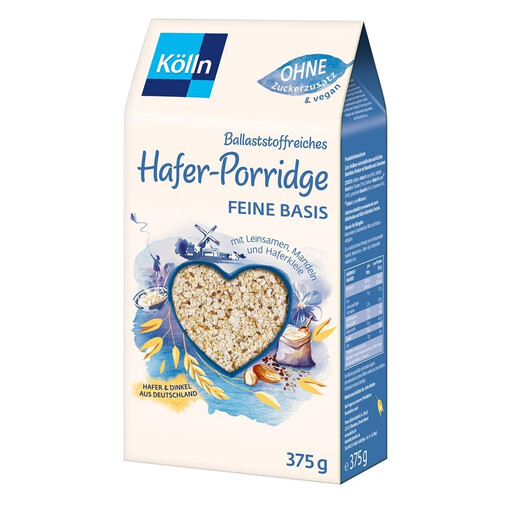
Kölln Pure Rolled Oat Porridge, 375 g
This 375 g porridge mix is a smaller option if you’re not regularly shopping for a large group.
It isn’t the same as a pack of plain oats. Before serving, check the ingredients and allergen information, especially for wheat and almonds.
View at Joybuy
 No image available
Steamed instant porridge, 700 g
This 700 g pack is an option if you’re looking for instant porridge rather than traditional jumbo oats.
Compare the preparation instructions and full allergen labelling on the pack. Don’t choose this product for gluten-free catering based on its oat description alone.
View at Joybuy
 No image available
Kölln gluten-free fine oats, 500 g
These fine oats, labelled gluten-free, are a 500 g option if the shared pack needs to be explicitly labelled gluten-free.
Before serving, check the current labelling, ingredients and allergen information on the pack.
View at Joybuy
Frequently asked questions
When is a 1 kg pack a better choice than 500 g?
A 1 kg pack suits regular shared breakfasts, as long as you can store the oats somewhere dry and away from heat. If the group size or people’s preferences vary, individual 500 g packs give you more flexibility.
Which oats are best for smoother porridge?
Fine or small-flake oats are the obvious choice for a smoother texture. If you want more bite in porridge, muesli or bowls, compare them with jumbo oats. Alnatura specifically describes its jumbo variety as firm.
Are ordinary oats suitable for someone with coeliac disease?
No, the word ‘oats’ on its own isn’t enough. The consumer advice centre recommends that people with coeliac disease only buy oats explicitly labelled gluten-free. If you’re preparing food for everyone, check the current labelling on the pack.
What should the group check on the pack before serving?
Above all, check the ingredients list and allergen information on the pack you’re actually using. For planning your shop, the net weight, best-before date and storage instructions are also useful. The nutritional information lets you compare individual products.


