Households planning to stock up
You’re shopping for several uses around the barbecue and already know how you’ll use any leftover oats. As well as the quantity, it’s important to consider whether you can store the packs in a cool, dry place.


Choose the amount for your barbecue based on the recipes you’re planning and whether you can store any leftover oats in a cool, dry place and use them later. Fine oats work well for porridge and recipes where you want a compact mixture; jumbo or large-flake oats add more texture. If you have organic, gluten-free or allergen requirements, check the labelling on the specific pack.
You’re shopping for several uses around the barbecue and already know how you’ll use any leftover oats. As well as the quantity, it’s important to consider whether you can store the packs in a cool, dry place.
If you’re using oats in vegetarian burgers or baked goods, choose the type of oats to suit the texture you want. For example, a REWE recipe uses fine oats and liquid to make a firm mixture that can be shaped.
Check the ingredients, allergens and organic labelling on the exact product you plan to use. Information about a different pack from the same brand isn’t enough.
First, decide which recipes you’re making and how much you’ll need. Then you can work out whether a larger pack suits your plans for using the rest, or whether a smaller pack will do.
| What to consider | What to check when buying | Who it matters to |
|---|---|---|
| Pack size | Compare the pack weight with how much you expect to use after the barbecue and the storage instructions. | If I’m planning to use oats for several meals, I want to store any leftovers properly and use them later. Around 45% of consumers would put having a useful supply of oats at the top of their shopping priorities. |
| Oat texture | Choose between fine, jumbo and large-flake oats to suit your main recipe; if you’re making burgers, check the amount of liquid in the recipe too. | I need a different texture for burgers that hold their shape or porridge than I do for muesli with more noticeable flakes. The right texture would be the top priority for around 33% of consumers. |
| Labelling | Check the ingredients, allergens, may-contain warnings and, where relevant, organic or gluten-free labelling on the specific pack. | If guests need to avoid certain ingredients or I’m specifically looking for organic oats, the labelling determines what I choose. For around 22% of consumers, this would be the main consideration. |
If you’re making burgers or baking just once, you may have more oats left over than you want to use later. A larger pack is most practical when you’ve already planned to use the rest for other meals.
Estimate how much you’ll need from your recipes and check the pack’s storage instructions before you buy.
Any oats you don’t use will still need a suitable place to be stored after the barbecue.
The Verbraucherzentrale explains that fine oats are made from oats that have been cut before rolling, while jumbo oats are rolled from whole grains. This difference in texture can affect how well they suit your recipe.
Choose the type of oats to get the texture you want. For burgers, follow the full recipe too: one REWE recipe uses fine oats and adds liquid until the mixture can be kneaded.
Ingredient and potential trace information is specific to each product. Kölln says its Blütenzarte XXL oats may contain traces of nuts and milk; Alnatura says its 1-kg large-flake oats may contain traces of soya, mustard and lupin.
Check the current packaging for every variety you use, especially if guests have allergen requirements or need gluten-free labelling.
EDEKA notes that listed products may not be available in every store, and product information may differ from what’s on the packaging. This is particularly important if you’re shopping shortly before the barbecue.
Check in good time whether your preferred variety is available locally, and compare the product information with the pack itself.
These examples show a range of pack sizes and oat textures. The details relate to the specific products listed, not to every variety from each brand.
Kölln sells fine and jumbo oats. For a larger stock-up option, the Kölln shop offers Blütenzarte Köllnflocken XXL in a 4 × 1.250 g pack.
Alnatura describes its 1-kg pack of large-flake oats, made from Demeter organic wholegrain oats, as hearty and firm to the bite.
REWE lists ja! Jumbo Oats as a 500-g pack of wholegrain oats.
EDEKA’s organic range includes extra-fine oats in a 500-g pack.
This selection includes 500-g packs of coarse or fine oats, as well as a fine variety labelled gluten-free. They’re useful for comparing oat textures for individual recipes; if you want to stock up, you’ll need to work out how many packs you need.
 Image unavailable
The coarse texture is worth considering if you want more noticeable flakes in baked goods or savoury recipes.
If you have allergen requirements, check the labelling on the specific pack.
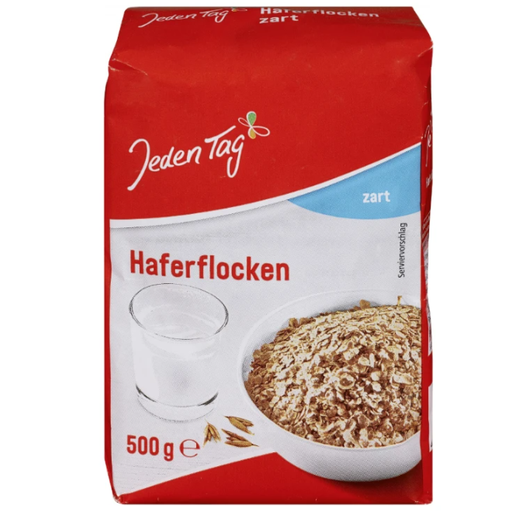 Image unavailable
Fine oats are a good choice for porridge or baking recipes where you don’t want a noticeably coarse texture.
If your guests have allergen requirements, follow the information on the specific pack.
 Image unavailable
This fine variety may suit porridge and baking recipes if you’re specifically looking for a pack labelled gluten-free.
If guests need gluten-free labelling, check it alongside the allergen information on the specific pack.
A larger pack makes sense if you’re planning to use oats in several recipes and after the barbecue. For a single burger or baking recipe, a 500-g or 1-kg pack may be easier to plan for; use the quantities in your chosen recipe as a guide.
Fine oats can work well in a firm burger mixture: one REWE recipe combines them with liquid to make a mixture that can be kneaded. If you want a coarser texture, jumbo oats are an option; whether the burgers hold their shape also depends on the other ingredients and the amount of liquid.
Follow the instructions on the relevant pack and store the oats in a cool, dry place, as Alnatura and ja! specify for the products mentioned. According to Lebensmittelverband Deutschland, the best-before date is a quality date, not an automatic throw-away date; the condition of the product and how it has been stored still matter.
Check the ingredients list, highlighted allergens and any may-contain warnings on every pack you use. EU labelling rules require ingredient and allergen information for prepacked foods; information for another product variety is no substitute for checking the pack you actually buy.