
Lieferung heute & morgen

Qualitätsgarantie

Willkommens-Angebote freischalten: KOSTENLOSE Lieferung | Bis zu 80 % RABATT | Kostenlose 30-Tage-JoyPlus-Testphase
App herunterladen
An illuminated warning light on your dashboard can quickly lead to uncertainty and the fear of high garage bills. An OBD2 diagnostic tool promises a solution: read fault codes yourself, reset service indicators, and keep an eye on your vehicle's health. However, the market is overwhelming and filled with offers that seem attractive at first but can later turn out to be costly bad investments. Before you make a decision, it's crucial to understand the most common pitfalls.
To make an informed decision, it is essential to understand the technical features that distinguish a good tool from an inadequate one.
Selecting the right device depends on your specific needs. Whether you're looking for a diagnostic tool for DIY mechanics or need a professional diagnostic tool for your workshop, these three parameters are decisive.
A tool's ability to delve deep into the vehicle's electronics is its most important feature. There are clear levels here:
Modern vehicles require service intervals to be reset or new components to be relearned after many maintenance tasks. A diagnostic tool with service reset capabilities saves you real money here. Pay attention to the availability of the functions relevant to you:
Check carefully which functions are included in the purchase price and whether they are available permanently or only for a limited period (e.g., one year). Models with lifetime updates offer the greatest cost security.
A tool is only as useful as the number of vehicles it can communicate with. While most devices promise broad coverage for European, Asian, and American brands, the difference is in the details, especially with newer models. Modern vehicles increasingly use new communication protocols like CAN-FD and DoIP (Diagnostics over Internet Protocol). A device that supports these standards is a future-proof investment and ensures compatibility with next-generation vehicles.
Based on these criteria, we have identified several devices that represent a smart choice for different user groups.
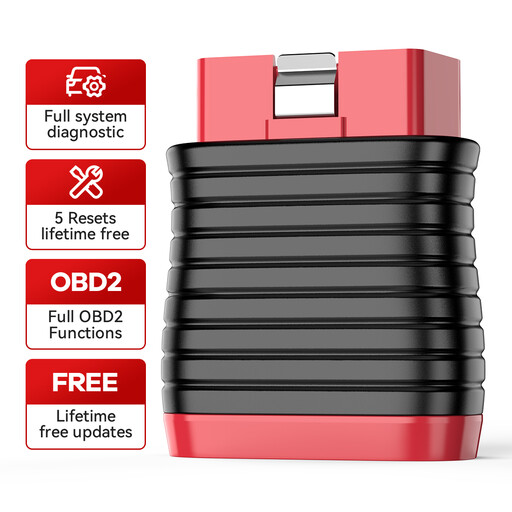
Why it's a good fit: Ideal for users seeking reliable full-system diagnostics for home use. The focus is on reading and clearing fault codes in all control units without getting lost in complex extra features. Operation via the smartphone app is intuitive.
This device offers lifetime free use for full-system diagnostics and its five included reset functions. There are no hidden subscriptions or recurring costs for the core feature set.
Provides full system diagnostics that go far beyond just reading engine faults. Includes 5 essential service resets (Oil, Brake, ABS, IMMO, ETS) for basic maintenance tasks.
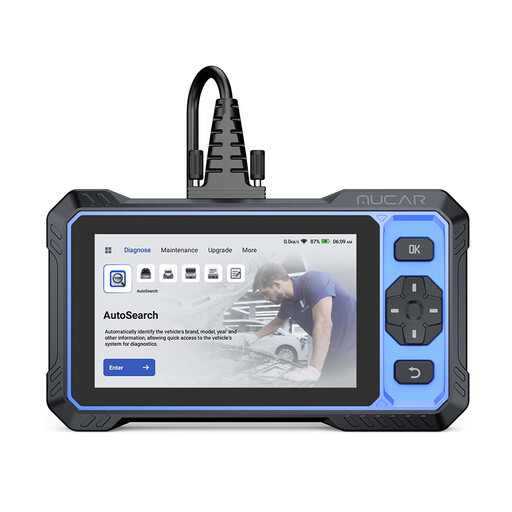
Why it's a good fit: For the advanced DIY mechanic who wants to not only clear fault codes but also actively troubleshoot. The bi-directional control enables component tests that are otherwise only possible in professional workshops.
Offers lifetime free updates for all functions, including full-system diagnostics and the 20+ service functions. There are no annual license fees, which allows for clear cost control.
Features bi-directional control for active tests and supports the CAN-FD protocol for newer vehicle models. The AI-powered diagnostics assist in interpreting fault codes.
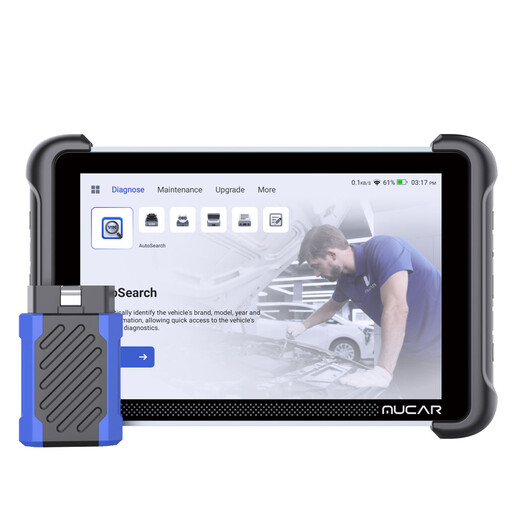
Why it's a good fit: Designed for daily workshop use. It combines advanced features like ECU coding and bi-directional tests with broad vehicle coverage and support for the latest protocols (CAN-FD & DoIP), making it a versatile work tool.
The promise of lifetime free updates is a crucial economic factor for workshops in this performance class, as it makes operating costs predictable and eliminates expensive annual licenses.
Offers advanced ECU coding for adapting and replacing modules. Its expandability with add-on tools (e.g., oscilloscope, endoscope) makes it a flexible diagnostic platform.
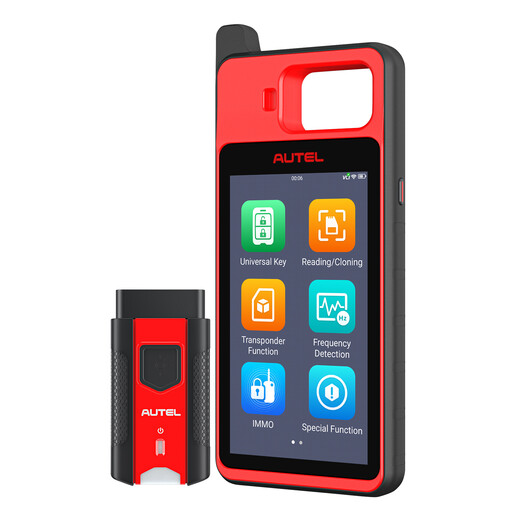
Why it's a good fit: This is not a general diagnostic tool, but a specialized tool for IMMO and key programming. It is intended for workshops or advanced users who regularly need to create, clone, or learn keys for a wide variety of vehicle brands.
Offers lifetime free software updates for its specialized functions. Users do not have to worry about additional fees for updating the vehicle database or programming algorithms.
Enables 60-second key generation for Autel IKEY universal keys and covers over 700 vehicle models. Functions like transponder reading, writing, and cloning are directly integrated.
We have compiled a complete, up-to-date list of products that fully meet these strict selection criteria and UK/EU regulations.
In the European Union, OBD2 compatibility generally applies to all petrol vehicles from the 2001 model year onwards and diesel vehicles from 2004. For vehicles built before these dates, or for specific models, it is advisable to check the diagnostic tool manufacturer's compatibility list. Professional tools often provide a detailed vehicle coverage list on their website.
A simple code reader can only receive information from the vehicle (passively), i.e., read fault codes and live data. A tool with bi-directional control can also send commands to the vehicle's control units (actively). This allows you to specifically actuate individual components like fuel pumps, valves, or lights to check their function without having to remove them. This significantly speeds up troubleshooting.
This depends on the manufacturer and the device model. Some providers charge annual subscription fees to receive updates for new vehicle models, fault codes, and service functions. Other models advertise the feature "lifetime updates," where all future software updates are included in the original purchase price. For long-term cost control, such a model is often the better choice.