
Lieferung heute & morgen

Qualitätsgarantie

Willkommens-Angebote freischalten: KOSTENLOSE Lieferung | Bis zu 80 % RABATT | Kostenlose 30-Tage-JoyPlus-Testphase
App herunterladen
An illuminated check engine light is often the start of a costly trip to the workshop. For dedicated home mechanics and anyone wanting to handle maintenance tasks like an oil service reset themselves, a personal OBD2 diagnostic scanner is a worthwhile investment. It not only allows you to read and clear fault codes but, depending on the model, can also perform in-depth system analyses and service functions.
This article serves as a guide. We will introduce different types of scanners and explain the crucial criteria to help you find the right automotive diagnostic tool for your needs.
The selection of scanners is vast. To find the right model, you should consider three key aspects that determine its feature set and long-term usability.
A simple fault code reader can read and clear codes. For more ambitious users, however, advanced functions are essential. These include:
Modern diagnostic scanners often connect wirelessly to a smartphone or tablet. A Bluetooth OBD2 scanner offers great flexibility, as you are not tethered to the vehicle by a cable. Make sure the device is compatible with your operating system (iOS or Android).
Vehicle coverage is equally important. Before purchasing, check if the all-makes diagnostic tool is suitable for the brands you intend to service. Some scanners specialize in specific manufacturers, while others offer broad coverage for European, Asian, and American vehicles. Protocols like CAN FD are becoming increasingly important for newer vehicles (e.g., from GM since 2020).
The cost structure is an often-overlooked but critical point. Some manufacturers offer lifetime free updates for all functions. Other models require annual subscriptions for advanced diagnostic or service functions. A scanner with free updates represents a one-time investment and protects against unexpected recurring costs.
Based on the criteria mentioned, we have compiled a selection of scanners that are well-suited for DIY use due to their range of functions and value for money.
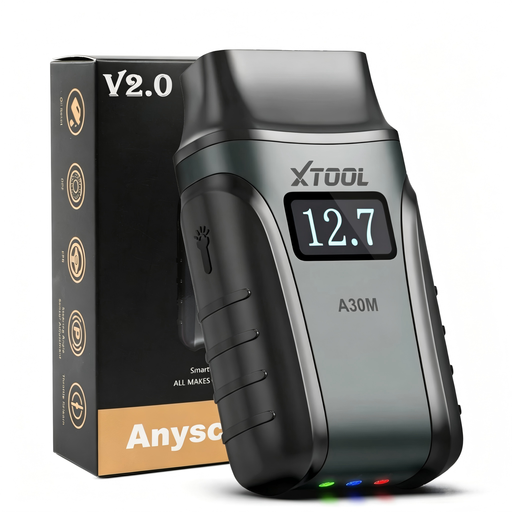
Why It Stands Out The XTOOL A30M is a powerful, wireless automotive diagnostic tool aimed at users who want to do more than just read fault codes. Its strength lies in its bi-directional control, which allows for active testing of vehicle components—a feature often found only in more expensive professional-grade tools.
With lifetime free updates for all functions and a wide range of over 26 service resets, it is a cost-effective long-term solution. Support for the CAN FD protocol and the FCA AutoAuth function for newer Fiat/Chrysler models makes it future-proof.
Pros:
Who is it for? For ambitious DIY mechanics who want to perform in-depth diagnostics, actively test components, and handle a variety of maintenance tasks on different vehicle brands themselves.
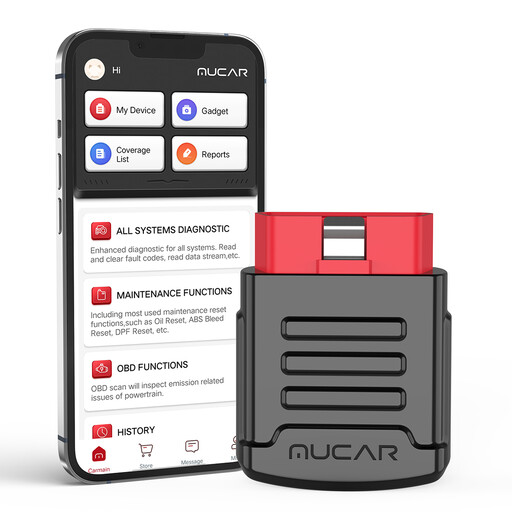
Why It Stands Out The MUCAR BT200 Pro offers a balanced mix of diagnostic depth and service functions. A key advantage is the lifetime free full system diagnostics for over 128 vehicle brands. This allows you to permanently access all control units without needing a subscription.
The scanner comes with 15 service reset functions that are free for the first year. This makes it a great choice for users who initially need a wide range of maintenance options and can later decide if they want to continue using them.
Pros:
Who is it for? For vehicle owners and hobby mechanics looking for a reliable all-makes diagnostic tool with comprehensive system diagnostics who want to perform common maintenance tasks.
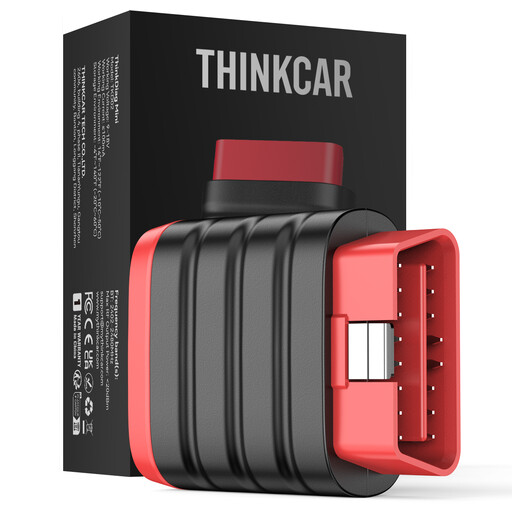
Why It Stands Out The ThinkDiag Mini focuses on one core competency: full system diagnostics. It is an extremely compact and easy-to-use device that connects via Bluetooth to its companion app. The decisive advantage is the lifetime free update guarantee for all system diagnostic functions.
This device is intentionally minimalist, forgoing advanced service resets or an automotive coding tool. It is the ideal solution for anyone primarily needing a reliable tool to read and clear fault codes from all control units (Engine, ABS, Airbag, etc.).
Pros:
Who is it for? For beginners and vehicle owners looking for a cost-effective and straightforward fault code reader for comprehensive system diagnostics, but who do not need advanced service functions.
The scanners presented here cover common use cases. However, if you have more specific requirements or want to compare an even wider selection of devices, you can find more options in our main category.
? Discover more automotive diagnostic tools on Joybuy.de
1. Does every OBD2 diagnostic scanner work on every car? No. OBD2 is a standard required in Europe for emissions-related systems since around 2001 (petrol) and 2004 (diesel). However, the ability to access other control units (ABS, Airbag, etc.) or perform service functions depends heavily on the diagnostic scanner's compatibility with the specific vehicle make and model. Therefore, always check the manufacturer's vehicle coverage list.
2. Can I damage my car with an OBD2 diagnostic scanner? The risk is extremely low when simply reading fault codes and live data. Caution is advised with advanced functions like an automotive coding tool or bi-directional control. Improper changes to the vehicle's configuration or activating components can potentially lead to problems. It is recommended to use such functions only with the appropriate technical expertise.
3. What is the difference between OBD2 and OBD1? OBD1 (On-Board Diagnostics 1) was an early, manufacturer-specific standard used in the 1980s and early 1990s. The connectors, fault codes, and protocols were not uniform. OBD2 is the successor standard that mandates uniform connector types (16-pin), fault codes (DTCs), and communication protocols for engine and emissions control across all manufacturers. Modern diagnostic scanners are designed for OBD2 vehicles.