
Lieferung heute & morgen

Qualitätsgarantie

Willkommens-Angebote freischalten: KOSTENLOSE Lieferung | Bis zu 80 % RABATT | Kostenlose 30-Tage-JoyPlus-Testphase
App herunterladen
By: Joybuy Product Recommendation OfficerDate: July 19, 2026
The complexity of modern vehicle electronics presents challenges for both DIY mechanics and professional workshops. An illuminated check engine light can have numerous causes, and without the right tool, precise fault analysis is nearly impossible. A capable OBD2 diagnostic scanner is therefore an essential investment for reading fault codes, monitoring system parameters, and performing maintenance tasks efficiently.
This guide is designed to help you navigate the market for diagnostic tools. We will introduce a selection of models with varying feature sets and explain the crucial criteria you should consider when making your purchasing decision.
The choice of the right device depends heavily on your individual requirements. Before you decide, you should weigh the following points.
The range of functions is the most important distinguishing feature. Basic devices are often limited to reading and clearing fault codes from the engine control unit. In contrast, an all-system car diagnostic tool provides access to all control units, such as ABS, airbag, transmission, and air conditioning.
For advanced users and workshops, other functions are relevant:
Before purchasing, check whether the diagnostic tool supports the vehicle makes and models you work on. Coverage, especially for European manufacturers, can vary greatly. Equally important is the manufacturer's update policy. Some models require annual subscriptions to stay up-to-date. Other devices advertise with lifetime updates, which significantly reduces long-term operating costs.
Modern diagnostic tools often offer a wireless connection via Bluetooth or Wi-Fi, which makes handling more flexible in a workshop environment. For diagnosing newer vehicle models (often from 2020 onwards), support for current communication protocols like CAN FD (especially for General Motors) and DoIP (e.g., for BMW, Jaguar, Land Rover) is crucial to ensure fast and stable data transmission.
Based on the criteria mentioned, we have compiled a selection of devices that stand out for their feature sets and technical specifications.
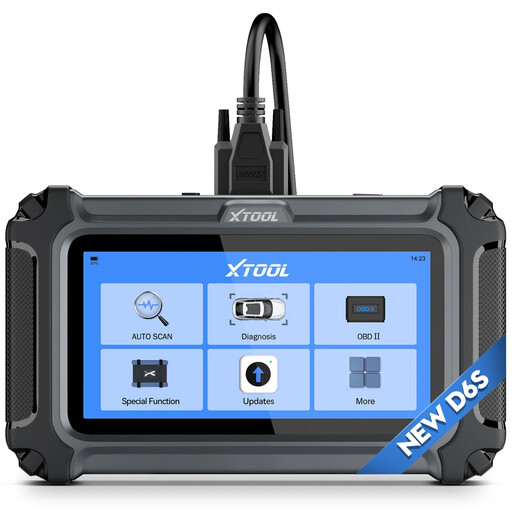
Why It Stands Out: The XTOOL D6S positions itself as a tool with a remarkable price-to-performance ratio, underscored by its promise of lifetime free software updates. This eliminates recurring costs and makes it a predictable investment.
Advantages:
Who Is It For? This device is a solid choice for dedicated DIY enthusiasts and small workshops looking for a reliable fault code reader with advanced service functions who also value long-term cost control.
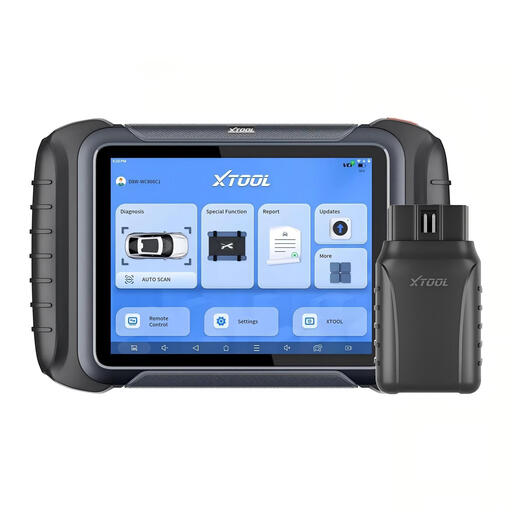
Why It Stands Out: The XTOOL D8W is an advanced professional workshop diagnostic tool that offers professional features like topology mapping and wireless connectivity. It is designed for complex diagnostic tasks and increased efficiency.
Advantages:
Who Is It For? The D8W is aimed at professional auto mechanics and medium-sized workshops that need a powerful tool for in-depth diagnostics, bidirectional control, and ECU coding.
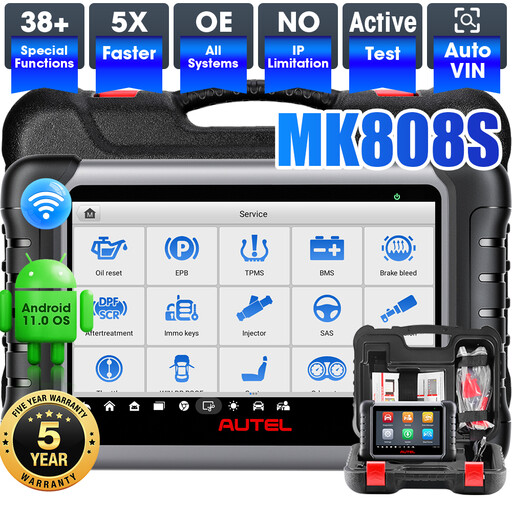
Why It Stands Out: The Autel MK808S is known for integrating bidirectional control into a more accessible price range. It combines broad vehicle coverage with a multitude of service functions, making it a versatile all-rounder.
Advantages:
Who Is It For? The MK808S is ideal for workshops and ambitious DIYers who are looking for a diagnostic tool with bidirectional control without having to spend the budget for a high-end model.
The models presented here cover a wide spectrum of use cases. However, if you are looking for a device with different specifications or for a different budget, you will find a larger selection of diagnostic tools in our corresponding category.
Discover more models in our Car Scanner Tool category
A basic OBD2 device can typically only read and clear fault codes from the engine control unit (according to the legal standard). A professional all-system car diagnostic tool accesses all control units installed in the vehicle (e.g., ABS, airbag, transmission) and offers advanced functions such as service resets, bidirectional control, and sometimes even ECU coding.
That depends on the manufacturer and model. Some devices require an annual software subscription to continue receiving updates for new vehicle models and functions. Other models, like the XTOOL D6S featured here, offer lifetime updates with no additional fees, which makes the total cost of ownership transparent.
Yes, most modern diagnostic scanners also function as a Service Reset Tool. They allow you to reset oil change intervals, maintain the electronic parking brake (EPB), register a new battery (BMS), and perform other service-related tasks. However, the exact scope of available reset functions varies depending on the device and vehicle model.