
Lieferung heute & morgen

Qualitätsgarantie

Willkommens-Angebote freischalten: KOSTENLOSE Lieferung | Bis zu 80 % RABATT | Kostenlose 30-Tage-JoyPlus-Testphase
App herunterladen
On-Board Diagnostics (OBD) has evolved from a simple emissions monitoring system into a central tool for comprehensive vehicle analysis. Modern OBD2 diagnostic tools go far beyond simply reading fault codes. They integrate features like bi-directional control, ECU coding, and advanced service resets, which are essential for professional workshops and ambitious DIY mechanics. Selecting the right tool depends on specific technical requirements, particularly the necessary diagnostic depth, vehicle coverage, and support for future-proof protocols like CAN FD and DoIP.
The decision for a car diagnostic tool should be based on an objective evaluation of technical parameters. The following criteria are relevant for making an informed choice.
A basic OBD2 diagnostic tool can often only access the engine control unit. Professional models offer a full system diagnosis that covers all control units installed in the vehicle. These include, among others:
Broad coverage for all makes from Europe, Asia, and America is an indicator of a versatile tool.
The ability to perform maintenance tasks is a crucial factor. A powerful Service Reset Tool should support a variety of functions, including:
These advanced features separate simple code readers from professional diagnostic tools.
Modern vehicles use advanced communication protocols. Support for CAN FD (Flexible Data-Rate) and DoIP (Diagnostics over Internet Protocol) is crucial for compatibility with newer vehicle models, especially from manufacturers like General Motors, Land Rover, or Jaguar from the 2020 model year onwards. The hardware itself should be robust, featuring a responsive display, a stable connection (Wi-Fi, Bluetooth), and sufficient storage.
The cost structure for software updates is a key economic factor. Models with lifetime updates and no annual subscription fees offer high cost predictability and ensure the tool remains compatible with new vehicle models and functions in the future.
Based on the technical criteria above, we present a selection of tools that stand out for their functionality and specifications.
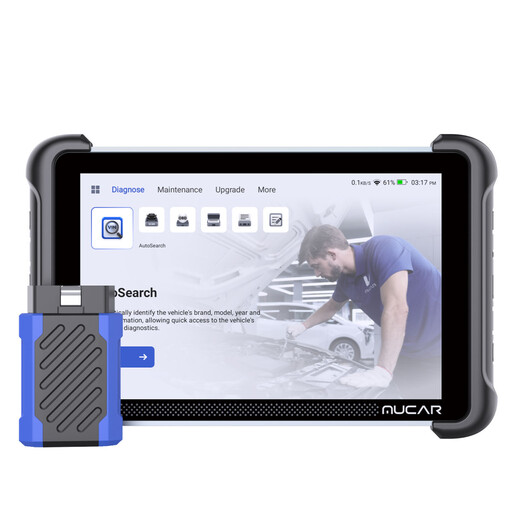
Why we recommend this product: The MUCAR 892BT combines very broad vehicle coverage with advanced functions like ECU coding and bi-directional control. The model with free lifetime updates represents a cost-effective solution for workshops and advanced users. Its support for CAN-FD & DoIP ensures compatibility with the latest vehicle generations.
Pros:
Who it's for: Professional auto mechanics and workshops looking for a versatile, expandable, and future-proof professional OBD2 scanner with a transparent cost model.
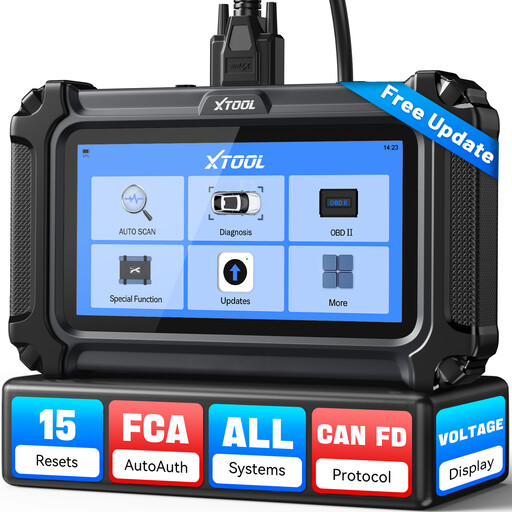
Why we recommend this product: The XTOOL D6 is a robust diagnostic tool that focuses on full system diagnostics and the most important service functions. With free lifetime updates and support for the CAN FD protocol, it provides a solid foundation for daily work on a wide variety of vehicles, including newer GM models.
Pros:
Who it's for: Independent workshops and service centers that need a reliable and easy-to-use automotive diagnostic tool for everyday diagnostics and standard maintenance tasks.
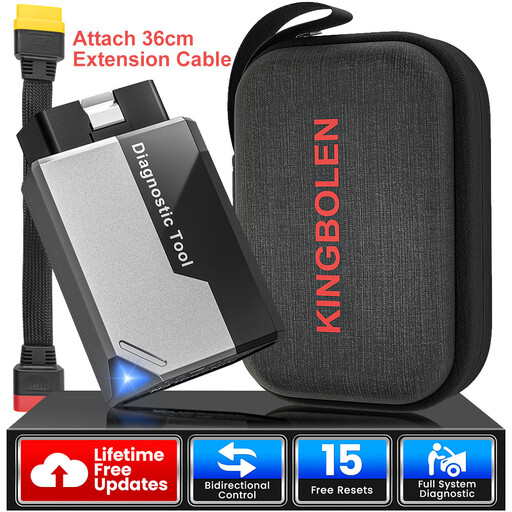
Why we recommend this product: The KINGBOLEN Ediag Elite is a compact and mobile solution that transforms a smartphone or tablet into a powerful diagnostic tool. Despite its small footprint, it offers impressive functional depth, including bi-directional control and 15 reset functions, also with lifetime updates.
Pros:
Who it's for: Ambitious DIYers, car enthusiasts, and mobile technicians looking for a cost-effective, portable, yet powerful solution for reading fault codes and performing advanced diagnostics.
The models presented here cover a wide range of use cases. However, if you are looking for tools with different specifications or for specific niche applications, you can find an expanded selection in our main category.
Discover More Vehicle Diagnostic Scanner Tools
1. What is the difference between a basic OBD2 scanner and a professional diagnostic tool? A basic OBD2 scanner is typically limited to reading and clearing fault codes from the engine control unit (related to the Check Engine light). A professional diagnostic tool offers a full system diagnosis across all control units, supports numerous service reset functions, enables bi-directional control to actuate components, and in some cases, can also code control units.
2. Do I need CAN FD and DoIP for my vehicle? CAN FD (Controller Area Network with Flexible Data-Rate) is a newer communication protocol that allows for higher data transfer rates. It is increasingly used in vehicles from the 2020 model year onwards, especially by brands like GM, Ford, and the VAG Group. DoIP (Diagnostics over Internet Protocol) is used for very data-intensive tasks, such as software updates (flashing) for control units. If you work on modern vehicles, support for these protocols is recommended for a future-proof investment.
3. What does "bi-directional control" mean on an automotive diagnostic tool? Bi-directional control means that the diagnostic tool can not only receive information from the vehicle (read) but also send commands to the vehicle's control units. This enables so-called "active tests." For example, a mechanic can use it to turn on the radiator fan, activate the fuel pump, or control the headlights to check their function without having to manually test or remove the parts. This significantly speeds up troubleshooting.