An illuminated warning light on your dashboard can be unsettling. The cause is often unclear, and the thought of a potentially expensive trip to the mechanic is never far away. An OBD2 diagnostic tool offers a practical solution. It allows you to read your vehicle's fault memory yourself, identify the source of the problem, and, in many cases, fix minor errors directly.
This article serves as a guide. We'll introduce different types of devices and explain the most important functions to help you make an informed decision—without the marketing hype.
What to Look for When Buying a Car Diagnostic Tool
The range of available devices is vast, from simple code readers to multi-functional tools. The following criteria will help you find the right model for your needs.
1. Functionality: From Check Engine Lights to In-Depth Diagnostics
The most important factor is what tasks you need the device to perform.
- Basic Functions: For beginners, a device that masters the fundamental functions is often sufficient. This includes reading and clearing fault codes from the engine control unit. This allows you to, for example, reset the check engine light after the root cause has been fixed.
- Advanced System Diagnostics: Anyone looking to delve deeper into vehicle technology will need a tool that can read the fault memory of all control units. This includes systems like ABS (Anti-lock Braking System), SRS (Airbag), transmission, and air conditioning.
- Service Functions: Ambitious DIY mechanics and workshops will benefit from a Service Reset Tool. Such devices allow you to reset service intervals (e.g., oil changes), register new batteries (BMS), open the electronic parking brake (EPB) for pad replacement, and perform other maintenance tasks.
- Special Functions: A professional diagnostic tool often offers additional capabilities like bi-directional control. This allows individual components and actuators (e.g., fans, valves, power windows) to be specifically controlled to test their function (active test).
2. Vehicle Compatibility and Interface
Not every tool works with every car. Pay close attention to compatibility.
- OBD2 Standard: In the EU, the OBD2 standard has been mandatory for petrol vehicles since 2001 and for diesel vehicles since 2004. Most devices cover these vehicles. For newer models, support for specific protocols like CAN-FD may be relevant. Always check the manufacturer's vehicle coverage list before purchasing.
- Operation: There are two basic types. Traditional handheld units are wired, connect directly to the OBD2 port, and are ready to use out of the box. An OBD2 scanner with an app, on the other hand, consists of an adapter that connects to a smartphone or tablet via Bluetooth or Wi-Fi. This often provides a more modern user interface and more flexible analysis options.
Top OBD2 Diagnostic Tool Picks
Based on the criteria mentioned, we have compiled a selection of devices for different user groups.
For Beginners: VDIAGTOOL VD10

Why It Stands Out: The VD10 is a straightforward, wired car diagnostic tool that focuses on the essential functions. It requires no app, no batteries, and no complicated setup. Simply plug it in and get started.
Pros:
- Simple Operation: Powered directly via the vehicle's OBD2 port.
- Core Functions: Reads and clears engine fault codes (DTCs), displays live data, and shows I/M readiness status.
- Broad Compatibility: Supports all common OBD2 protocols and a wide range of vehicles from 1996 (USA) or 2001/2004 (EU) onwards.
- Multi-language: The menu navigation is available in English, among other languages.
Who Is It For? For car owners looking for a quick and easy way to determine the cause of an illuminated check engine light and clear the fault code after a repair, without having to deal with apps or Bluetooth connections.
To the VDIAGTOOL VD10
For Ambitious DIY Mechanics: XTOOL A30D
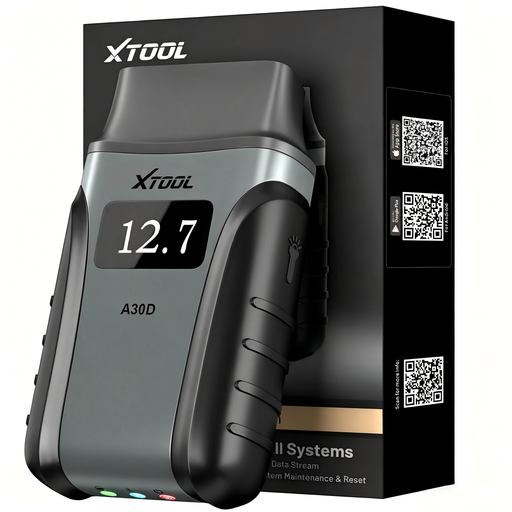
Why It Stands Out: The XTOOL A30D combines the flexibility of an OBD2 scanner with an app with features often found only in more expensive devices. The wireless Bluetooth connection to an Android or iOS device allows for convenient operation.
Pros:
- Full System Diagnostics: Accesses all available control units (Engine, ABS, Airbag, Transmission, etc.).
- Bi-Directional Control: Enables active tests to check the functionality of components.
- Extensive Service Functions: According to the manufacturer, it offers over 19 reset functions, including Oil Reset, EPB, SAS, BMS, and DPF regeneration.
- Future-Proof: Supports the CAN FD protocol for modern vehicles and offers free lifetime software updates.
Who Is It For? For DIY mechanics and tech-savvy car owners who want to do more than just read fault codes. Ideal for performing maintenance, in-depth system analyses, and active tests.
To the XTOOL A30D
For Professional Use: Autel MaxiCOM MK808S
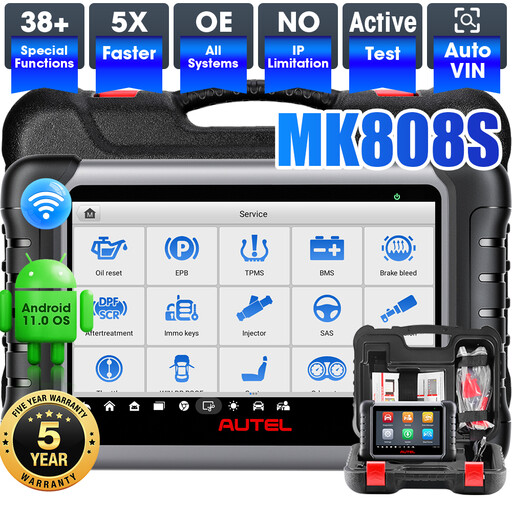
Why It Stands Out: The Autel MaxiCOM MK808S is a professional diagnostic tool built into a rugged tablet. It offers comprehensive vehicle coverage and a range of functions that meet the demands of workshops and advanced users.
Pros:
- Powerful Hardware: Runs on an Android 11 system with a fast processor and ample storage (4 GB RAM + 64 GB storage).
- Comprehensive Diagnostics: Provides OE-level diagnostics for all systems on over 150 vehicle brands.
- Advanced Functions: Includes over 38 service functions (according to the manufacturer), bi-directional control (active tests), and IMMO key functions for many Asian vehicles.
- User-Friendly: AutoVIN technology automatically identifies vehicles, and diagnostic reports can be printed directly via Wi-Fi.
Who Is It For? For small to medium-sized workshops and professional mechanics who need a reliable all-in-one tool for daily work on a wide variety of vehicle makes and models.
To the Autel MaxiCOM MK808S
Explore More Options
If our selection doesn't include the perfect device for your specific needs, or if you're looking for other alternatives, you can find a broader range of diagnostic tools in our main category.
Discover More Readers & Tools
Frequently Asked Questions (FAQ)
What is an OBD2 diagnostic tool?
An OBD2 diagnostic tool is an electronic device that connects to a vehicle's standardized On-Board Diagnostics port (OBD2 port). It is used to access data from various control units to read diagnostic trouble codes (DTCs), view live data from sensors, and clear faults after a repair.
Can I reset the service indicator with a car diagnostic tool?
Yes, many modern diagnostic tools have this feature. As a Service Reset Tool, they allow you to reset the oil change indicator, brake service (EPB), or other service-related intervals. However, the exact range of functions varies from device to device and also depends on the vehicle model.
What does bi-directional control mean?
Bi-directional control, also known as an active test, is an advanced feature that allows the diagnostic tool not only to receive data from the vehicle but also to send commands to its control units. This enables the user to specifically activate individual components like fuel pumps, fans, valves, or lights to test their functionality without having to remove them. This feature is typically found in a professional diagnostic tool.


