
Lieferung heute & morgen

Qualitätsgarantie

Willkommens-Angebote freischalten: KOSTENLOSE Lieferung | Bis zu 80 % RABATT | Kostenlose 30-Tage-JoyPlus-Testphase
App herunterladen
By Joybuy Product Recommendation Officer, July 18, 2026
An illuminated check engine light or an upcoming service message on the dashboard is a cause for concern for many vehicle owners. A trip to the workshop is often associated with time and expense. Owning an OBD2 diagnostic tool offers a practical solution to read the fault memory yourself and identify the cause. However, modern vehicles require more than just clearing fault codes. Tasks like resetting the service interval, calibrating new components, or even performing targeted functional tests demand more powerful devices.
This article serves as a guide. We explain the crucial functions you should look for when making your choice and present a selection of tools for different use cases—from the ambitious DIY enthusiast to the independent workshop.
Choosing the right device largely depends on your individual requirements. The following points will help you make an informed decision.
A simple fault code reader is sufficient for basic engine diagnostics. However, for more advanced work, specialized functions are necessary:
An all-makes car diagnostic tool is ideal if you work on vehicles from various manufacturers. Look for broad coverage of European, Asian, and American brands. Support for modern communication protocols is also crucial:
The type of connection affects your flexibility at work. A Bluetooth car diagnostic tool offers maximum freedom of movement, as there is no cable connection between the diagnostic dongle (VCI) on the vehicle and the display unit (tablet or smartphone). Wired systems are often more robust but limit your working range. Also, check whether the device has its own display or requires the use of an app on an external device.
Based on the criteria mentioned, we have compiled a selection of devices that stand out for their range of functions and application areas.
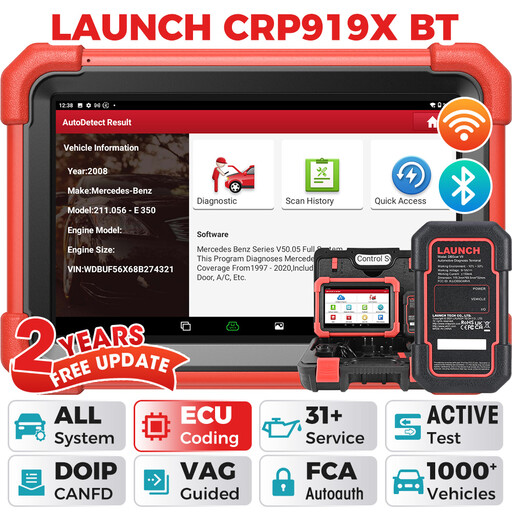
Why it stands out: The Launch CRP919X BT positions itself as a versatile tool for semi-professional users and workshops. It combines comprehensive system diagnostics with advanced features like online ECU coding and bi-directional control. Support for CAN-FD and DoIP makes it future-proof for working on modern vehicle fleets. The connection via a Bluetooth VCI adapter ensures maximum flexibility in the workshop.
Key Features:
Who is it for? For ambitious DIY mechanics who want to perform in-depth diagnostics and coding, as well as for small to medium-sized workshops looking for a powerful and cost-effective secondary device.
View the Launch CRP919X BT on Joybuy.de
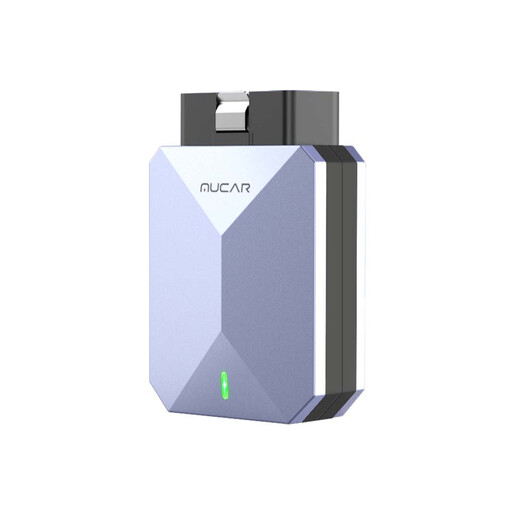
Why it stands out: The MUCAR BT200 MAX is a compact Bluetooth dongle that works with a smartphone or tablet. Its standout feature is the integrated, AI-powered diagnostic assistant, which interprets fault codes and provides concrete repair recommendations. This is particularly helpful for users with less experience in fault analysis. Despite its compact design, it offers full system diagnostics and bi-directional control.
Key Features:
Who is it for? For tech-savvy DIY mechanics who appreciate a flexible, app-based system with guided diagnostics and want to benefit from free updates in the long run.
View the MUCAR BT200 MAX on Joybuy.de
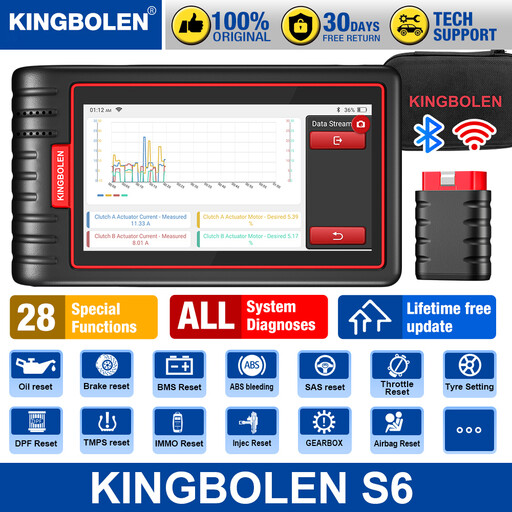
Why it stands out: The KINGBOLEN S6 is an all-in-one device with its own 5.99-inch display that offers a wide range of maintenance functions. With 28 service functions, it covers almost all common workshop tasks, making it an extremely versatile service reset tool. The wireless Bluetooth connection and the Auto-VIN function for automatic vehicle identification simplify the diagnostic process.
Key Features:
Who is it for? For users whose main focus is on performing a wide variety of maintenance and service tasks on different vehicle brands and who prefer a standalone device with a large display.
View the KINGBOLEN S6 on Joybuy.de
The models presented here cover a broad spectrum, but the world of vehicle diagnostics is diverse. If you are looking for devices with different specializations or for a specific budget, you will find a larger selection in our category.
Discover more OBD Readers on Joybuy.de
1. What is the difference between OBD2 and EOBD? OBD2 (On-Board Diagnostics 2) is the standard mandated in the USA since 1996. EOBD (European On-Board Diagnostics) is the European equivalent, which became mandatory for petrol vehicles from 2001 and for diesel vehicles from 2004. Technically, the systems are largely identical and use the same fault codes and protocols. Modern diagnostic tools are generally compatible with both standards.
2. Can I reset the service interval with any OBD2 diagnostic tool? No. Simple code readers are usually limited to diagnosing the engine and emissions-related systems. To reset the oil service, brake maintenance, or other intervals, you need a device with explicit service or maintenance functions. Look for terms like "Oil Reset," "EPB Reset," or "Service Reset" in the product description.
3. Do I need a car coding tool for personal use? A car coding tool is an advanced feature mainly used by enthusiasts and professional workshops. It allows you to customize control units, for example, to register a new component (like a battery or an injector) in the system or to activate convenience features. For pure fault diagnosis and standard maintenance work, a coding function is not essential. Devices like the Launch X-431 CRP919X BT offer such advanced capabilities for users who want to delve deeper into vehicle electronics.