
Lieferung heute & morgen

Qualitätsgarantie

Willkommens-Angebote freischalten: KOSTENLOSE Lieferung | Bis zu 80 % RABATT | Kostenlose 30-Tage-JoyPlus-Testphase
App herunterladen
A warning light on your dashboard can quickly cause uncertainty. Is it just a minor issue, or are you facing an expensive repair? An OBD2 diagnostic tool promises quick answers and the potential to save on garage bills. But the market is crowded and full of marketing promises that don't always deliver. As your Joybuy Product Recommendation Officer, I'll help you spot the common pitfalls and find a device that truly fits your needs.
Many buyers invest in tools that are either overkill for their needs or hide essential features behind extra costs. Pay attention to these three points to avoid a bad purchase:
To find the right tool, don't be dazzled by long feature lists. Instead, focus on the parameters that are relevant to your specific use case.
The most important characteristic of a diagnostic tool is which control units (ECUs) it can read and at what depth. There are roughly three levels:
A modern car diagnostic tool is more than just a fault code reader. So-called service functions save you real money on maintenance. Check which functions are relevant for you:
The OBD2 port is standardized, but the communication protocols behind it continue to evolve. For modern vehicles from around 2020 onwards, new protocols like CAN FD (especially for GM, Ford) and DoIP (for BMW, Volvo, Land Rover) are relevant. A tool that supports these protocols is more future-proof and can communicate with the latest vehicle models. Always check if your specific vehicle model and year are supported by the tool's manufacturer before purchasing.
Based on these criteria, we have put together a selection of tools that offer a suitable solution for different user groups.
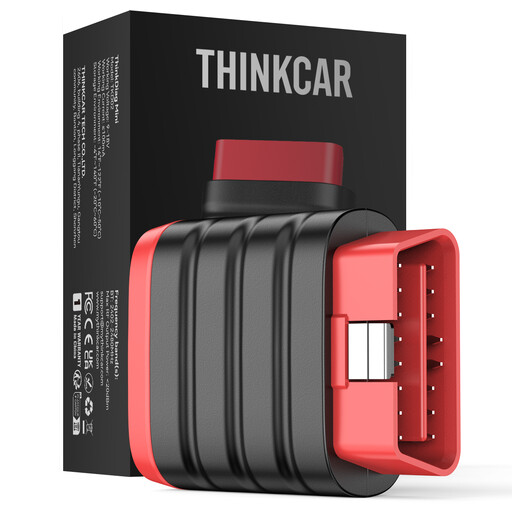
Why This Fits Their Persona: Ideal for the home mechanic who wants to read fault codes quickly and easily. This compact Bluetooth adapter turns your own smartphone into a diagnostic tool. It's perfect for finding the cause of a lit check engine light and performing simple system checks.
This device bypasses the subscription trap with a clear promise: according to the manufacturer, updates for full system diagnostics are free for life. You get a solid diagnostic function without hidden recurring costs.
Compact design that fits in the glove compartment. The all-system diagnostics via the companion app offer remarkable depth for this price class.
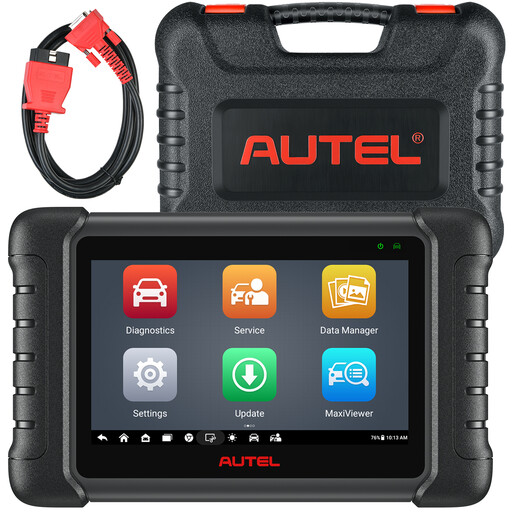
Why This Fits Their Persona: For the advanced user who wants to do more than just read fault codes. This tablet-based device offers deep all-system diagnostics and a wide range of service functions to perform maintenance jobs like brake jobs or battery replacements yourself.
The MX808S delivers true diagnostic depth. Instead of vague promises, it offers bi-directional control, a feature that allows you to actively test components. This goes far beyond what simple scanners can do and justifies the added value.
Comprehensive all-system vehicle coverage and over 38 service functions, according to the manufacturer. The ability to perform active tests is a clear hallmark of advanced diagnostics.
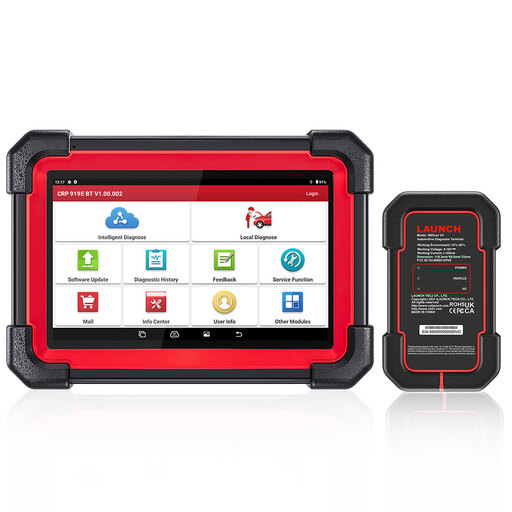
Why This Fits Their Persona: Designed for daily use in the workshop. This tool not only offers full system diagnostics and bi-directional control but also advanced functions like ECU coding and support for the latest vehicle protocols.
This device isn't an overpriced solution for DIYers, but an investment for professionals. It delivers the advertised pro-level features and is equipped to work on modern vehicle fleets with its support for CAN FD and DoIP.
OE-level functions including ECU coding and wireless diagnostics via the DBScar VII VCI. Support for new protocols makes it a future-proof tool for any workshop.
We've compiled a complete, up-to-date list of products that fully meet these strict selection criteria and UK/EU regulations.
The OBD2 standard is mandatory in the EU for all petrol vehicles manufactured from 2001 and for diesel vehicles from 2004. Your vehicle most likely has an OBD2 port (usually in the driver's footwell). However, for advanced functions that go beyond basic engine diagnostics, compatibility is model-specific. It is recommended to check the manufacturer's vehicle coverage list before buying or to ask the seller directly, providing your car's make, model, and year.
The main difference lies in the range of functions and the hardware. Bluetooth adapters are compact and use your smartphone as a display. They are excellent for reading and clearing fault codes and often provide access to system diagnostics via an app. Tablet scanners are standalone devices with a larger screen, more rugged construction, and significantly more processing power. They typically offer deeper system diagnostics, a much larger number of service functions, and often pro-level features like bi-directional control or ECU coding.
Yes, this is one of the most common uses. However, not every tool can do this. A simple fault code reader is usually not capable of it. You need a device that is explicitly advertised as a Service Reset Tool or that lists "Oil Reset" in its function list. The models presented here offer this function for a wide variety of vehicles.