
Lieferung heute & morgen

Qualitätsgarantie
App herunterladen
Kategorien
The On-Board Diagnostics (OBD) interface has been a standard in motor vehicles for decades, providing access to control unit data and fault memory. An OBD2 diagnostic tool transforms this interface from a workshop-exclusive resource into an essential gadget for the informed vehicle owner. With the right OBD2 scanner, you can not only read and clear fault codes but also perform complex maintenance tasks yourself. This leads to greater control over your vehicle's condition and can significantly reduce the cost of workshop visits.
Selecting the right device depends on your specific needs. A simple fault code reader is sufficient for basic analysis, whereas an all-system car diagnostic tool provides deep insights into modules like the ABS, Airbag (SRS), or transmission. Modern devices also offer connectivity via a diagnostic tool with an app, bidirectional control for component testing, and specialised service reset tools.
The decision to purchase a diagnostic tool should be based on an analysis of its technical parameters. The following criteria are relevant for making an informed choice:
Based on the technical criteria mentioned above, we have compiled a selection of diagnostic tools that stand out for their range of functions and technical design.
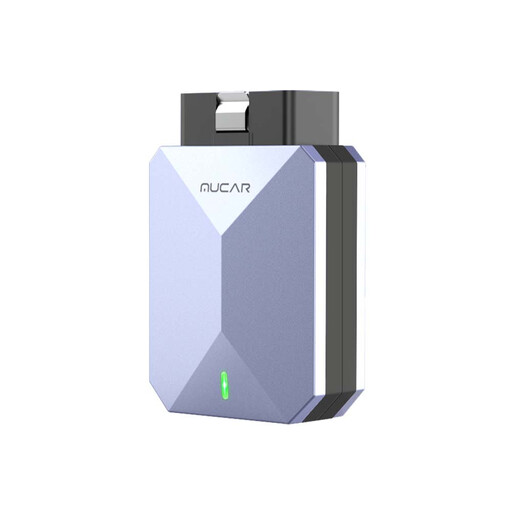
Analysis: The MUCAR BT200 MAX is positioned as a versatile tool designed for both beginners and advanced users. A standout feature is its integrated, AI-powered diagnostic assistant. This not only interprets fault codes but also analyses symptoms and provides repair recommendations based on them. The combination of a full system scan, bidirectional control, and support for the CAN-FD protocol makes it a technically solid device for a wide range of vehicles.
Pros:
Best for: Private users and DIY enthusiasts looking for a tool with guided fault analysis. The AI function offers added value for users with less experience in interpreting diagnostic data.
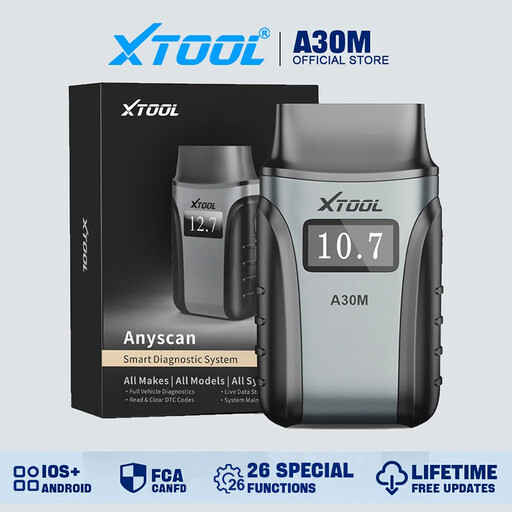
Analysis: The XTOOL A30M is a compact yet powerful Bluetooth scanner that stands out with an exceptionally high number of service functions. With over 26 reset functions, including more specialised ones like DPF regeneration and injector coding, it is aimed at ambitious users who want to perform in-depth maintenance. The implementation of bidirectional control and support for the CAN-FD protocol without an additional adapter underscores the device's professional-grade capabilities.
Pros:
Best for: Ambitious DIY enthusiasts and small workshops that need a device with maximum functionality for service resets and in-depth diagnostic capabilities.
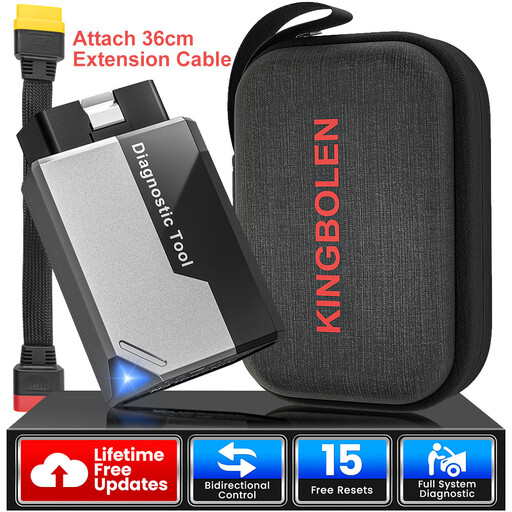
Analysis: The KINGBOLEN Ediag Elite is designed as a compact and mobile diagnostic tool that transforms a smartphone into a fully-fledged diagnostic system. Its outstanding feature is the promise of lifetime free updates for all functions, including system diagnostics, 15 reset services, and bidirectional tests. This represents a clear value proposition. Support for CAN-FD and FCA AutoAuth ensures compatibility with modern vehicles. The included extension cable adds flexibility during use.
Pros:
Best for: Private car owners and DIY users looking for a cost-effective, future-proof tool with a professional feature set, who value a transparent cost model without subscriptions.
The models presented cover a broad spectrum of use cases. If these products do not exactly meet your requirements or if you are looking for alternative solutions, you can find an expanded selection in our main category for Scanner Tool.
1. What is the difference between a basic OBD2 scanner and an all-system diagnostic tool? A basic OBD2 scanner typically only reads generic and manufacturer-specific fault codes from the engine control unit (ECU) and the exhaust system. An all-system car diagnostic tool can additionally access all other control units installed in the vehicle, such as ABS (Anti-lock Braking System), SRS (Airbag), transmission control, air conditioning, and body electronics. This allows for a much deeper and more comprehensive fault diagnosis.
2. Do I need a diagnostic tool with the CAN-FD protocol for my vehicle? The CAN-FD (Controller Area Network with Flexible Data-Rate) protocol is an advancement of the conventional CAN bus and allows for faster and more efficient data transmission. It is increasingly used in newer vehicles, especially in brands like General Motors (GM) from the 2020 model year onwards. If you own or wish to diagnose such a modern vehicle, a device with CAN-FD support is required for full compatibility.
3. What does bidirectional control mean on a car diagnostic tool? Bidirectional control, also known as an active test, is a function that allows the diagnostic tool not only to receive data from the vehicle but also to send commands to the control units. This enables individual components (actuators) such as fuel pumps, valves, window regulators, or fans to be specifically activated and tested for their function. This helps to quickly and accurately identify the cause of a fault without having to replace parts on suspicion.
Written by: Joybuy Product Recommendation Officer