
Lieferung heute & morgen

Qualitätsgarantie

Willkommens-Angebote freischalten: KOSTENLOSE Lieferung | Bis zu 80 % RABATT | Kostenlose 30-Tage-JoyPlus-Testphase
App herunterladen
An OBD2 diagnostic tool for cars can read fault codes, display live data and, depending on the model, perform maintenance functions. However, there are significant differences between simple code readers and comprehensive diagnostic platforms. If you only focus on terms like “Full System”, “Coding” or “Lifetime Updates”, you might end up buying features that aren’t available for your vehicle.
Although a vehicle may have the standardised OBD2 port, a scanner might only support the engine control unit. For ABS, airbag, transmission, TPMS or comfort control units, you need a full-system diagnosis. Before buying, you should therefore check which control units are actually covered for your make, model and year.
An OBD2 scanner with lifetime updates can offer ongoing software updates without recurring update fees. However, this doesn’t automatically mean that every special function is available for every vehicle. Features such as ECU coding, DPF reset or BMS reset depend on the vehicle model, production variant and control unit architecture.
With bidirectional diagnosis, the device sends test commands to specific vehicle components, for example to fans, pumps, window regulators or relays. ECU coding, on the other hand, changes configurations or adapts control units. Both functions require different software support and should not be confused.
Look for a specific coverage list with make, model, year and supported control units. For modern vehicles, additional protocols may be required:
The manufacturer’s specifications should be checked against your own vehicle identification number (VIN), or at least against the make, model and year, before placing an order.
A long list of maintenance functions is only relevant if it matches your vehicle. Typical functions can include oil reset, ABS reset, EPB, SAS, DPF reset, BMS reset, TPMS relearn, injector coding or transmission adaptation. Check whether the desired function is explicitly mentioned for your vehicle.
For ECU coding and active tests, a stable on-board voltage should also be ensured. An interruption during a write process can lead to communication problems. Always follow the respective operating instructions and only use functions when you understand their purpose and requirements.
Bluetooth adapters are compact and can use a smartphone or tablet as a display. This makes them easier to use on the go, but requires a compatible app, a supported operating system and a stable connection. Tablet diagnostic tools usually have their own screen and are better suited for frequent diagnostic work.
Compare before buying:
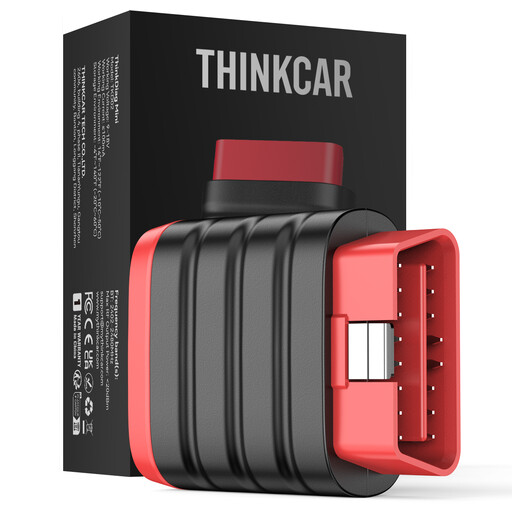
Why this product fits the profile: The compact Bluetooth adapter connects to iOS and Android devices and focuses on vehicle diagnosis without an integrated tablet.
The product description clearly defines the range of functions: maintenance resets and special functions are not included. This makes it easier to align your choice with a pure diagnostic need.
Compact design, Bluetooth connection, 22 supported languages and, according to the product information, lifetime free updates.
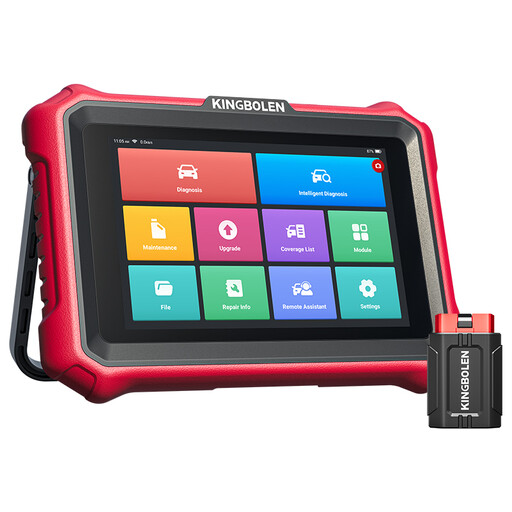
Why this product fits the profile: The tablet combines full-system diagnosis, ECU coding, active tests and CAN-FD and DoIP support in a standalone device.
The description explicitly mentions update terms, protocols and the separate AutoAuth process for certain FCA vehicles.
8-inch touchscreen, 34+ mentioned maintenance functions, 12,600 mAh battery and storage of diagnostic reports.
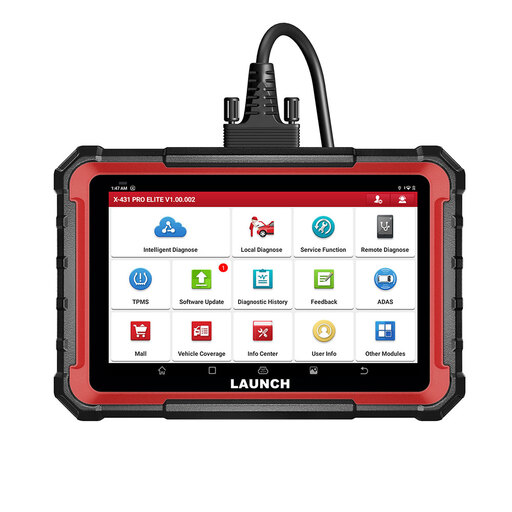
Why this product fits the profile: This vehicle diagnostic tool is designed for extensive system coverage, active tests and maintenance functions for various vehicle makes.
CAN-FD and DoIP support are explicitly listed. At the same time, the specific vehicle coverage should be confirmed before ordering.
8-inch screen, all-system diagnosis, ECU coding, bidirectional tests and 31+ mentioned reset functions.
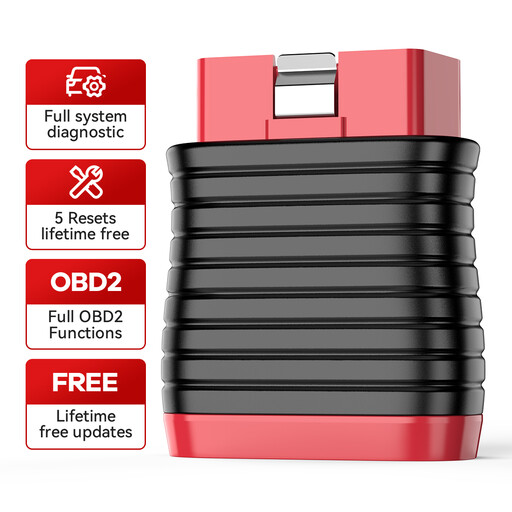
Why this product fits the profile: The adapter is designed for smartphone users who need full-system diagnosis and five specific reset functions.
The manufacturer clearly distinguishes this model from advanced coding and programming functions. The included functions therefore remain easy to understand.
Support for Android and iOS, Bluetooth connection, 22 languages and IMMO, oil, brake, ABS and ETS reset according to the product information.
We have put together a complete, regularly updated list of products that fully meet these strict selection criteria and the safety regulations in force in the EU.
No. A basic OBD2 scanner can often read and clear engine or emissions-related fault codes. For ABS, airbag, transmission or comfort systems, you usually need a car diagnostic tool with full-system access. Clearing codes also doesn’t automatically fix the technical cause of the fault.
The lifespan depends on the housing, battery, connection, storage and frequency of use. With tablet devices, you should also pay attention to battery capacity, charging port and software support. An adapter without a battery can be less prone to wear if handled correctly, but it requires a smartphone and a working app.
That depends on the specific terms. “Lifetime updates” usually refers to the software update of the device without recurring update fees. Individual vehicle access, manufacturer portals, AutoAuth registrations or optional functions may still be handled separately. Therefore, check the update and licence terms of the specific model before buying.