
Lieferung heute & morgen

Qualitätsgarantie

Willkommens-Angebote freischalten: KOSTENLOSE Lieferung | Bis zu 80 % RABATT | Kostenlose 30-Tage-JoyPlus-Testphase
App herunterladen
As a Joybuy Product Recommendation Officer, I regularly analyse the market for automotive diagnostic technology. Selecting the right equipment is crucial for workshop efficiency and precision in complex repairs. This article aims to provide professional auto mechanics and ambitious DIY mechanics with an objective guide to finding an OBD2 diagnostic tool that meets specific requirements for functionality and vehicle coverage. We will examine technical features and application scenarios to create an informed basis for your decision.
Choosing a suitable device depends on more than just the price. The following criteria are particularly important for professional use and for advanced users.
A basic car diagnostic tool can read and clear fault codes. However, for a professional workshop or ambitious projects, advanced functions are essential.
Compatibility with a wide range of vehicle makes and models is a critical criterion. Pay attention to the specified coverage for European, Asian, and American manufacturers. For work on newer vehicles, support for modern communication protocols like CAN-FD and DoIP (Diagnostics over Internet Protocol) is also important, as they ensure faster and more stable data transmission.
Vehicle technology is constantly evolving. Regular software updates are therefore necessary to diagnose future models. Some manufacturers offer free lifetime updates, while others use an annual subscription model. A one-time investment in a device with free updates can significantly reduce a workshop's long-term operating costs.
Based on the criteria mentioned, we have compiled a selection of devices that stand out for their range of functions and application profiles.
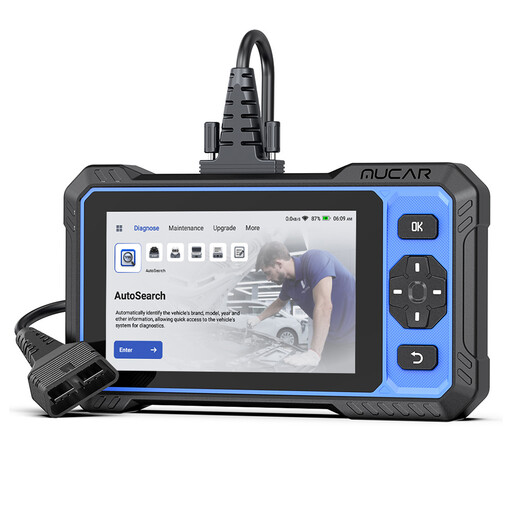
Why it stands out: The MUCAR 632 Elite integrates AI-assisted diagnostics that, according to the manufacturer, analyse fault codes and provide real-time explanations. This can accelerate the diagnostic process for less common errors.
Advantages:
Who is it for?: This device is a great choice for ambitious DIY mechanics and smaller workshops looking for a cost-effective tool with bidirectional control and the most important service functions for a wide range of vehicles.
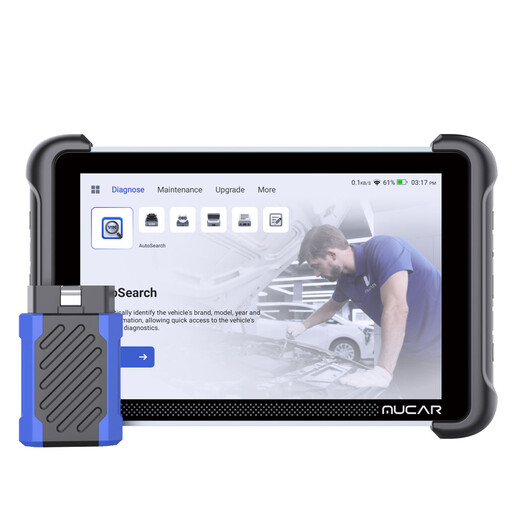
Why it stands out: The MUCAR 892BT is positioned as a professional OBD2 scanner for workshops that require very broad vehicle coverage and advanced coding functions. Its modular expandability makes it a flexible platform.
Advantages:
Who is it for?: Ideal for independent workshops and professional mechanics who need a versatile, expandable, all-in-one diagnostic system with in-depth coding and service functions for maximum vehicle coverage.
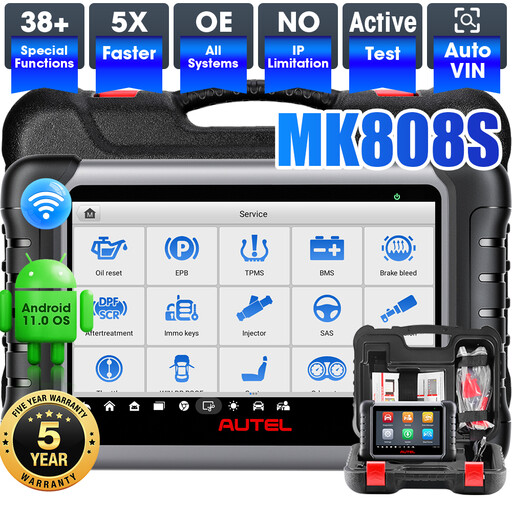
Why it stands out: The Autel MK808S is known for its powerful hardware and the integration of bidirectional control in this class of device. The combination of a fast processor and Android 11 ensures smooth operation.
Advantages:
Who is it for?: This device is aimed at technicians and workshops who need a fast and responsive diagnostic tool with reliable bidirectional control and solid coverage of the most common service functions.
The models presented here already cover a wide spectrum of requirements. If you haven't found the right device for your specific use case, you can find a larger selection in our main category.
? Discover our full range of Automotive Diagnostic & Coding Tools
1. What is the difference between a basic OBD2 scanner and a professional diagnostic tool? A basic OBD2 scanner is primarily designed for reading fault codes related to emissions from the engine control unit and clearing them. In contrast, a professional automotive diagnostic tool offers all-system diagnostics, performs service resets, supports bidirectional control to actuate components, and, on advanced models, can also perform ECU coding.
2. What does bidirectional control mean on an automotive diagnostic tool? Bidirectional control, also known as an active test, means that the diagnostic tool can not only receive data from the vehicle but also send commands to the control units. This allows a mechanic to, for example, turn on the fuel pump, deactivate a cylinder, or activate the headlights to check the function of the respective system directly from the device without manual intervention on the vehicle.
3. Do I have to pay for software updates for an OBD2 diagnostic tool? That depends on the manufacturer and model. Some devices, like the featured models from MUCAR, are offered with lifetime free updates. Other manufacturers, especially in the higher price segment, require an annual license fee for further updates after an initial free period (e.g., 1-2 years). This is an important factor when calculating long-term operating costs.