
Lieferung heute & morgen

Qualitätsgarantie

Willkommens-Angebote freischalten: KOSTENLOSE Lieferung | Bis zu 80 % RABATT | Kostenlose 30-Tage-JoyPlus-Testphase
App herunterladen
An illuminated check engine light or an upcoming service can quickly lead to uncertainty. For ambitious DIY mechanics and professional workshops, the question then arises: How can I precisely identify the cause and perform service tasks myself, without relying on expensive workshop visits? A high-performance OBD2 scanner is the central tool for this job.
This article serves as a comprehensive guide. We explain which technical features are important when making a selection and present a range of devices that are suitable for different applications based on their functionality. The goal is to provide you with an informed basis for purchasing the right car diagnostic tool.
The market offers a wide variety of devices, from simple code readers to complex diagnostic stations. The following criteria will help you find the right tool for your needs.
Basic devices can often only read the fault memory related to the engine control unit (ECU). However, for a comprehensive analysis, tools are required that can access all systems of a vehicle. These include ABS (Anti-lock Braking System), SRS (Airbag), transmission control, air conditioning, and comfort electronics, among others. Broad system coverage is crucial for locating sources of error throughout the entire vehicle network.
For advanced users and workshops, extended functions are of great importance:
Modern vehicles use new communication protocols. CAN FD (CAN with Flexible Data-Rate) is one such standard that enables faster and more efficient data transmission and is primarily used in newer vehicle models (e.g., from General Motors). A future-proof automotive diagnostic tool should support this protocol. Additionally, Bluetooth adapters, paired with a smartphone app, offer high flexibility and mobility, while wired devices often ensure a more stable connection.
Based on the criteria mentioned, we have compiled a selection of devices suitable for different user groups.
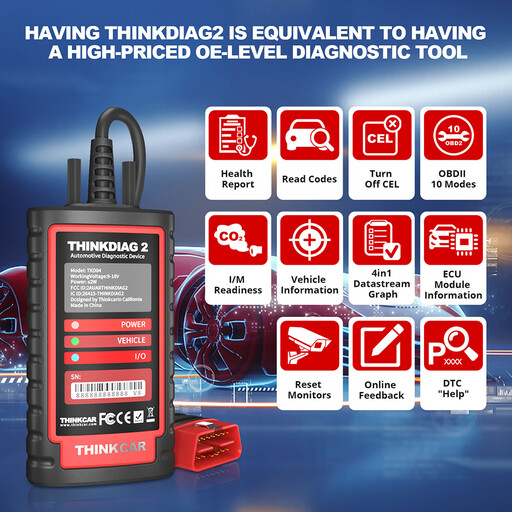
What sets it apart: The THINKDIAG 2 is a versatile Bluetooth diagnostic adapter that stands out for its support of the modern CAN FD protocol. It offers OE-level diagnostics for all systems and enables advanced functions like ECU coding and bidirectional control. It is operated via an app for iOS and Android devices.
Advantages:
Who is it for? This device is an excellent choice for ambitious DIY mechanics and small workshops looking for a mobile and powerful tool with in-depth diagnostic and customisation capabilities for all makes.
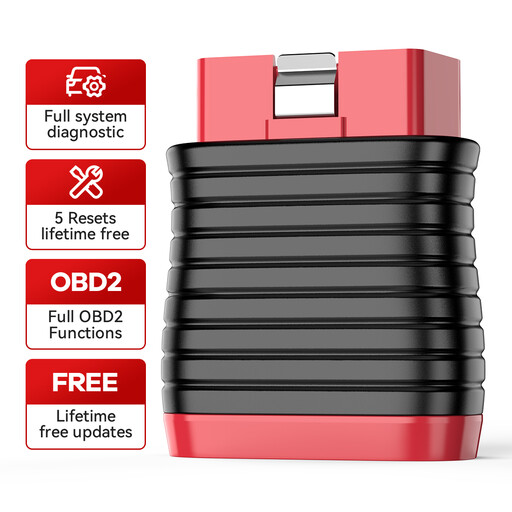
What sets it apart: The THINKDIAG BD6 focuses on the core competencies of vehicle diagnostics. It offers full system diagnostics and the five most important service functions with no ongoing costs. According to the manufacturer, software updates are free for life, making it an economical solution for regular use.
Advantages:
Who is it for? Ideal for vehicle owners and DIY beginners who need a reliable way to read fault codes and perform basic maintenance without being tied to a subscription.
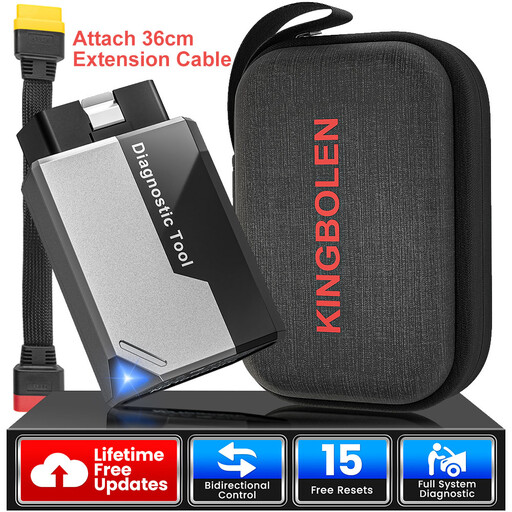
What sets it apart: The KINGBOLEN Ediag Elite combines extensive functionality with an attractive update model. According to the manufacturer, it offers lifetime free updates for all functions, including all-system diagnostics, 15 service reset functions, and bidirectional control. Compatibility with CAN FD and FCA vehicles (via AutoAuth) completes the package.
Advantages:
Who is it for? This automotive diagnostic tool is aimed at price-conscious, advanced users who want maximum functionality without recurring costs and who value bidirectional testing capabilities.
Comprehensive vehicle diagnostics go beyond just reading fault codes. The electrical system is the foundation of every modern vehicle. If you want to accurately check the condition of your car battery and charging system to prevent starting problems, you will find suitable devices in our category.
See our selection of Battery Testers
1. What is the difference between OBD2 and EOBD? OBD2 (On-Board Diagnostics 2) is the standard mandated in the USA for all vehicles from the 1996 model year onwards. EOBD (European On-Board Diagnostics) is the European equivalent, which became mandatory for petrol vehicles from 2001 and for diesel vehicles from 2004. Both systems are largely compatible and are used to monitor emissions-related systems. Modern diagnostic tools typically support both standards.
2. Can I reset the service indicator with an OBD2 scanner? Yes, many advanced diagnostic tools offer a service reset function. This allows you to reset the service interval display (e.g., for an oil change) in the instrument cluster. However, the range of functions varies depending on the device model and the vehicle. Before purchasing, check whether the desired reset functions are supported for your specific vehicle model.
3. Do I need special knowledge for ECU coding? Yes, ECU coding is an advanced function that intervenes deeply in the vehicle's electronics. Improper coding can lead to malfunctions of control units. This function should only be used by experienced users or professionals with appropriate knowledge of vehicle systems. It is advisable to create a backup of the original coding before making any changes.