
Lieferung heute & morgen

Qualitätsgarantie

Willkommens-Angebote freischalten: KOSTENLOSE Lieferung | Bis zu 80 % RABATT | Kostenlose 30-Tage-JoyPlus-Testphase
App herunterladen
An illuminated check engine light can be unsettling. The cause is often a minor issue, but a trip to the workshop for a simple diagnosis costs time and money. Your own OBD2 scanner offers a practical solution. It allows you to read your vehicle's fault codes yourself, understand the cause, and even perform minor service tasks.
This article serves as your guide. We'll introduce different types of devices and explain the crucial features to help you find a model that meets your needs—whether you want to perform occasional checks or tackle complex maintenance jobs yourself.
The market for diagnostic scanners is vast. To find the right tool, you should consider three key aspects.
While the OBD2 interface is standardised, the communication protocols used by manufacturers can vary. A good universal car diagnostic tool should offer broad coverage for European, Asian, and American vehicles. Look for support for modern protocols like CAN FD, which is used in newer vehicle models (e.g., from General Motors since 2020). Always check the manufacturer's vehicle compatibility list before purchasing.
The range of features determines what you can do with the scanner.
Usability is a key factor for practical, everyday use.
Based on feature set, compatibility, and intended use, we have selected a few recommended models for you.
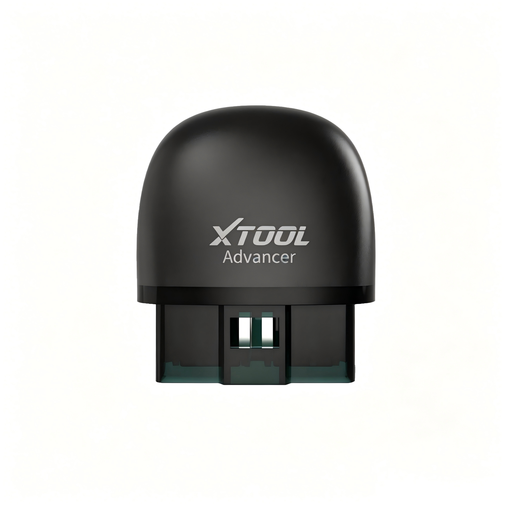
XTOOL AD20Pro V2.0 Car Scanner All System Scan Automobile Engine Fault Detector Tool
Why It Stands Out: The AD20Pro V2.0 is an extremely compact and cost-effective Bluetooth OBD2 scanner. It transforms your smartphone (iOS or Android) into a powerful diagnostic tool. A key highlight is the free lifetime updates, ensuring the device remains compatible with future vehicle models.
Pros:
Who Is It For? This device is ideal for car novices and DIY enthusiasts looking for a straightforward, app-based solution for regular vehicle checks, reading fault codes, and basic service tasks like oil resets.
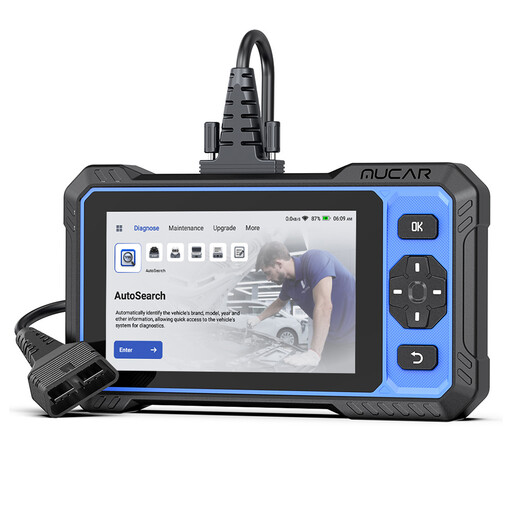
MUCAR 632 Elite AI-Assisted OBD2 Bidirectional Scan Tool
Why It Stands Out: The MUCAR 632 Elite is a wired handheld scanner that brings professional-grade features to ambitious home mechanics. Its integrated bidirectional control allows for active tests of vehicle components, which significantly speeds up troubleshooting. The AI-assisted analysis also helps interpret fault codes more quickly.
Pros:
Who Is It For? This model is aimed at advanced users and small workshops who need a powerful all-in-one device for in-depth diagnostics and a wide range of service functions without relying on a smartphone.
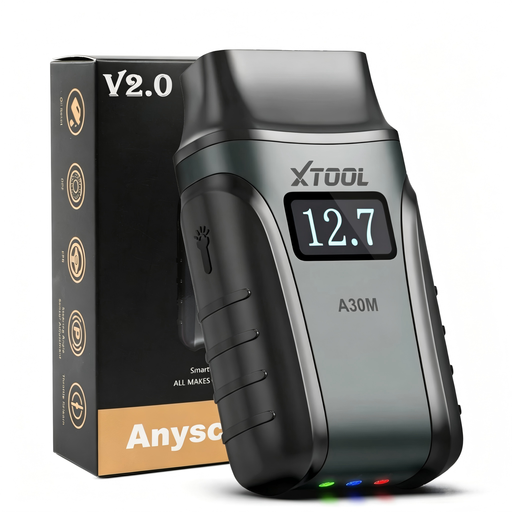
XTOOL A30M OBD2 Diagnostic Device BT, Wireless Car Diagnostic Tool with 26+ Reset
Why It Stands Out: The XTOOL A30M combines the flexibility of a Bluetooth adapter with the feature set of a professional workshop scanner. With support for bidirectional control and over 26 service functions, this compact adapter delivers impressive performance. Support for the CAN FD protocol and access to FCA (Fiat/Chrysler) vehicles make it particularly future-proof.
Pros:
Who Is It For? The A30M is the right choice for experienced home mechanics and semi-professional users who want maximum functionality in a wireless format. It's ideal for anyone who wants to not only read fault codes but also perform active tests and complex service tasks.
A thorough diagnosis is the first step in vehicle care. But regular maintenance involves more, such as checking and changing the engine oil. High-quality engine oil is crucial for the engine's longevity and performance.
If you perform basic maintenance yourself in addition to diagnostics, you can find a selection of suitable products for your vehicle in our category.
Discover our selection of engine oil and other maintenance products
OBD1 was a manufacturer-specific diagnostic system used before 1996. Each brand had its own connectors and codes. OBD2 (On-Board Diagnostics 2) is a standardised system mandated in the US for all vehicles from 1996 onwards and in the EU for petrol cars from 2001 and diesel vehicles from 2004. It uses a universal 16-pin diagnostic connector and standardised fault codes, which simplifies cross-brand diagnostics.
Simply reading fault codes is a passive process and poses no risk to your vehicle. However, caution is advised when using active functions. Fault codes should only be cleared after the root cause has been fixed; otherwise, important safety-related warnings could be suppressed. Functions like bidirectional control or ECU coding should only be used with the proper expertise to avoid causing malfunctions.
Although the OBD2 interface is standardised, there are differences in communication protocols and manufacturer-specific fault codes. Most modern diagnostic scanners cover the most common protocols (like ISO9141-2, KWP2000, CAN). However, for the full range of functions, especially when diagnosing systems like ABS or airbags, it is crucial that the device explicitly supports your specific vehicle model. Therefore, always check the manufacturer's compatibility list before purchasing.