
Lieferung heute & morgen

Qualitätsgarantie

Willkommens-Angebote freischalten: KOSTENLOSE Lieferung | Bis zu 80 % RABATT | Kostenlose 30-Tage-JoyPlus-Testphase
App herunterladen
An illuminated check engine light can quickly cause uncertainty. An OBD2 scanner promises swift clarity, but the market is overwhelming. Many devices advertise long feature lists and seemingly low prices, but not all deliver on their promises. As a Joybuy Product Recommendation Officer, I'll help you navigate the common pitfalls and find a tool that truly fits your needs—whether you want to read simple error codes or perform complex maintenance tasks yourself.
Before you make a decision, you should be aware of the most common marketing promises that often lead to disappointment.
To avoid a bad purchase, you should check three core technical aspects that distinguish a useful tool from a useless gadget.
The most important distinction lies in the diagnostic depth.
Modern vehicles require more than just reading codes. Look for these advanced functions:
Vehicle technology is constantly evolving. To be prepared for future models, modern communication protocols are important.
Based on the criteria mentioned, we have compiled a selection of devices suitable for different needs and budgets.
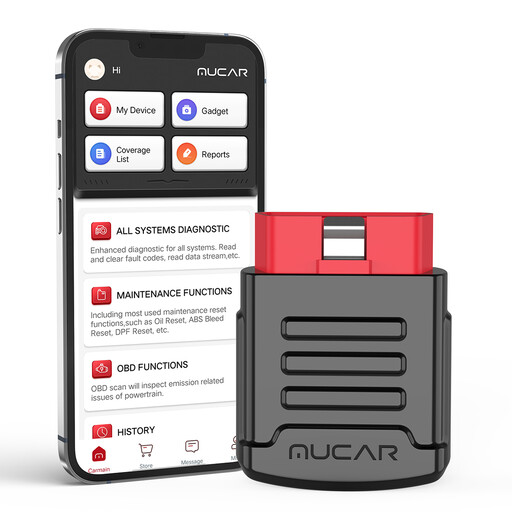
Why this tool fits: Ideal for beginners who want to do more than just read engine codes without a large budget. The compact Bluetooth adapter simply connects to your smartphone, allowing for flexible diagnostics right at the vehicle.
This model offers lifetime free use of diagnostics for all systems. This eliminates the worry of hidden subscription costs for core functions.
Offers broad vehicle coverage for over 128 brands and 15 service reset functions (1 year free), which is sufficient for most at-home maintenance tasks.
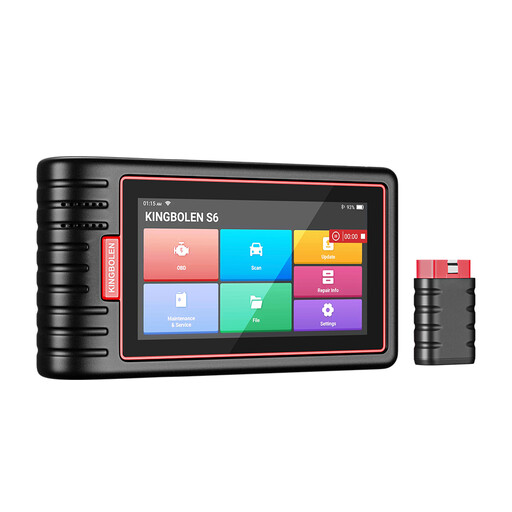
Why this tool fits: A dedicated tablet that offers a wide range of service functions (over 28) and full system diagnostics. Perfect for hobby mechanics who want to perform complex tasks like DPF regeneration or SAS calibration themselves.
Support for the CAN FD protocol ensures better compatibility with newer vehicles, thus avoiding the trap of outdated technology. The update policy for basic and diagnostic functions is clearly declared as lifetime free.
Combines comprehensive system diagnostics with over 28 service functions in a handy tablet with a touchscreen. The wireless Bluetooth connection ensures great working comfort.
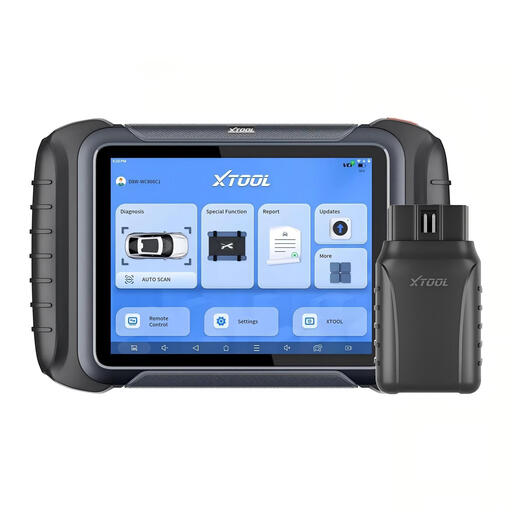
Why this tool fits: A tool for professional use. The topology map visualizes communication between control units, significantly speeding up troubleshooting. Advanced functions like ECU coding are essential for module replacement.
This device explicitly supports CAN FD and DoIP and offers broad coverage for ECU coding. It overcomes the compatibility and functional limitations of simpler devices, making it a future-proof investment for workshops.
The intelligent topology map for a quick fault overview, combined with full bi-directional control and over 42 service functions, makes it a highly efficient tool for daily workshop use.
We have compiled a complete, up-to-date list of products that fully meet these strict selection criteria and UK regulations.
In principle, the OBD2 standard is mandatory in the EU for petrol vehicles from 2001 and diesel vehicles from 2004 for emissions-related diagnostics. This means a simple device can usually read the check engine light. However, access to other systems like ABS, airbag, or transmission, as well as special service functions, are not standardized and depend heavily on the vehicle manufacturer and the diagnostic tool. Therefore, always check the manufacturer's compatibility list for your specific model and year.
This term is interpreted differently by manufacturers. Ideally, it means that all functions, including new vehicle models and service routines, are updated permanently and at no extra cost. More common, however, is a model where only the basic software or the fundamental OBD2 functions are free for life, while advanced diagnostics or updates for new vehicle generations require a paid subscription after an initial free period (e.g., 1-3 years).
If you primarily work on vehicles built before 2020, these protocols are generally not necessary. However, if you run a workshop or regularly work on very new vehicles (especially from brands like General Motors, Ford, BMW, Volvo, Jaguar, or Land Rover), support for CAN FD and DoIP is increasingly important to perform a complete and fast diagnosis. For a future-proof purchase, a device with these protocols is a sensible consideration.