
Lieferung heute & morgen

Qualitätsgarantie

Willkommens-Angebote freischalten: KOSTENLOSE Lieferung | Bis zu 80 % RABATT | Kostenlose 30-Tage-JoyPlus-Testphase
App herunterladen
Choosing an RC car for off-road terrain can quickly become overwhelming. The packaging promises high speeds, extreme durability, and limitless driving fun. But the reality is often different: a remote-controlled car that breaks down after just a few off-road sessions is not only frustrating but also a wasted investment. As your Joybuy Product Recommendation Officer, I'll help you spot the typical marketing traps and make an informed decision.
Three pitfalls, in particular, consistently lead to disappointment:
To avoid these problems, it's crucial to understand the core technical features of a good off-road RC car.
Before you make a decision, you should carefully examine three technical aspects. These are the primary determinants of your model's performance, durability, and overall enjoyment.
For an off-road RC car, the drivetrain is of central importance. Here, the recommendation is clear:
The longevity of an off-road model depends directly on its construction.
The performance of an RC car is determined by the combination of its motor and battery.
Based on these criteria, we have identified several models suitable for different user profiles.
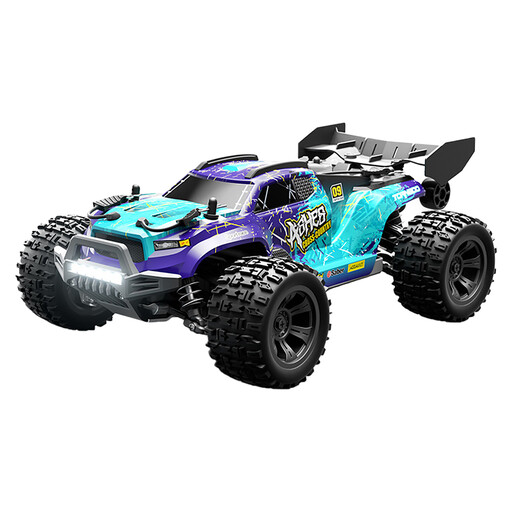
Why This Fits Their Persona: This model offers an excellent balance of performance and durability for anyone looking to get into the serious RC hobby. It's not just a toy, but a capable off-road vehicle.
The reinforced aluminum chassis withstands impacts that would break basic plastic models. The 4WD system and large tires prevent it from getting stuck in rough terrain.
Complete Ready-to-Run set; powerful 7.4V 1500mAh lithium battery for long run times; water-resistant features for driving in wet conditions.
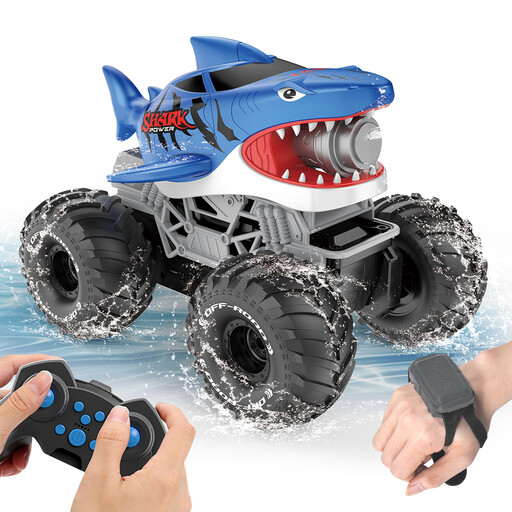
Why This Fits Their Persona: Ideal for drivers who want more than just speed. Its amphibious function and dual control options (including gesture control) open up entirely new worlds of play on land and in water.
Instead of vague "water-resistant" promises, this model is explicitly designed for water use with its propeller tires and fully waterproof construction.
Amphibious design for use in ponds or on lawns; dual control via remote and gesture-sensing watch for high interactivity.
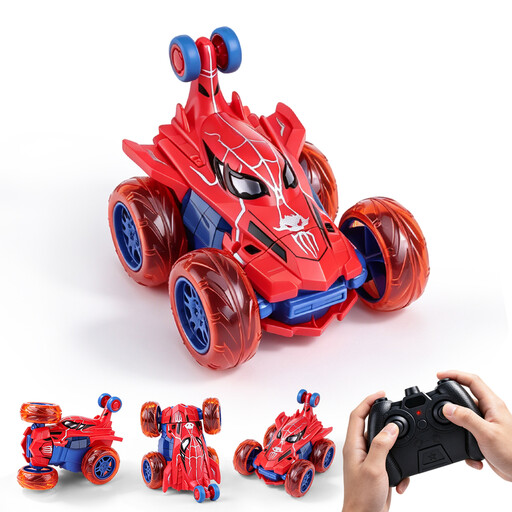
Why This Fits Their Persona: This model is a perfect gift for boys and girls who want an exciting and robust toy. It combines cool stunts, lights, and a solid 4WD construction that's suitable for kids.
Instead of cheap plastic wheels, this model features durable rubber tires and a true 4WD system, ensuring durability and good off-road capability during active play.
Easy USB charging without removing the battery; the 2.4GHz technology allows multiple cars to run simultaneously without interference.
We have compiled a complete, up-to-date list of products that fully meet these strict selection criteria and German safety regulations.
A brushed motor is the simpler and more cost-effective technology. It uses physical carbon brushes to transfer power, which wear out over time. A brushless motor is electronically commutated, has no wearable parts, is more efficient, and delivers more power with less heat generation. For ambitious drivers seeking a fast and durable RC car, a brushless motor is the superior choice.
To maximize the lifespan of a LiPo battery, you should follow a few rules. Never store the battery fully charged or completely empty. A storage voltage of about 3.8 volts per cell is ideal. Avoid deep-discharging the battery (below 3.0V per cell), as this can cause permanent damage. Always charge batteries on a fireproof surface and never leave them unattended during the charging process.
Not necessarily. A higher price often correlates with better performance and materials, but also with higher maintenance and repair costs. For beginners or casual drivers, a solid mid-range model with good spare parts availability might be the more sensible choice. More important than the price is that the vehicle matches your experience level and intended use. A high-performance competition model is often overkill for the backyard or park.