
Lieferung heute & morgen

Qualitätsgarantie

Willkommens-Angebote freischalten: KOSTENLOSE Lieferung | Bis zu 80 % RABATT | Kostenlose 30-Tage-JoyPlus-Testphase
App herunterladen
An off-road remote control car promises action and outdoor driving fun. But the market is flooded with models whose marketing claims often suggest more than the technology can deliver. Before you make a decision, it's crucial to know the common pitfalls that can quickly turn a hoped-for adventure into a costly mistake. This guide will help you separate the good from the bad and find a model that truly meets your needs.
Many buyers are drawn to impressive speed claims or a rugged appearance. However, the real weaknesses often only become apparent after a few drives. Pay special attention to these three points:
To objectively evaluate a model's performance and durability, you should focus on technical specifications. The following three parameters are crucial for off-road capability.
The drive system is a key factor in how the vehicle performs off-road.
The motor is the heart of the vehicle and affects both speed and maintenance.
The stability of the vehicle depends directly on the quality of the chassis and suspension. A simple remote control toy car often has a rigid plastic chassis that breaks easily upon impact. In contrast, a high-quality remote-controlled truck uses a reinforced chassis, ideally with metal components, and an independent suspension. This allows the wheels to react to bumps independently, drastically improving grip and durability.
Based on these objective criteria, we have identified a few models suitable for different user profiles.
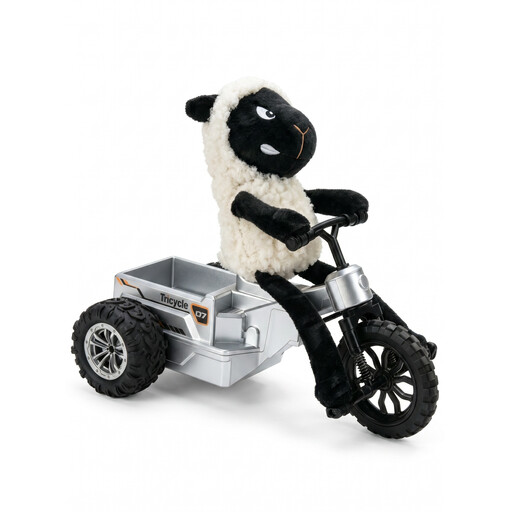
Why This Fits Their Persona: This model is ideal for children and teens looking to get into the world of RC cars. It combines the fun of an off-road vehicle with the ability to perform cool drifts on smooth surfaces. A perfect gift for boys and girls aged 6 and up.
The vehicle comes with a rechargeable lithium battery that provides a longer run time of about 20–40 minutes per charge compared to standard batteries, avoiding the disappointment of short drive times.
Two sets of tires (drift and racing) are included, allowing for an easy switch between different driving styles. The 4WD system ensures good control during drift manoeuvres.
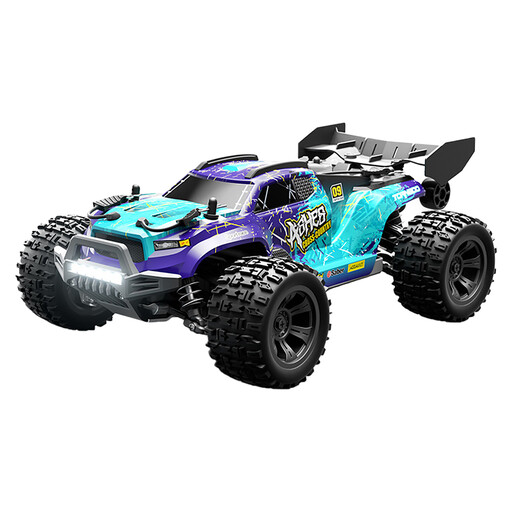
Why This Fits Their Persona: For adults and teens looking for a robust and powerful vehicle for real off-road conditions. This model has the technical specs to handle sand, grass, and even light mud, making it more than just a toy.
The chassis is reinforced with an aluminum alloy, and the body is designed for impact and torsion resistance. This prevents damage from crashes and collisions, bypassing the trap of cheap, brittle plastic parts.
The 7.4V 1500mAh lithium battery ensures long-lasting performance. The professional 2.4 GHz remote control allows for precise adjustments to speed and steering, which is essential for advanced driving.
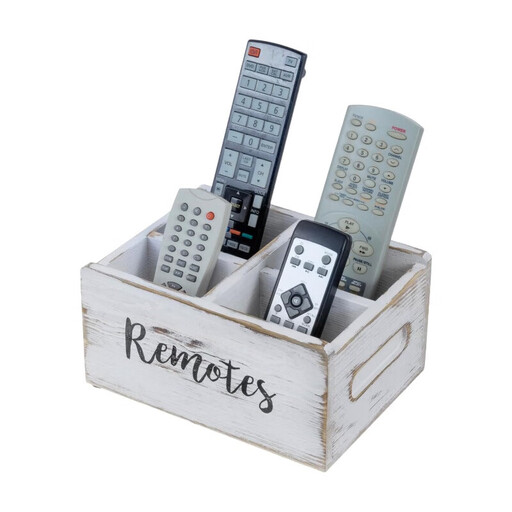
Why This Fits Their Persona: After the driving fun comes the tidying up. Anyone who values their equipment wants to store the sensitive remote control safely and within easy reach, rather than leaving it lying around. This holder is a practical addition for any RC driver.
Instead of storing the remote unprotected where it can fall or get damaged, this holder provides a dedicated spot. This protects the sensitive electronics and joysticks from accidental bumps.
The four compartments offer enough space for the RC car's pistol-grip remote as well as other remote controls. The solid wood design is sturdy and fits well in living rooms or hobby basements.
Safe and tidy storage is key to the longevity of your equipment. We've compiled a list of products to help you organise your remote controls and accessories.
1. How long does the battery of an off-road RC car last? Battery life varies greatly depending on the model and driving style. Simple toy cars often provide only 10–20 minutes of run time. Hobby-grade models with high-quality Li-Ion or Li-Po batteries typically achieve 20–40 minutes. The capacity, measured in milliampere-hours (mAh), is a good indicator here. Many models also allow for a quick swap to a spare battery to extend the fun.
2. Are RC buggies truly waterproof? Not always. Pay close attention to the manufacturer's specifications. "Splash-proof" means the vehicle can handle light rain or damp grass. "Waterproof" implies that the electronics are sealed and can withstand drives through puddles. However, complete submersion should be avoided with almost all models unless explicitly permitted by the manufacturer.
3. Where can I find spare parts for my RC car? The availability of spare parts is a crucial quality indicator. For established hobby-grade brands, there is a wide range of replacement and tuning parts available from specialised dealers. For very cheap, no-name products, finding spare parts is often a hopeless task. It is advisable to do a quick search before buying to see if common wear-and-tear parts like control arms, driveshafts, or motors are available for the desired model.