
Lieferung heute & morgen

Qualitätsgarantie

Willkommens-Angebote freischalten: KOSTENLOSE Lieferung | Bis zu 80 % RABATT | Kostenlose 30-Tage-JoyPlus-Testphase
App herunterladen
The search for a high-performance Off-Road RC Car for Adults can quickly become overwhelming. The market is flooded with models that promise high speeds and extreme durability. However, not every vehicle lives up to its advertising. Many buyers soon discover that their new hobby-grade device can't handle the stress of off-road conditions. This guide highlights the most common pitfalls and explains which technical features truly matter, enabling you to make an informed purchasing decision.
Before we dive into the important specifications, it's helpful to understand the typical marketing traps that often lead to disappointment.
To avoid a bad purchase, you should focus on objective, technical specifications. Three areas are of central importance here.
For challenging terrain, a 4WD remote-controlled off-road car (all-wheel drive) is a fundamental requirement. A 4WD system distributes power to all four wheels, providing significantly better traction and control on loose or uneven surfaces. There are two main types of motors:
The chassis is the backbone of the vehicle. While plastic may suffice for lightweight entry-level models, an RC car with a metal chassis is the more solid choice for a high-speed RC car intended to handle jumps and rough terrain. An aluminium base plate protects the internal components from impacts from below and increases the vehicle's torsional rigidity, leading to more precise handling.
The battery is the primary determinant of runtime and power output. Two values are critical here:
Instead of making a one-size-fits-all recommendation, we have selected models that suit different requirements and user profiles.
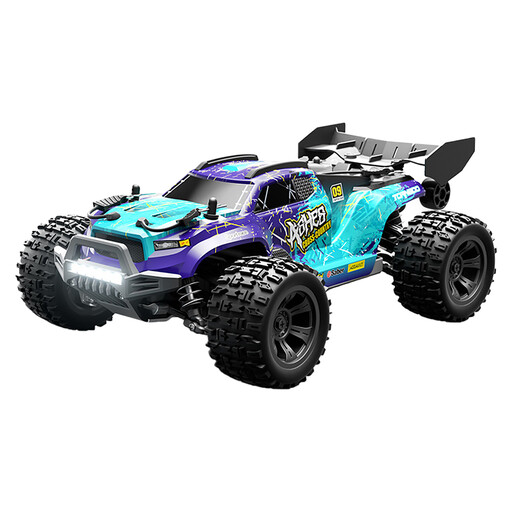
Why This Fits Their Persona: This model is aimed at users looking for a true hobby-grade device. It combines the crucial features for durability and performance in the field, making it a solid foundation for demanding drives.
The reinforced aluminium metal chassis withstands hard landings, while the 7.4V 1500mAh battery ensures sustained and consistent power delivery. Its description as a waterproof RC buggy is backed by a robust construction designed for driving in a wide variety of conditions.
The 4WD all-wheel drive, combined with high-grip off-road tyres, provides excellent traction on sand, mud, and grass. The professional 2.4 GHz transmitter allows for precise control and adjustments like speed throttling.
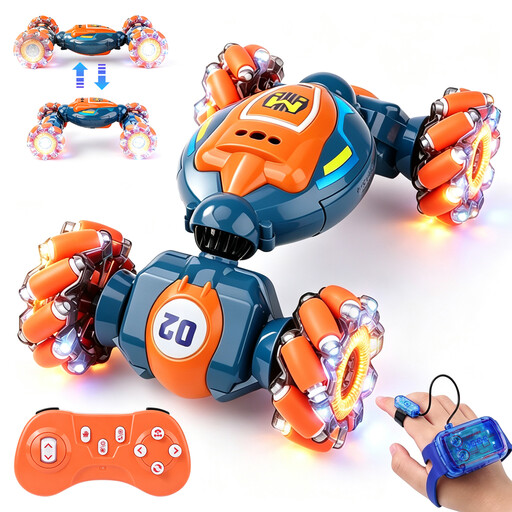
Why This Fits Their Persona: For drivers who care less about raw speed and more about technical finesse and cool manoeuvres. The dual control via remote and gesture-sensing wristband offers an interactive and modern driving experience.
This model doesn't promise classic off-road dominance but delivers exactly what it advertises: unique stunt capabilities. The omnidirectional Mecanum wheels are specifically designed for lateral drifts and 360° spins, not for climbing over rocks.
The dual control modes (handheld remote and gesture wristband) offer variety. The ability to drive sideways and perform rapid spins makes it an eye-catcher in parks or large open areas.
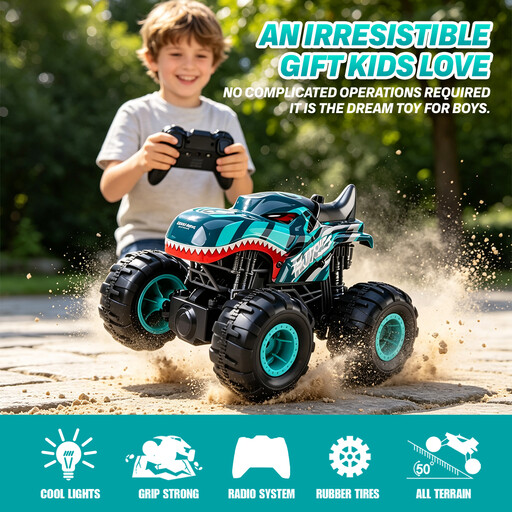
Why This Fits Their Persona: Ideal as a high-quality **gift for men and boys** who want a straightforward yet capable vehicle for the garden or park. The focus is on driving fun and a striking design, without the complexity of a pure hobby-grade model.
The model is positioned as a robust remote-controlled monster truck with a durable ABS plastic body designed for everyday use. Expectations are clearly set on fun and all-terrain capability, not professional racing.
The inclusion of two batteries allows for an extended runtime of up to 50 minutes. The large rubber tyres and powerful motor handle grass and sand with ease, while light and sound effects add extra entertainment value.
We have compiled a complete, real-time updated list of products that fully meet these strict selection criteria and German safety regulations.
The battery life depends heavily on the capacity (in mAh) and driving style. A 1500 mAh battery can provide a runtime of about 20 to 30 minutes, depending on the intensity of use. Continuous high-speed driving or operating in difficult terrain consumes more energy than moderate driving on flat surfaces. Many sets include a second battery to extend the runtime.
Caution is advised here. "Waterproof" is not a standardised term. Most models are merely "splash-resistant," meaning the electronics are protected against light rain or damp surfaces. For driving through deep water or in extremely wet conditions, a model is required where the electronic components (ESC, receiver, servo) are explicitly designated as being hermetically sealed.
A Brushed Motor is the more traditional and cost-effective option. It uses physical brushes to transfer current, which wear out over time. A Brushless Motor operates electronically without direct contact, making it more efficient, powerful, and lower-maintenance. For most beginners and intermediate users, a high-quality, high-torque brushed motor already provides excellent performance.