Single-serve blenders
If you want to make a portion directly in the blending cup and drink from it, a screw-on drinking cup can save you having to decant your smoothie. WMF lists a 0.6-litre container for the Kult X Mix & Go.


For a single serving, a mains-powered blender with a drinking cup is an obvious choice if there’s a socket at the permitted blending spot and you want to take your smoothie with you without decanting it. If there’s no mains connection, a rechargeable blender may be more practical, provided you can arrange to charge it. The CHIP Test Centre assesses noise and cleaning separately; wattage alone is no guarantee of a quiet appliance or a particular smoothie texture.
If you want to make a portion directly in the blending cup and drink from it, a screw-on drinking cup can save you having to decant your smoothie. WMF lists a 0.6-litre container for the Kult X Mix & Go.
In a shared space, noise, countertop space and cleaning all matter. The CHIP Test Centre lists noise and cleaning as separate assessment criteria.
If you can’t use a mains connection at your chosen blending spot, a rechargeable blender could be an option. The Ninja Blast BC151EUBK, featured in a product test overview, is one example; check with your workplace that you’re allowed to use it.
For an apricot smoothie in a shared office, it’s worth checking the cup and cleaning requirements first, then the noise level of the specific model, and finally the power supply at your chosen spot.
| What matters to you | What to check before buying | Who it matters most to |
|---|---|---|
| Single serving and drinking cup | Check the usable capacity, the cup’s closure and what’s included. | If I want to drink my smoothie straight from the blending cup and take it with me without decanting, a suitable lid is important. Around 28% of consumers say single servings and portability are their top priorities. |
| Considerate blending | Look at noise tests for the specific model and check the rules at your workplace. | In a shared space, I want to know whether using the blender is likely to disturb others. Around 22% of consumers say being considerate of colleagues is their main concern. |
| Cleaning after blending | Check each part individually to see whether it can be removed and whether the instructions say it is dishwasher-safe. | If I use the blender in a shared kitchen, I want to be able to clean the cup, lid and blade assembly thoroughly after use. Easy cleaning is the main priority for around 22% of consumers. |
| Other or frozen ingredients | Check whether the specific model is approved for frozen fruit or ice. | If I want to blend other ingredients as well as apricots on a regular basis, especially frozen ingredients, I need to make sure the exact model is suitable. Around 17% of consumers say being able to use a variety of ingredients is their main priority. |
| Blending without a socket | For a rechargeable blender, check the charge level, usable blending capacity and whether you’re allowed to use it at work. | If there’s no mains connection at my chosen blending spot, I need a way to charge the battery before use. Around 11% of consumers say not needing a socket is their main priority. |
Bitter apricot kernels can release hydrogen cyanide and cause severe poisoning. A more powerful blender doesn’t make them a suitable ingredient.
Remove the stones from apricots before blending and don’t use bitter apricot kernels. The German Federal Institute for Risk Assessment advises against eating them altogether.
The CHIP Test Centre assesses noise and cleaning separately, and notes that high power alone doesn’t guarantee good results.
For office use, look at noise tests for the specific model. If you want to blend frozen ingredients, check that the exact model is approved for them.
This claim may apply to certain removable parts; it doesn’t automatically mean the motor unit, blades and lid are all dishwasher-safe.
Before buying and after use, read the cleaning instructions for every part actually included.
The details below relate to specific model ranges and can help you compare cups, cleaning requirements and ingredients. Mentioning a brand doesn’t indicate that a product is available.
The Kult X Mix & Go is a mains-powered smoothie maker with a container that also works as a drinking bottle.
The Smoothie Mix & Go SM 3735 is a mains-powered blender cup option supplied with two drinking containers.
BlendBoss and Blast are different blender options featured in product test overviews.
The VitaPower MMB2111M01 is a mini blender set that blends ingredients directly into a bottle for taking on the go.
The 5000 Series HR2766/00 blender is worth considering if you want to blend ingredients other than apricots too.
This selection includes mains-powered blenders with drinking cups, as well as portable, rechargeable models for single servings.
 No image available
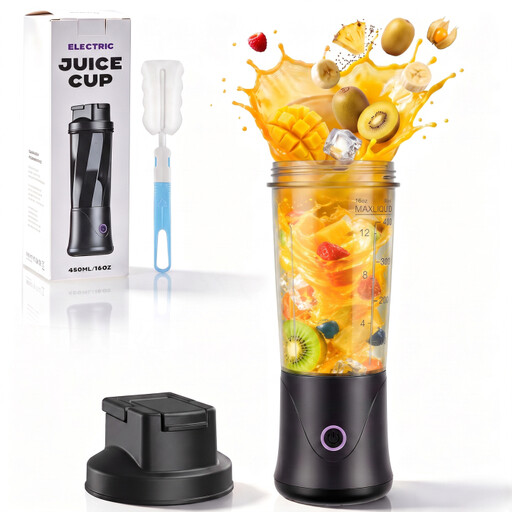
This portable blender with a travel cup is a good fit if you want to make a single serving and take it with you without decanting.
710 ml travel cup; three pre-set automatic programmes; ice-crushing function; removable, dishwasher-safe parts.
 No image available
Described as suitable for smoothies and office use, this blender is an option for a single serving. Before buying, check the instructions to see which parts can be cleaned.
400 ml cup; six blades; black finish.
 No image available
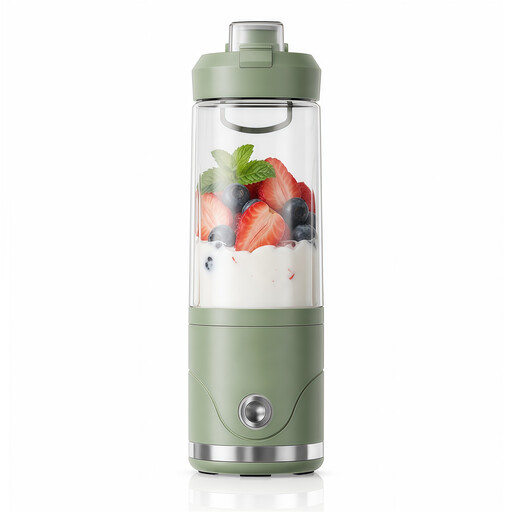
This rechargeable blender is an option if you can’t use a mains connection at your chosen blending spot and can arrange to charge it.
650 ml cup; six blades; USB-C charging; green finish.
 No image available
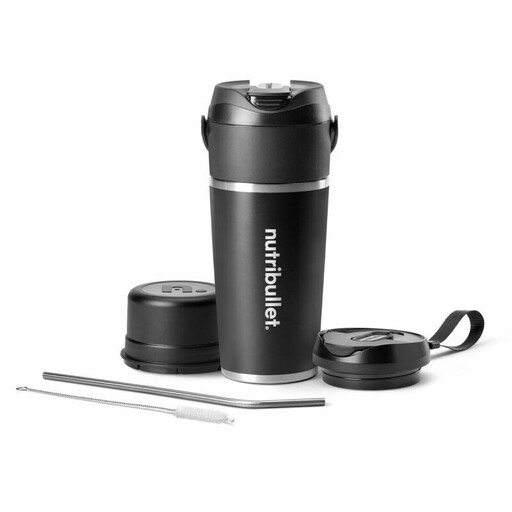
This portable, rechargeable blender is worth considering if you want to blend without a socket and take your drink with you.
Portable design; black version.
 No image available
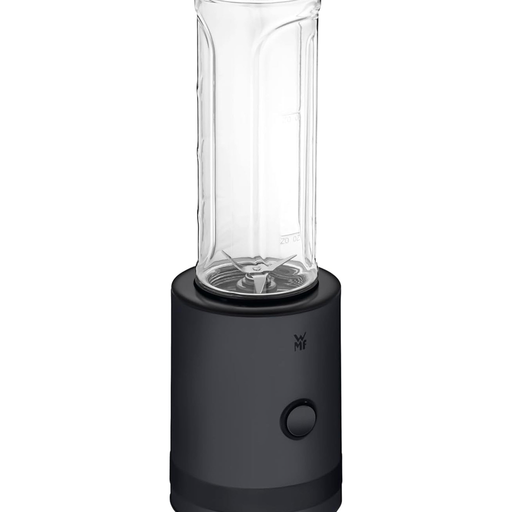
The two blending and drinking containers are handy if you’d like an extra cup available and want to take your smoothie with you in the same container.
Two containers, each with a capacity of 0.6 l; 300 W; containers and lids listed as dishwasher-safe.
Remove the stones from the apricots and use only the flesh. The German Federal Institute for Risk Assessment warns that bitter apricot kernels contain amygdalin, which releases hydrogen cyanide, and advises against eating them altogether.
Use fresh ingredients with no signs of spoilage, wash the fruit thoroughly and clean the appliance parts you’ve used according to the instructions. If you’re storing a smoothie made with perishable ingredients, the German Federal Institute for Risk Assessment recommends keeping it refrigerated at between 2 °C and 7 °C.
Check whether you’re allowed to use your chosen spot, a socket or charging point, and the blender at the times you have in mind under your office rules. If you have a rechargeable blender, you’ll also need to arrange to charge it in advance.
Follow the instructions for the specific cup and check which ingredients, temperatures and cleaning methods are recommended. This helps you make sure the guidance suits how you plan to use it.
No. The German consumer advice centre distinguishes between your statutory rights if a product is faulty and a voluntary manufacturer’s guarantee, which is subject to its own terms and conditions. If you’re buying an extra drinking cup, also check that it’s compatible with your model and included in the stated contents.