
Lieferung heute & morgen

Qualitätsgarantie

Willkommens-Angebote freischalten: KOSTENLOSE Lieferung | Bis zu 80 % RABATT | Kostenlose 30-Tage-JoyPlus-Testphase
App herunterladen
A tidy workspace is the foundation for focused and efficient work. But where do you put all the binders, documents, and office supplies that accumulate over time? A well-chosen office cabinet not only creates order but can also significantly shape the aesthetic of your study or home office.
The selection is vast, ranging from mobile pedestals to spacious filing cabinets. This article serves as a guide. We'll introduce various criteria to help you make your decision and present a selection of models suited for different needs due to their specific features.
Before you decide on a model, there are a few fundamental aspects to consider. The right choice depends on your available space, your workflows, and the items you need to store.
Consider what primary function the cabinet should serve.
The durability and stability of an office cabinet depend heavily on the material used. Models made from engineered wood (like MDF or particleboard) with a melamine finish are low-maintenance and available in many designs. Steel constructions are particularly robust and well-suited for storing heavy binders. Look for solid craftsmanship, smooth-running hinges and drawer slides, as well as safety features like an anti-tip kit.
Measure the available space precisely before making a purchase. Consider not only the width and depth but also the height of the room. Tall, narrow shelves make optimal use of vertical space and are ideal for smaller rooms. Wider, lower cabinets also provide a useful surface for printers, scanners, or decorations. Especially with home office furniture, a space-saving and multifunctional solution is often advantageous.
Based on the criteria mentioned, we have compiled a selection of functional storage solutions that cater to different needs.
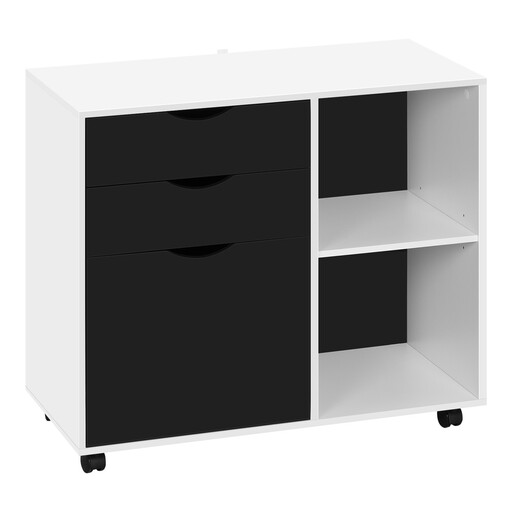
Why it stands out: This model from Woltu combines closed and open storage in a mobile format. The mix of three drawers and two open compartments makes it a versatile solution for the desk area. A special feature is the bottom drawer, which is equipped with a hanging rail for A4 files.
Advantages:
Who it's for: For users who need a flexible and mobile storage solution right at their workspace. Ideal for the home office to keep documents, office supplies, and personal items organised and within easy reach.
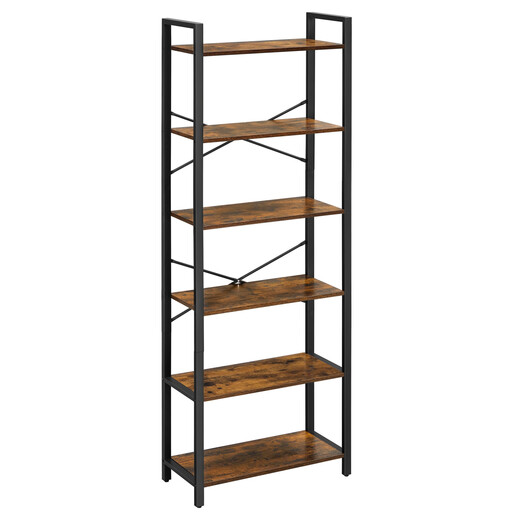
Why it stands out: This tall and narrow bookshelf for the study makes efficient use of room height, offering ample space across six tiers. The design, featuring a black steel frame and shelves with a greige finish, fits well into modern or industrial-style work environments.
Advantages:
Who it's for: For individuals who need a lot of open storage and are looking for a space-saving, vertical solution. It is excellent for displaying books and organising binders in a stylish setting.
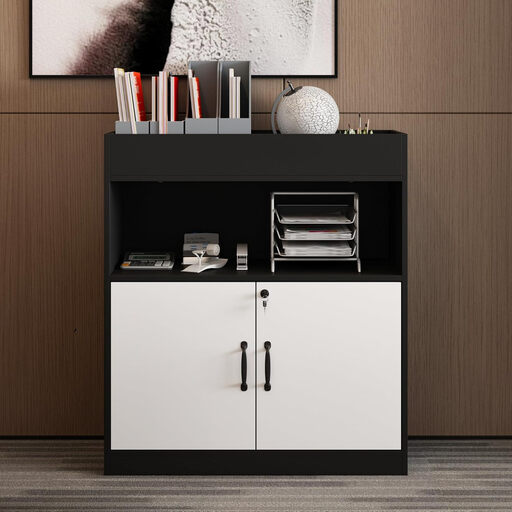
Why it stands out: The Caldion cabinet is a classic lockable storage cabinet that combines security and organisation. It offers a balanced mix of two open compartments for quick access and two compartments behind lockable doors for confidential contents.
Advantages:
Who it's for: For professionals, the self-employed, and anyone who needs to store sensitive data or documents in the office or home office. The combination of secure and open storage makes it a practical all-rounder.
If the models presented don't exactly match what you're looking for, or if you prefer a specific colour scheme, you can find more solutions in our collection. For example, discover our selection of Black Office Shelves to give your workspace an elegant and timeless touch.
A filing cabinet is specifically designed for archiving documents. It often features drawers with hanging file systems for standard formats like A4 and is frequently lockable. An office cabinet is a more general term that encompasses a variety of storage furniture, including shelves, sideboards, and multi-purpose cabinets with different compartment layouts.
Good organisation starts with a system. Use labelled binders, dividers, and storage boxes to sort documents by topic. Place frequently needed documents and materials at an easily accessible height (within arm's reach). Less frequently used files can be archived in the top or bottom compartments. Regular decluttering helps maintain an overview.
Whether a lockable storage cabinet is necessary depends on your job and work environment. If you handle sensitive customer data, personnel files, or confidential business documents, a lockable cabinet is highly recommended to comply with data protection regulations (like GDPR) and maintain confidentiality. It also provides the necessary privacy for your work documents in a multi-person household.