
Lieferung heute & morgen

Qualitätsgarantie

Willkommens-Angebote freischalten: KOSTENLOSE Lieferung | Bis zu 80 % RABATT | Kostenlose 30-Tage-JoyPlus-Testphase
App herunterladen
Long hours at a desk, whether at home or in the office, take their toll. An unsuitable chair is often a direct path to neck strain and back pain. But the office chair market is saturated with marketing promises. An ergonomic office chair is supposed to be the solution, but the term is often used loosely.
As your Joybuy Product Recommendation Officer, I see it as my mission to navigate the marketing jungle and provide you with clear, objective guidance. Before you make a purchasing decision, you should know the most common pitfalls that lead to a bad buy.
The 3 Most Common Traps When Buying an Office Chair:
To avoid these traps, focus on the objectively measurable features that define a good desk chair.
A truly adjustable office chair should offer more than just an adjustable seat height. Look for the following adjustment options to perfectly tailor the chair to your body's dimensions:
The choice of material affects both comfort and longevity. A mesh office chair is particularly suitable for people who sit for many hours at a time, as the breathable material prevents heat buildup. Also, look for recognised certifications like BIFMA or SGS. These standards confirm that the chair has passed stress tests for safety, stability, and durability. A specified maximum weight capacity of, for example, 150 kg is another indicator of a robust construction.
Instead of making blanket recommendations, we have identified models that meet specific needs and purposefully avoid the pitfalls mentioned.
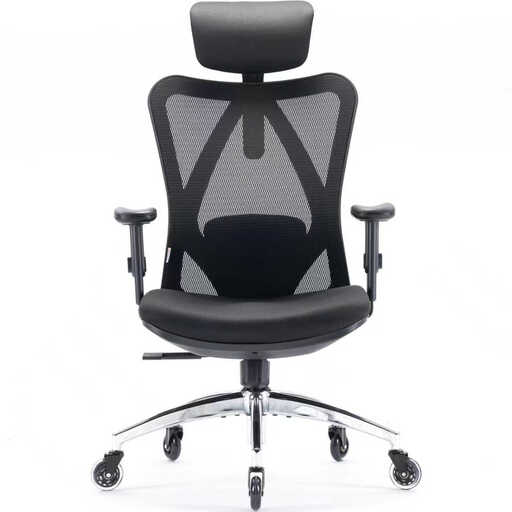
Why it's a match: Ideal for a first professional home office chair setup. It offers the essential ergonomic adjustments without breaking the bank and is well-suited for daily use.
This model goes beyond an empty "ergonomic" promise by offering five separate adjustments, including an adjustable headrest and lumbar support.
It provides a solid baseline of features with BIFMA and SGS certification and a high weight capacity of up to 150 kg, which isn't a given in this price range.
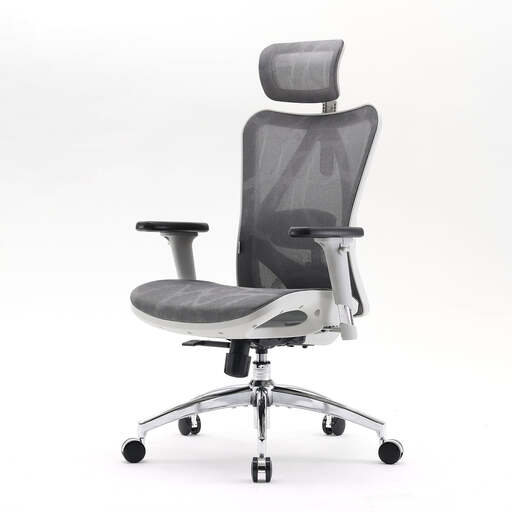
Why it's a match: Designed for individuals who sit for more than 8 hours a day. The focus is on maximum adjustability and durable support, making it an ideal professional computer chair for work and gaming.
It avoids the trap of fixed supports with a height-adjustable lumbar support and 3D armrests (adjustable in height, depth, and rotation), allowing for truly individual customisation.
The combination of breathable polyester mesh and a robust aluminum alloy frame ensures longevity and comfort, even during intensive use.
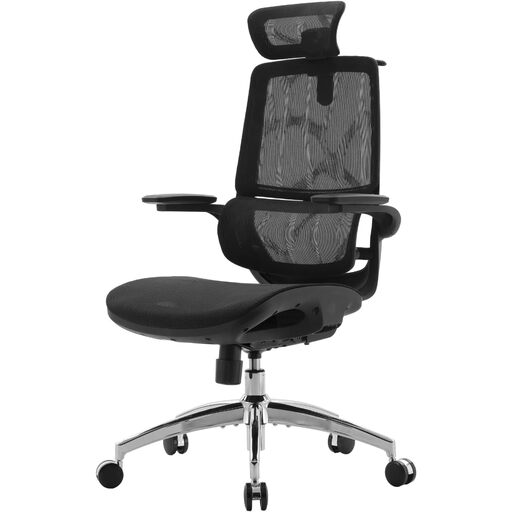
Why it's a match: Perfect for multi-functional rooms or smaller apartments where the workspace needs to disappear after hours. It also offers more freedom for those who play instruments like the guitar.
It solves the problem of bulky chairs that don't fit under the desk. The 80° flip-up armrests allow for space-saving storage without compromising on ergonomics.
The adaptive lumbar support with a dual-backrest design adjusts to the user's movements, providing continuous support, while the flip-up armrests create maximum everyday flexibility.
We have compiled a complete, up-to-date list of products that meet these strict selection criteria and comply with applicable EU safety regulations.
The lifespan of an office chair depends on the material quality, construction, and intensity of use. Models with steel or aluminum frames and certifications like BIFMA are designed for longevity. A warranty of three years or more, as offered on some SIHOO office chair models, is a good sign of the manufacturer's confidence in its product. With proper care, a high-quality chair can last for many years.
There's no one-size-fits-all answer; it comes down to personal preference and intended use. A mesh office chair offers unmatched breathability, which is a significant advantage during long workdays in the summer or in poorly air-conditioned rooms. A padded chair can provide a softer seating experience but tends to retain heat. For most office and home office applications, mesh is a very practical choice.
Most ergonomic office chairs, including the models featured here, are delivered for self-assembly. The process is typically straightforward and requires no special tools. Manufacturers include detailed instructions and all the necessary assembly hardware. Assembly usually takes between 15 and 30 minutes.