
Lieferung heute & morgen

Qualitätsgarantie

Willkommens-Angebote freischalten: KOSTENLOSE Lieferung | Bis zu 80 % RABATT | Kostenlose 30-Tage-JoyPlus-Testphase
App herunterladen
Anyone who spends many hours a day sitting, whether in a home office or a corporate one, knows the challenge: an unsuitable chair can quickly lead to tension and discomfort. The market for ergonomic office chairs is vast, but not every model advertised as "ergonomic" delivers on its promise. Choosing the right chair is an investment in your own well-being.
As your Joybuy Product Recommendation Officer, I'll help you identify the crucial features and avoid common purchasing traps. Instead of being swayed by marketing promises, you should focus on verifiable facts and functions that truly make a difference.
Many buyers invest in a new desk chair only to find that it fails to meet their initial expectations after just a few months. This is often due to well-disguised flaws or exaggerated advertising claims.
To avoid a bad purchase, focus on three fundamental technical aspects. These determine whether a chair is suitable for long periods of sitting and promotes a healthy posture.
The mechanism controls how the seat and backrest move. There are significant differences here:
Good lumbar support is more than just a curve in the backrest. It supports the lower back (lumbar spine) and helps maintain the natural S-shape of the spine. Make sure the support is height-adjustable to position it precisely at the curve of your lumbar spine. Some models also offer depth adjustment to regulate the pressure. A swivel chair with lumbar support that is fixed and not adjustable can even cause harm if positioned incorrectly.
The material significantly influences comfort and durability.
Always check the maximum weight capacity. An executive chair with a 150 kg capacity, for example, is designed with a more robust gas lift and a sturdier base, which increases safety and longevity.
Based on the criteria mentioned, we have identified a few models that are suitable for different user profiles and requirements.
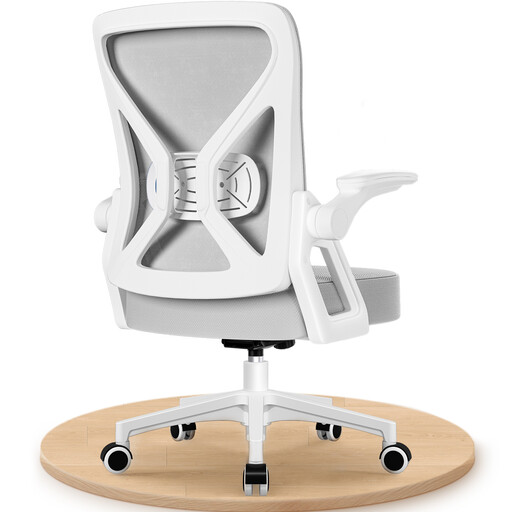
Why This Fits Their Persona: This model is a solid choice for the home office or for users seeking essential ergonomic features without a high price tag. It covers the most important adjustments and offers practical functions for everyday use.
It avoids the "one-size-fits-all" trap with an adjustable lumbar support and seat height. This allows the chair to be adapted to your body size instead of imposing a rigid shape.
The flip-up armrests create more space when needed, allowing the chair to be pushed completely under the desk. The tilt function up to 125° allows for relaxing breaks.
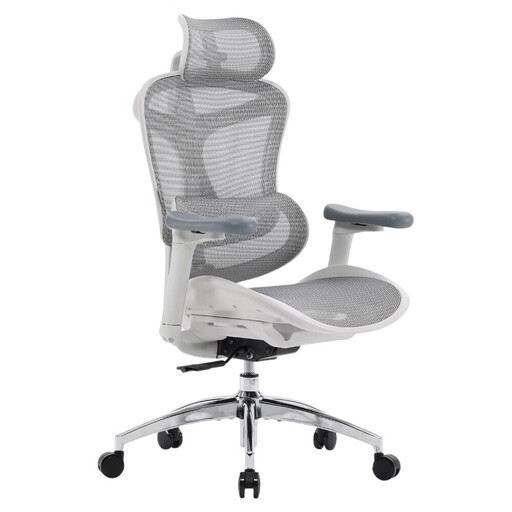
Why This Fits Their Persona: For people who spend eight hours or more at their desk every day, dynamic and adaptive support functions are essential. This model is designed for demanding, long-term users who value continuous and responsive body support.
It bypasses the trap of useless features by relying on intelligent, automated adjustments. The self-adaptive lumbar support and weight-sensitive mechanism work without complicated manual tuning.
The dynamic lumbar support adapts to the user's movements. The 3D armrests are adjustable in three directions and recline with the backrest. The 150 kg weight capacity ensures stability.
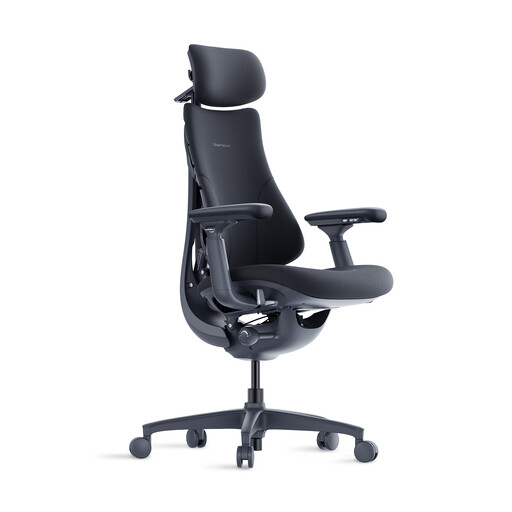
Why This Fits Their Persona: Ideal for users who also want to use their workspace for breaks and moments of relaxation. This chair combines the functions of a full-featured ergonomic office chair with the comfort of a recliner.
This model avoids the "useless extras" trap because the footrest and extreme recline function are stable and integrated into the core design, rather than being a wobbly add-on.
The main advantage is the combination of an adaptive lumbar support for work and an integrated footrest with a recline angle of up to 160° for true relaxation breaks.
We have compiled a complete, up-to-date list of products that fully meet these strict selection criteria and applicable safety regulations.
What is the difference between a gaming chair and an ergonomic office chair? A gaming chair often takes its design cues from racing seats, with pronounced side bolsters and fixed cushions for the neck and lumbar regions. The focus is on a stabilizing, but often rigid, posture for intense gaming sessions. A classic ergonomic office chair, on the other hand, emphasizes dynamic sitting and micro-adjustable components (like lumbar support, armrests, seat depth) to promote a neutral and mobile posture throughout a long workday. However, there are also hybrid models that combine features from both categories.
How important is the synchro-tilt mechanism really? For individuals who sit for more than two to three hours a day, the synchro-tilt mechanism is a crucial feature. It encourages movement by opening the angle between the torso and thighs when reclining. This stimulates blood circulation, supplies nutrients to the intervertebral discs, and prevents a rigid, unhealthy sitting posture. A simple tilt mechanism cannot achieve this effect.
How do I correctly adjust my new desk chair? A basic setup involves three steps: