
Lieferung heute & morgen

Qualitätsgarantie

Willkommens-Angebote freischalten: KOSTENLOSE Lieferung | Bis zu 80 % RABATT | Kostenlose 30-Tage-JoyPlus-Testphase
App herunterladen
By: Joybuy Product Recommendation OfficerDate: July 28, 2026
Long days at a desk, whether in a corporate office or at home, often lead to neck tension and back pain. An ergonomic office chair is frequently presented as the solution, but the market is confusing. Many models advertise themselves as "ergonomic" without meeting the essential criteria.
This guide will help you separate the wheat from the chaff. We'll show you the three most common pitfalls to watch out for and which technical features are truly crucial for long-lasting comfort and a healthy posture.
Before you make a purchase, you should be aware of the common flaws that often only become apparent after a few months of use.
To avoid the pitfalls mentioned above, focus on verifiable technical features. These three aspects are decisive for a high-quality, durable chair.
The mechanism determines how the seat and backrest move. A simple rocker mechanism, where the angle between the seat and backrest remains fixed, is unsuitable for long sitting sessions.
Look for models with a synchronous mechanism. With this, the backrest tilts back at a greater angle than the seat. This promotes blood circulation, relieves pressure on the intervertebral discs, and supports a dynamic sitting posture that prevents tension.
An ergonomic desk chair must adapt to your body, not the other way around. Look for the following adjustment options:
Don't rely on advertising claims; trust in recognised standards.
Based on the criteria above, we have identified several models suitable for different user profiles and requirements.
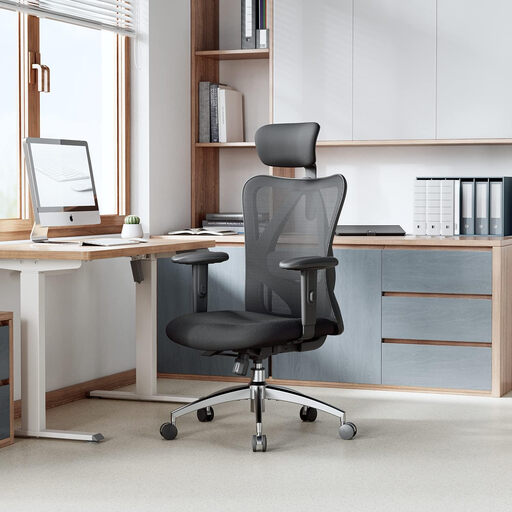
Why This Fits Their Persona: Ideal for individuals who spend over eight hours a day in a home office or corporate setting. This chair offers a full suite of adjustments to optimally support the body over long periods and prevent fatigue.
It avoids the "empty ergonomics promise" with an adjustable headrest and lumbar support. BIFMA and SGS certifications confirm its high load capacity (up to 150 kg) and the durability of its components.
Comprehensive adjustments (headrest, lumbar support, armrests, height); breathable mesh back; high weight capacity.
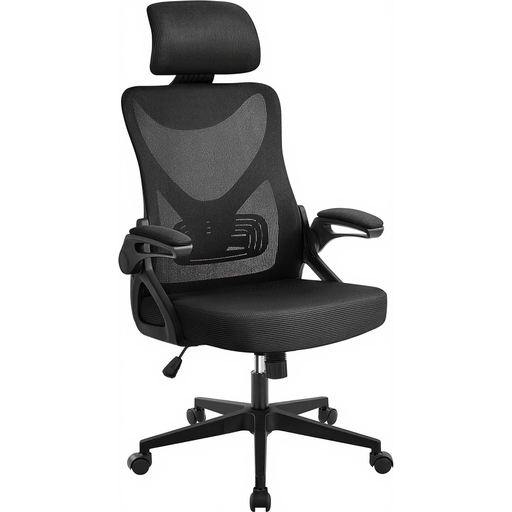
Why This Fits Their Persona: Perfect for users in smaller apartments or multi-functional rooms. The flip-up armrests allow the chair to be pushed completely under the desk, saving valuable space without sacrificing basic ergonomic functions.
This chair avoids the trap of bulky, inflexible models. Despite its space-saving design, it offers key ergonomic features like an adjustable headrest, lumbar support, and a tilt function. BIFMA certification ensures its stability.
90° flip-up armrests for space-saving storage; BIFMA and EN1335 certified; high load capacity up to 136 kg.
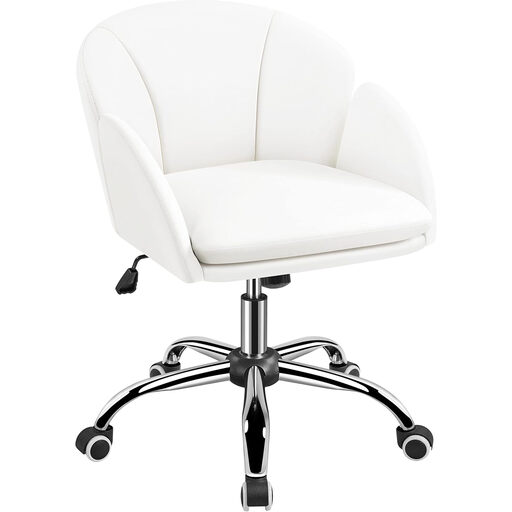
Why This Fits Their Persona: For users whose workspace is part of their living area, where aesthetics play as big a role as function. This chair combines an elegant, petal-shaped design with fundamental ergonomic comfort for moderate periods of use.
It refutes the assumption that functional chairs must be unattractive. At the same time, it's more than just a design piece: the SGS-certified gas lift and EN12520 certification guarantee tested safety and stability.
Elegant velvet design with a petal silhouette; height-adjustable with a tilt function; certified and tested components.
We have compiled a complete, up-to-date list of products that fully meet these strict selection criteria and German safety regulations.
BIFMA (Business and Institutional Furniture Manufacturer's Association) is an American standard that evaluates the safety, durability, and structural performance of office furniture. A BIFMA-certified chair has been tested for aspects such as stability, base strength, caster longevity, and gas lift durability under repeated, intensive use. It is a reliable indicator of a long-lasting and safe product.
A proper initial setup is crucial. Start with the seat height: your feet should be flat on the floor with your knees at approximately a 90-degree angle. The lumbar support should be positioned in the curve of your lower back. Adjust the armrests so that your forearms can rest horizontally on the desktop with your shoulders relaxed.
Both materials have their advantages. A mesh backrest is highly breathable and provides excellent air circulation, which is particularly beneficial on warm days or for people who tend to sweat. An upholstered backrest often offers a softer, more enveloping feel and can be perceived as more comfortable in cooler environments. The choice ultimately depends on personal preference and the climate of your workspace.