
Lieferung heute & morgen

Qualitätsgarantie

Willkommens-Angebote freischalten: KOSTENLOSE Lieferung | Bis zu 80 % RABATT | Kostenlose 30-Tage-JoyPlus-Testphase
App herunterladen
An office chair without armrests is often the most practical solution for workspaces with limited room. Whether in a home office, at a vanity table, or in a small apartment, the ability to slide the chair completely under the tabletop creates valuable space. However, the selection is vast, and not every model delivers on its promises. Many buyers soon find themselves dealing with wobbly constructions, squeaky casters, or uncomfortable seats.
As your Joybuy Product Recommendation Officer, I'm here to help you avoid the common pitfalls. This guide focuses on the objective criteria that distinguish a good chair from an unsuitable one, enabling you to make an informed decision.
Before we get to the recommendations, it's important to be aware of the most common flaws, which often only become apparent after the purchase:
To avoid these problems, you should check three core parameters before buying. These form the foundation for durability, safety, and comfort.
The base is the foundation of any swivel chair. Pay attention to the maximum load capacity specified by the manufacturer. A value of at least 110 kg is a good indicator of a solid build. Bases made of steel or reinforced nylon generally offer greater stability than those made of simple plastic. A good task chair with casters should also feature load-dependent braking safety casters suitable for the specific floor type (hard or soft floors) to prevent it from rolling away unintentionally.
A height-adjustable swivel chair must offer a sufficient range to adapt to different body sizes and desk heights. A quality gas lift allows for smooth, stepless adjustment. Look for certifications like SGS, which confirm that components have been tested for safety and durability. An adjustment range of about 10-12 cm is sufficient for most home office chair applications.
The choice of upholstery material affects not only the look but also the durability and cleaning effort.
Here are some models that are well-suited for different user profiles based on their objective features.
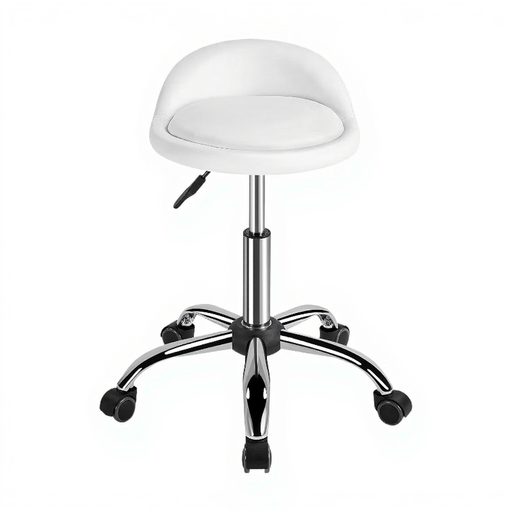
Why This Fits Their Persona: This compact stool is the ideal solution for very small work nooks or multi-purpose rooms. Its low backrest and lack of armrests allow it to be pushed completely under almost any desk or work surface, thus maximising available space.
The sturdy metal base, with a specified load capacity of 120 kg, and the 360° casters counteract the problem of an unstable foundation.
Maximum space-saving due to its compact design. The low-maintenance faux leather cover is easy to clean.
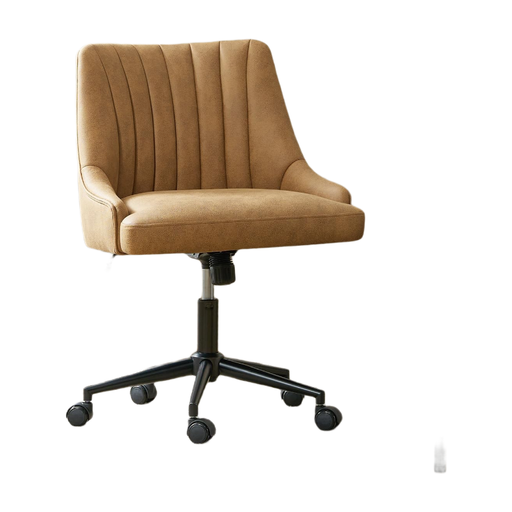
Why This Fits Their Persona: For users whose chair is an integral part of their interior design. The quilted design and fabric upholstery give it a homely aesthetic that stands out from classic office chairs and integrates well into a modern living room or bedroom.
The high-density foam padding and durable fabric upholstery counteract the problem of rapid material wear.
Combines a residential design with office-ready functionality. The 360° swivel and height adjustment provide the necessary flexibility at the workspace.
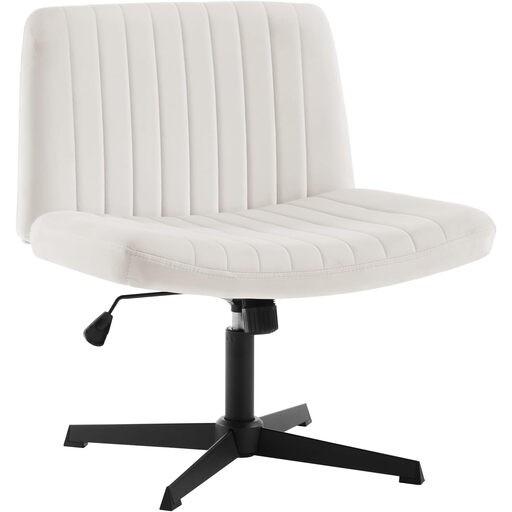
Why This Fits Their Persona: Ideal for individuals looking for a chair for various purposes—from focused work to relaxing at a vanity table. The soft velvet upholstery and integrated rocking function offer a higher comfort factor than purely functional office chairs.
The combination of height adjustment and a 17-degree rocking function addresses the lack of adaptability, offering personalised comfort that goes beyond a simple place to sit.
High comfort thanks to the velvet cover and rocking function. The high load capacity of 150 kg indicates a robust construction.
We have compiled a complete, up-to-date list of products that fully meet these strict selection criteria and German safety regulations.
An ergonomic chair without armrests is entirely possible. Ergonomics primarily depends on a supportive backrest, a suitable seat depth, and, most importantly, the correct, adjustable seat height. Armrests can support posture but are not essential for every work style. For activities that require a lot of freedom of movement (e.g., drawing, playing an instrument), an armless design is often more advantageous.
Most chairs come with standard casters for carpeted floors (soft floor casters). For hard floors like parquet, laminate, or tile, special hard floor casters with a softer tread are recommended. These prevent scratches and reduce rolling noise. Some manufacturers include them or offer them as a separate accessory.
Sit on the chair and adjust the height so that your feet are flat on the floor and your thighs are parallel to the ground or slope slightly downward. Your arms should be able to rest on the desk surface at an approximate 90-degree angle without you having to raise your shoulders.